
Dried udder for dogs: soft and popular
Dried udder for dogs is a soft, aromatic chew made from the mammary tissue of cattle, and many dogs love it. Because it gives way easily when chewed, udder is well suited to puppies, small dogs and seniors with sensitive teeth – however, it is comparatively high in fat and should therefore be fed in moderation. In this article, you will learn what makes beef udder special, which dogs it suits and how to dose it correctly.
Content: Dried udder for dogs: soft and popular
- What is dried udder for dogs?
- Is udder fatty?
- Is udder suitable for puppies?
- Udder for seniors and small dogs
- Feeding udder correctly: amount, storage and alternatives
- Frequently asked questions about udder for dogs
- Conclusion: dried udder as a soft reward in moderation
Soft beef snacks to try:


What is dried udder for dogs?
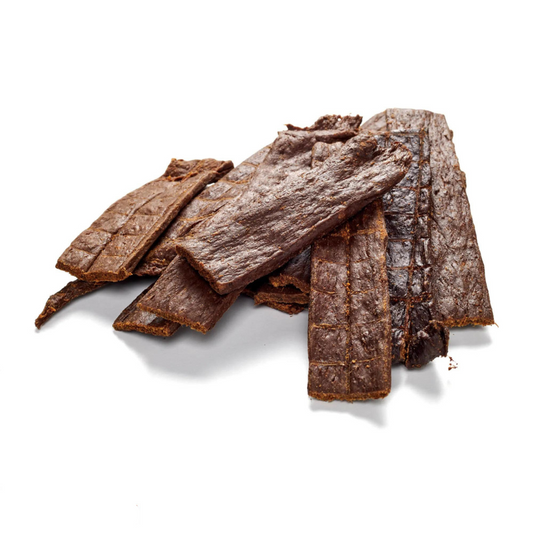
Dried udder consists of pieces of beef udder that are gently dried until a long-lasting, soft yet chewy snack is created. It belongs to the "head to toe" chews, i.e. parts of the animal that are hardly used in human cooking.
Origin and production
The udder is the cow's mammary tissue. For dog snacks, it is cleaned, cut into pieces or sticks and dried. In the process, it loses most of its water and keeps for a long time. Good udder snacks consist of a single ingredient and contain no additives.
Texture and smell
Compared with hard chews such as hide bones, dried udder is much softer. It can easily be bent and broken with your fingers. The smell is mild to aromatic and bearable for most people. For dogs, on the other hand, the scent is very tempting, which is why udder is also popular as a special reward.
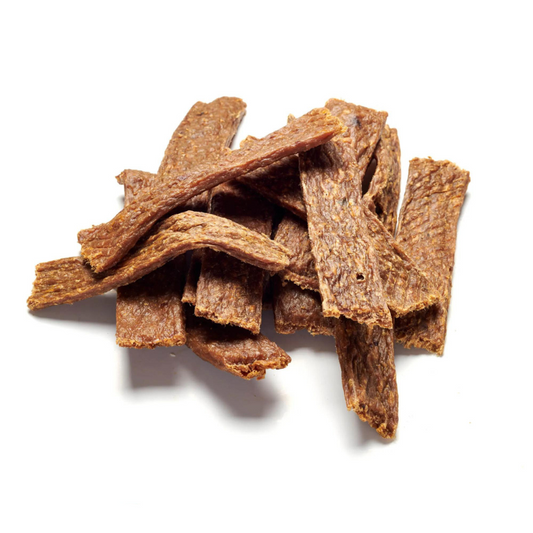
In our range, you will find udder as beef udder (puppy sticks) – handy sticks that are easy to portion.
Why dogs love udder so much
The intense scent, the slightly fatty taste and the yielding texture make udder irresistible to many dogs. Even picky dogs that leave hard chews lying around often happily accept udder. This makes it a practical reward for special moments – for example after claw trimming, at the vet or as a highlight at the end of a training session.
Is udder fatty?
Yes, dried udder is rather high in fat compared with lean chews such as lung, rabbit or turkey. This gives it its intense flavour, but also means more calories per piece.
What this means for feeding
Fat is an important source of energy, but provides more than twice as many calories per gram as protein. For active dogs of normal weight, an udder stick as an occasional snack is therefore no problem. For dogs prone to being overweight, udder should rather be the exception. You will find the exact nutritional values in the product description.
When you should avoid udder
- Pancreatitis: Low-fat snacks are a must here – discuss the choice with your vet.
- Overweight: Opt for lean alternatives from the category low-fat chews.
- Acute diarrhoea: During gastrointestinal problems, chews generally take a break.
- A very sensitive stomach: Start with small pieces and watch how well it is tolerated.
You can read more about lean alternatives in the article Low-fat dog chews.
Is udder suitable for puppies?
Udder is well suited to many puppies because it is soft and gentle on the sensitive milk teeth. Because of the fat content, however: small pieces, not every day and always under supervision.
Udder during teething
While teething, puppies have a great need to chew, and the gums are often irritated. Soft chews such as udder offer a pleasant chewing option without putting too much strain on them. You will find more ideas in our guide Chews for teething puppies and in the category chews for puppies.
Tips for puppies
- Introduce slowly: Start with a small piece and check the stool the next day.
- Adjust the portion: For small puppies, divide a stick into several pieces.
- Supervision: Stay with your puppy until the piece has been eaten.
- Take the food ration into account: Snacks count towards the daily ration so that the puppy food remains the main source of nutrition.
Soft meat cubes for young and older dogs:


Udder for seniors and small dogs
For seniors and small dogs, udder is often a good choice because it is soft and easy to break up. Dogs with missing or sensitive teeth can usually enjoy it well, too.
Older dogs
With age, teeth wear down, and some dogs have gum problems. Hard chews then become uncomfortable. Soft varieties such as udder keep the joy of chewing alive without overtaxing them. Since older dogs often use less energy, however, the amount should be chosen particularly carefully. You will find more ideas under chews for older dogs and in the article Soft treats for senior dogs.
Small dogs
For small breeds, udder is convenient because it can easily be divided into suitable pieces. Remember that small dogs have a correspondingly small snack budget – half a stick may already be enough.
Feeding udder correctly: amount, storage and alternatives
It is best to feed udder as an occasional reward in small portions, store it dry and well ventilated and alternate it with lean snacks.
The right amount
As a rule of thumb, all snacks together should make up no more than about 10 percent of the daily energy requirement. Because of its higher fat content, udder fits into the plan once or twice a week rather than daily. Our article How many treats per day? explains exactly how to plan treats.
Udder as a training reward
Because udder breaks easily, you can divide it into small pieces and use it as a high-value reward for difficult exercises, such as recall. Keep the pieces very small and deduct the amount from the rest of the snack budget. For many repetitions, lean training snacks are the better basis – udder remains the extra.
Storage
Store udder in a dry, cool place protected from direct sunlight, ideally in a breathable container. Fatty chews can go rancid more quickly in warm conditions – if a piece smells unusual, throw it away.
Udder compared with other soft snacks
| Snack | Texture | Fat content (tendency) |
|---|---|---|
| Beef udder | soft and chewy | rather high |
| Soft meat cubes | soft | low to medium depending on the variety |
| Beef lung | light, airy | low |
| Meat strips | firm, easy to chew | low to medium |
Lean variety is offered by beef lung or soft meat cubes, for example. You will find more beef snacks in the category beef.
More beef chews for variety:


Frequently asked questions about udder for dogs
What is dried udder for dogs?
Dried udder consists of gently dried pieces of the mammary tissue of cattle. It is soft, aromatic and ideally made from just one ingredient. Many dogs love it as a special reward.
Is udder fatty?
Yes, compared with lean snacks such as lung or rabbit, udder is rather high in fat. Feed it in small amounts and plan the calories into the daily ration. For overweight dogs or dogs with pancreatitis, lean alternatives are better.
Is udder suitable for puppies?
For many puppies, yes, because the soft texture is gentle on the milk teeth. But give only small pieces, not every day and always under supervision so that digestion is not overwhelmed.
How often can my dog have udder?
For healthy dogs of normal weight, udder fits as a snack about once or twice a week. On those days, other treats should be reduced accordingly.
Is udder suitable for dogs with allergies?
Udder is a single-protein beef snack. It is therefore not suitable for dogs with a beef allergy. If your dog tolerates beef well, udder can be an option – with allergies, you should discuss new snacks with your vet.
Conclusion: dried udder as a soft reward in moderation
Dried udder is a soft, aromatic chew that many dogs love and that is particularly suitable for puppies, small dogs and seniors with sensitive teeth. Because of its comparatively high fat content, however, it belongs on the menu in small portions and rather occasionally. For overweight dogs or dogs with pancreatitis, lean alternatives are the better choice. That way, udder remains what it should be: a special reward.
Further reading on this topic:
- Chews for Teething Puppies: What Really Helps?
- Soft treats for senior dogs with dental problems
- Beef for dogs
This post was created with the help of AI