
How long should a dog chew? Chewing time by age
How long a dog should chew depends above all on his age, his teeth and the chew itself: as a rough guide, around 15 to 30 minutes of chewing time a day suits many adult dogs, while puppies and seniors do better with shorter sessions. More important than the exact number of minutes are a suitable chew, regular breaks and keeping an eye on the daily ration. In this article, you will learn how to plan chewing time by age, how to recognise too much chewing and how often a week chews make sense.
Content: How long should a dog chew? Chewing time by age
- Why chewing is so important for dogs
- How long should a dog chew? Chewing time by age
- Can a dog chew too much?
- Which chew suits which chewing time?
- How often a week do chews make sense?
- Frequently asked questions about chewing time
- Conclusion: finding the right chewing time by age
Popular chew ears for a relaxed chewing break:


Why chewing is so important for dogs
Chewing is a natural need for dogs: it keeps them busy, calms them down and can help prevent boredom. Many dogs are visibly more relaxed after a chewing break.
Chewing relaxes
Many dogs settle down while chewing steadily. That is why chews are ideal after an exciting walk, when visitors arrive or as an evening ritual. You can read more about the background in our article Why chewing makes dogs happy.
Chewing works the mind and the jaw
A chew challenges your dog in a pleasant way: he has to find the right position, nibble and hold on. This trains the chewing muscles and is a worthwhile addition to exercise and playing together.
Chewing as part of dental care
Mechanical chewing can help reduce soft deposits on the teeth. However, it replaces neither tooth brushing nor regular check-ups at the vet.
How long should a dog chew? Chewing time by age
How long a dog should chew depends mainly on his life stage: puppies are better off chewing several times for short periods, adult dogs can handle longer chewing breaks, and seniors often need softer chews and shorter sessions.

| Life stage | Chewing time per day (approx.) | What to look out for |
|---|---|---|
| Puppy (up to approx. 6 months) | several short sessions of approx. 5–10 minutes | soft chews, mind the teething phase |
| Adolescent dog (approx. 6–18 months) | approx. 10–20 minutes | often a strong urge to chew, choose the right size |
| Adult dog | approx. 15–30 minutes | match the chew to your dog's chewing style |
| Senior | approx. 10–20 minutes | softer chews, check teeth regularly |
These values are not fixed rules but a guide. Breed, temperament and the condition of the teeth play a big role.
Puppies
Puppies often have a strong urge to chew while teething. Soft, easily digestible chews and short sessions are ideal now, because the milk teeth and gums are sensitive. You will find suitable varieties under chews for puppies and tips in the article Chews for teething puppies.
Adolescent and adult dogs
With their permanent teeth, dogs can chew longer and harder. Many adult dogs enjoy a daily chewing break of about a quarter of an hour to half an hour. Strong chewers need robust chews such as a buffalo hide bone with pizzle filling, while connoisseurs often do well with ears or scalp sticks.
Seniors
Older dogs more often have sensitive or missing teeth. Shorter chewing sessions and softer varieties from the category chews for older dogs are often more comfortable here. Also have your senior's teeth checked regularly by the vet.
Robust chews for dedicated chewers:


Can a dog chew too much?
Yes, a dog can chew too much – for example if he gnaws on very hard chews for hours, takes in too many calories or the chewing seems compulsive. In that case, you should adjust the chewing time and the chews.
Signs of too much chewing
- Worn or broken teeth and reddened gums
- Soft stool or digestive problems after long chewing sessions
- Weight gain, because chews are not deducted from the food ration
- Overworked jaw muscles, noticeable as reluctance or stiff chewing movements
- Compulsive chewing of furniture or paws, which can point to stress or boredom
What you can do
Limit the chewing time by swapping the chew for a treat after about half an hour and offering it again later. If your dog has dental problems, switch to softer varieties, and talk to your vet about unusual behaviour or dental damage. If your dog is not getting enough exercise, walks, search games and training together will also help.
Which chew suits which chewing time?
Which chew suits the chewing time you want depends on hardness, size and structure: soft, thin chews are finished quickly, while tough and thick varieties keep dogs busy much longer.
Short chewing breaks
For a few minutes, thin, light chews such as ears, pieces of lung or short intestine sticks are ideal. They are perfect as a small reward in between, for puppies and for dogs that do not like to chew for long at a time.
Medium chewing time
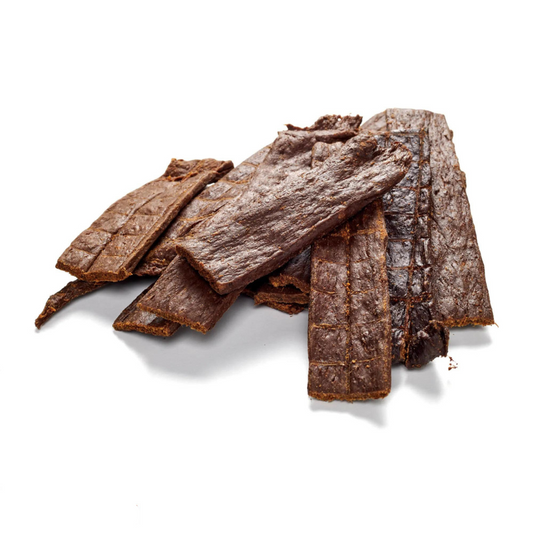
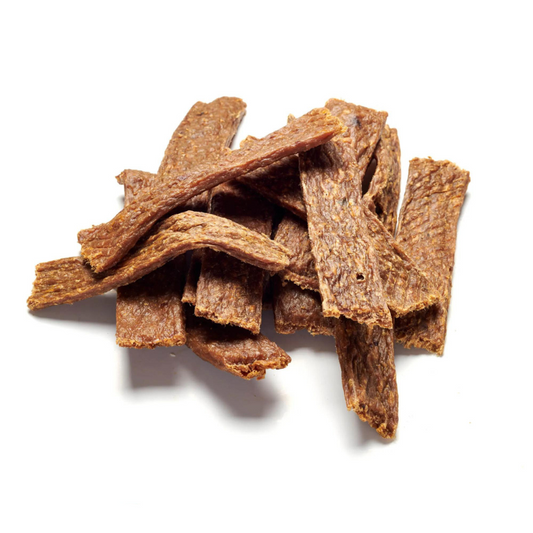
Scalp sticks, fur strips or ear shells keep many dogs busy for about a quarter of an hour. They are often just right for the daily chewing break of adult dogs.
Long-lasting activity
Large hide bones, chew plates or metatarsal bones can keep strong chewers busy for longer. Here it is worth consciously limiting the chewing time and spreading the chew over several days. This keeps the amount of calories in check and does not overwork the jaw muscles.
Tip: control chewing time consciously
With a new chew, time how long your dog needs once. That way you can better judge in future which chew suits which situation – for example a short snack before heading out or a long chew for a quiet evening.
How often a week do chews make sense?
For most healthy dogs, a small chew every day or a larger chew several times a week makes sense – as long as the calories are planned into the daily ration.
The 10 percent rule
As a rule of thumb, treats and chews together should provide no more than about 10 percent of the daily energy requirement. A large, heavy chew can quickly use up this share. Our article How many treats per day? explains how to calculate it.
A weekly chewing plan
- Small chews such as rabbit ears are suitable for the daily chewing break.
- Larger chews such as hide bones or chew plates are better given two to three times a week.
- Very fatty varieties such as pig ears should only be planned in occasionally.
- Variety with different types keeps interest high – but introduce new things slowly.
You will find popular classics for every day among our bestsellers and in the category long-lasting chews.
Chew sticks for the daily chewing break:


Frequently asked questions about chewing time
How long a day should a dog chew?
As a rough guide, many adult dogs enjoy about 15 to 30 minutes of chewing time a day. Puppies are better off chewing several times briefly for about 5 to 10 minutes, seniors often a little shorter and softer. Adjust the time to your dog's teeth, temperament and chew.
Can a dog chew too much?
Yes. Chewing very hard chews for hours can wear down the teeth, provide too many calories or upset digestion. If the chewing seems compulsive, stress or boredom may be behind it – then it is worth talking to a vet or dog trainer.
How often a week do chews make sense?
A small chew daily or a larger one two to three times a week suits most healthy dogs. It is important to count the calories towards the daily ration.
Should I take the chew away after a certain time?
That can make sense, especially with large or fatty chews. Swap it for a treat after the desired chewing time and offer it again later. For safety reasons, you should always take away small leftover pieces.
Is chewing in the evening good for relaxation?
For many dogs, yes. A chewing break after the last walk can serve as a relaxing ritual. Just make sure you stay nearby until the chew is finished or put away.
Conclusion: finding the right chewing time by age
How long a dog should chew cannot be pinned down to the minute, but a guide helps: adult dogs often enjoy 15 to 30 minutes a day, puppies and seniors rather shorter sessions with softer chews. Plan the calories into the daily ration, keep an eye on teeth and behaviour, and give chews under supervision whenever possible. That way, chewing remains what it should be: a relaxed, natural activity. Our article Leaving your dog alone with chews? Safety rules explains how to give chews safely.
Further reading on this topic:
- The secret of the chewing muscles: why chewing makes dogs happy
- Leaving your dog alone with chews? Safety rules
- How Many Treats per Day? The 10 Percent Rule
This post was created with the help of AI