
Chews for Teething Puppies: What Really Helps?
Chews for teething puppies should above all be soft, natural and the right size – for example beef udder, soft meat cubes or rabbit ears without fur. Hard chews such as antlers, hooves or bones are unsuitable during this phase because they can overwhelm the sensitive teeth. In this article, you'll learn when dogs lose their baby teeth, why your puppy wants to chew so much right now and which chews really help.
Content: Chews for Teething Puppies: What Really Helps?
- When do puppies start teething?
- Why teething puppies chew so much
- Which chews are suitable for teething puppies
- These chews are unsuitable for puppies
- From what age can puppies have chews?
- Frequently asked questions about puppy teething
- Conclusion: Soft chews for teething puppies
Soft chews that teething puppies can chew easily:


When do puppies start teething?
Teething in dogs usually begins at around three to four months of age and is generally complete by about six to seven months. During this time, the 28 baby teeth are replaced by 42 permanent teeth.
How teething progresses
- Incisors: The small front incisors usually fall out first.
- Canines: Next come the canine teeth, which often wobble quite noticeably.
- Premolars and molars: Finally, the front cheek teeth are replaced and the back molars come through for the first time.
The exact timing varies depending on breed and size. Small breeds are sometimes a little later. You can learn more about a dog's teeth in our article How many teeth does a dog have?.
Typical signs
- increased chewing on furniture, shoes or hands
- red, slightly swollen gums
- occasional small traces of blood on toys or chews
- baby teeth on the floor – although many are simply swallowed
- temporarily a little less appetite for hard food
When to see the vet
If a baby tooth stays in place even though the permanent tooth is already coming through next to it, this is called a retained (persistent) baby tooth. It is particularly common in small breeds and should be checked by a vet, as it can lead to misaligned teeth. Severe pain, persistent bleeding or refusal to eat also call for a vet's attention.
Why teething puppies chew so much
Teething puppies chew a lot because chewing can relieve pressure in the gums – and it's also a natural need that young dogs use to explore their surroundings.
Chewing is a basic need
Chewing keeps dogs busy, calms them and relieves stress. Especially during the exciting puppy phase, it helps your dog to settle down. If it doesn't get suitable things to chew, it will find its own – often to the detriment of table legs and shoes.
Channel chewing in the right direction
- Offer alternatives: Calmly swap forbidden items for an allowed chew.
- Plan rest periods: A chew after a walk can help your puppy relax.
- Hands are not chew toys: Briefly pause play if your puppy bites too hard.
- Offer variety: Different textures make chewing more interesting.
Our article How to stop puppies biting explains how to gently train your puppy out of nipping hands.
Which chews are suitable for teething puppies
Teething puppies do best with soft to medium-firm natural chews that give way and break down easily – for example beef udder, soft meat cubes, meat strips or rabbit ears without fur.
The best chews for teething
| Chew | Firmness | Why suitable? |
|---|---|---|
| Beef udder (puppy sticks) | soft to medium | gives way when chewed, gentle on the gums |
| Soft meat cubes | soft | ideal as a reward and for training |
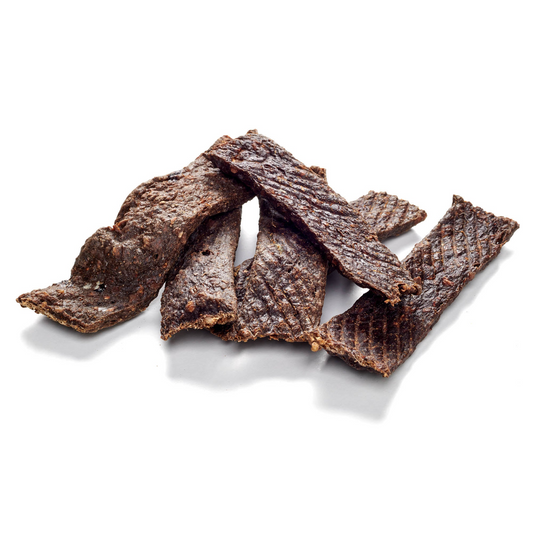
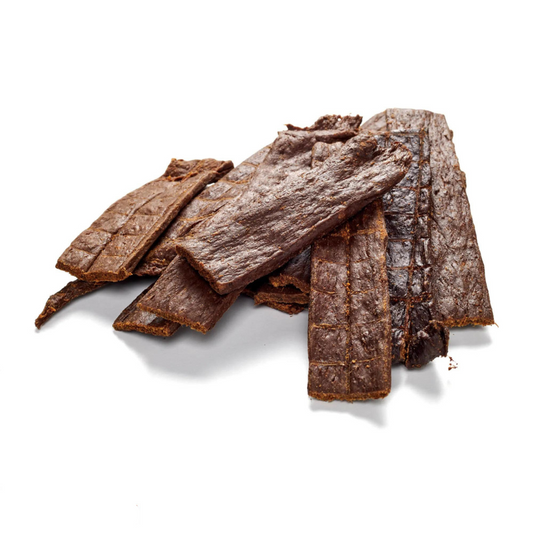
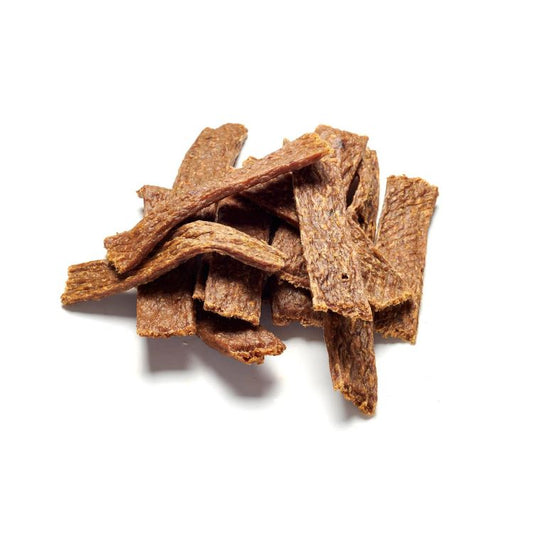
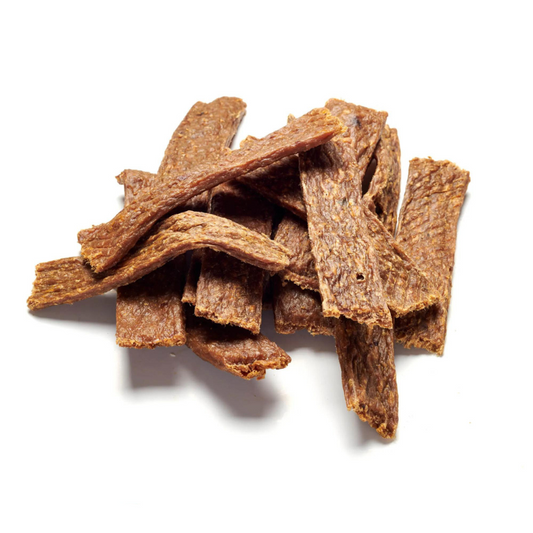
| Meat strips, e.g. chicken or rabbit | medium | longer chewing fun, easy to portion |
| Rabbit ears without fur | medium | small, light and lean |
| Ear strips | medium | handy size for small and medium-sized puppies |
A popular classic is Beef udder (puppy sticks), which is particularly suitable for young dogs thanks to its soft texture. For small rewards in between, Chicken meat cubes soft are handy. You'll find more soft varieties in our soft meat cubes category.
What to look out for when buying
- Natural ingredients: Ideally single-protein snacks without sugar, flavourings or preservatives.
- The right size: The chew should be bigger than your puppy's mouth so that it can't be swallowed whole.
- Thumbnail test: If you can easily press a dent into the surface with your fingernail, the chew is usually soft enough.
- Tolerance: Introduce new varieties one at a time and keep an eye on digestion.
You'll find a wide selection of age-appropriate snacks in our chews for puppies category.
Meat strips and ear strips for longer chewing fun:


You'll find more varieties in our meat strips category.
These chews are unsuitable for puppies
Unsuitable for teething puppies are very hard chews such as antlers, hooves, bones or hard chew plates, as well as cooked bones and anything small enough to be swallowed.
What to avoid
- Antlers and hooves: They are very hard and can damage baby teeth or emerging permanent teeth.
- Bones: Cooked bones can splinter and are generally off-limits for dogs. Raw, hard bones are also usually too firm for teething puppies.
- Hard chew plates and large chew bones: They overwhelm young teeth and are often hard to digest.
- Pieces that are too small: Take away leftover bits of chews in good time before they can be swallowed.
- Chews with fur: Better introduced later for young puppies whose digestion is still sensitive.
- Heavily seasoned or sweetened snacks: Human food and sweets have no place in a puppy's bowl.
Safety rules for chewing
- Never leave your puppy to chew unsupervised.
- Always provide fresh water.
- Give chews in calm moments rather than in exciting situations.
- Take away chewed leftovers before they get too small.
From what age can puppies have chews?
Puppies can usually have chews as soon as they've moved in with you – typically at around eight to ten weeks – provided the chews are soft, small and suitable for their age.
A guide by age
| Age (approx.) | Suitable chews |
|---|---|
| 8–12 weeks | very soft snacks, small softies, soft meat cubes |
| 3–7 months (teething) | beef udder, meat strips, rabbit ears without fur, ear strips |
| from approx. 7 months | gradually firmer chews, matched to size and chewing behaviour |
Keeping snacks and main food in balance
Puppies need a balanced puppy food for healthy growth. Chews and treats should therefore make up only a small part of the daily ration – a widely used rule of thumb is no more than about 10 percent of daily energy. Our article Puppy food explains what makes a good puppy food. Our guide Puppy training and the first reward explains when the first reward makes sense.
Small, soft rewards for puppies:


You'll find more soft rewards in our softies category.
Frequently asked questions about puppy teething
What can my puppy chew while teething?
Soft to medium-firm natural chews such as beef udder, soft meat cubes, meat strips or rabbit ears without fur are well suited. They give way when chewed and are gentle on the sensitive gums. Make sure the size matches your puppy's mouth.
From what age can puppies have chews?
Usually from when they move in at around eight to ten weeks, as long as the chews are soft and small. You should only introduce firmer chews gradually after teething. Always supervise your puppy while it chews.
Which chews are unsuitable for puppies?
Very hard chews such as antlers, hooves, hard bones and chew plates are unsuitable, as are cooked bones, which can splinter. You should also avoid pieces small enough to be swallowed and sweetened or seasoned foods.
How long does teething last in dogs?
Teething usually lasts around three to four months. It generally starts at three to four months of age and is complete by six to seven months. If baby teeth remain after that, your vet should take a look.
Is it normal for my puppy to bleed while teething?
Small traces of blood on toys or chews are normal during teething and usually harmless. If bleeding lasts longer, your puppy stops eating or seems to be in a lot of pain, you should see your vet.
Conclusion: Soft chews for teething puppies
Teething puppies have a strong urge to chew – and that's completely normal. With soft, natural chews such as beef udder, soft meat cubes, meat strips or rabbit ears without fur, you can satisfy this need sensibly while protecting your furniture and shoes. Hard chews such as antlers, hooves or bones, on the other hand, should only be introduced carefully after teething. Always supervise chewing, keep the amount of snacks within limits and have any unusual teeth checked by your vet – then your puppy will get through teething with ease.
Further articles on this topic:
- Everything about puppies: From selection to training
- Initial Puppy Equipment - What does a puppy really need?
- Chew articles for dogs: Why they're important and which ones are available
This post was created with the help of AI