
Maintaining weight in senior dogs: adjusting treats
To help a senior dog maintain its weight, you should adapt treats to its usually lower energy needs: smaller amounts, lean and soft snacks, and rewards that are firmly counted in the daily ration. Because older dogs can both gain and lose weight, regular weighing is part of it. In this article you will learn why weight changes with age, how many treats an old dog needs and which snacks are suitable.
Content: Maintaining weight in senior dogs: adjusting treats
- Why do old dogs gain or lose weight?
- How many treats does an old dog need?
- Which snacks are good for senior dogs?
- Helping a senior dog lose weight: how to do it gently
- Frequently asked questions about weight in senior dogs
- Conclusion: maintaining weight in senior dogs with adapted treats
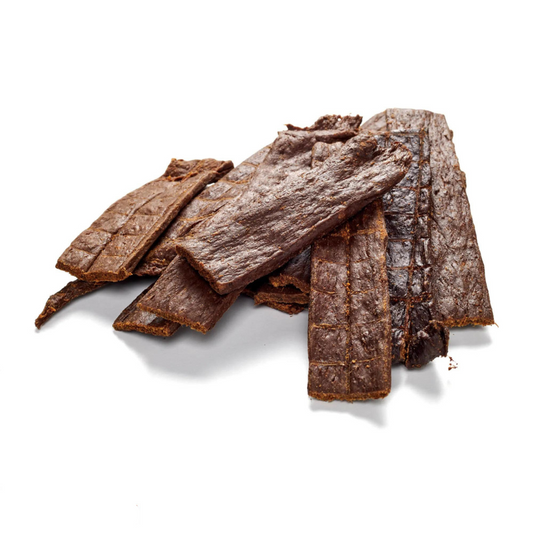
Soft, lean meat cubes for older dogs:


Why do old dogs gain or lose weight?
Old dogs often gain weight because they move less and use less energy while the amount of food stays the same. Weight loss, on the other hand, can point to dental problems, muscle loss or illness and should always be checked by a vet.
Reasons for weight gain
- Less exercise: shorter walks and more rest reduce energy consumption.
- Changing metabolism: body composition changes with age, and muscle mass often declines.
- Habitual food amounts: many dogs still get as much as they did when they were younger.
- More comfort treats: older dogs in particular are often spoiled in between.
Reasons for weight loss
- Dental problems that make chewing painful
- A declining sense of smell and taste that dampens appetite
- Muscle loss due to less activity
- Illnesses affecting the kidneys, thyroid or digestive tract, for example
If your dog loses weight unintentionally, the vet is the first point of contact. How to adapt the diet in old age in general is explained in our article Senior dogs: adjusting the diet in old age.
How many treats does an old dog need?
An old dog does not need more treats than before – usually fewer: as a guide, snacks and chews should provide at most about 10 percent of daily energy, and because seniors often use less energy, the snack budget is smaller too.
Adjusting the snack budget
When exercise decreases, calorie needs drop – and with them the amount of treats that is possible without weight gain. Our guide How many treats per day? explains how to calculate the budget. Always subtract the snack calories from the food ration.
Rewarding without calories
Not every reward has to be edible. Many older dogs enjoy calm cuddles, a kind word, a short sniffing walk along a new route or a shared ritual on the sofa. If you use these rewards deliberately, just a few treats a day are often enough. For exercises that matter to your dog – such as recall – a particularly tasty snack still remains the strongest motivation.
Check weight and body shape regularly
- Weigh every two to four weeks: small dogs fit on kitchen or baby scales; for larger dogs, weigh yourself together with your dog on the bathroom scales and subtract your own weight.
- Feel the ribs: the ribs should be palpable with light pressure but not visible.
- Check the waist: seen from above, a slight waist should be visible behind the ribs.
- Watch the muscles: if the back and hind legs become noticeably thinner, this can indicate muscle loss.
It is best to note the values with the date – that way you will also notice gradual changes.
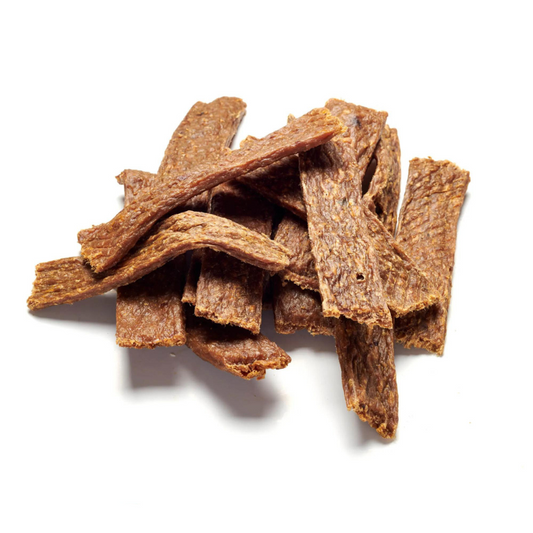
Lean meat strips for sharing:


Which snacks are good for senior dogs?
Soft or easy-to-chew, rather low-fat snacks that can be broken into small pieces are particularly suitable for senior dogs – for example softies, soft meat cubes, lean meat strips or dried lung.
Qualities of good senior snacks
- Soft or tender: gentle on sensitive teeth and gums.
- Lean: low-fat types help maintain weight.
- Easy to break: so that many small rewards fit into the budget.
- Aromatic: a strong smell motivates dogs whose noses are getting weaker.
- Known tolerance: in old age, the stomach often reacts more sensitively to new things.
You will find a suitable selection in our categories chews for old dogs and low-fat chews. The soft meat cubes and snacks such as Softies Rabbit are particularly easy to chew. If your dog has dental problems, also read our article Soft treats for old dogs.
Types of snacks for seniors compared
| Type of snack | Texture | Suitability for maintaining weight |
|---|---|---|
| Dried lung | light, crumbly | very good, little energy per piece |
| Soft meat cubes | soft | good, break into small pieces |
| Softies | soft | good, watch the amount |
| Lean meat strips | medium-firm | good, if the teeth allow it |
| Large, fatty chews | hard | only occasionally and planned in |
Plan chews deliberately
Many older dogs still enjoy chewing, and chewing can be relaxing. However, large or fatty chews provide a lot of energy at once. If you give your senior something to chew, choose smaller, lean chews that suit its teeth and count them in the daily ration. On days with a chew, the other treats are reduced accordingly. If the teeth are sensitive, soft snacks are the better choice.
Helping a senior dog lose weight: how to do it gently
An overweight senior dog should lose weight slowly and under veterinary supervision by gently reducing food and snack amounts and adding gentle exercise.
Gentle steps
- Vet check: the vet clarifies whether illness is behind the excess weight and sets a target weight.
- Weigh food precisely: measuring cups are inaccurate; kitchen scales help.
- Switch snacks: replace fatty treats with lean ones and cut large pieces small.
- Use food as a reward: part of the daily ration is ideal for sniffing games or small exercises.
- Move gently: several short walks, swimming or calm search games are easy on the joints.
Preserve muscle
When losing weight, fat should disappear, not muscle. An adequate supply of high-quality protein and regular, adapted exercise are therefore important. Calm brain work also keeps your dog busy without providing much energy – you will find ideas in our article Brain games for senior dogs.
Helping underweight seniors
If your older dog is losing weight, the opposite applies: particularly tasty, soft snacks can help stimulate appetite – but only after the vet has clarified the cause. Several smaller meals spread over the day are often easier to manage than two large ones. Slightly warmed food smells more intense and is eaten more readily by many seniors.
Light snacks with little fat:


Frequently asked questions about weight in senior dogs
How many treats does an old dog need?
An old dog does not need more treats than before, often even fewer. As a rule of thumb, snacks should provide at most about 10 percent of daily energy. Since seniors usually use less energy, the snack budget is correspondingly smaller.
Why do old dogs gain or lose weight?
Weight gain is usually caused by less exercise with the same amount of food. Weight loss can indicate dental problems, muscle loss or illness and should always be checked by the vet.
Which snacks are good for seniors?
Soft or easy-to-chew, lean snacks such as dried lung, soft meat cubes, softies or lean meat strips are well suited. They are easy to break and gentle on the teeth.
How often should I weigh my senior dog?
Every two to four weeks is a good rhythm. That way you will notice changes early. The rib test also helps you assess body shape.
What should I do if my old dog no longer wants to eat treats?
If appetite decreases, toothache or other illnesses may be behind it. Have your dog examined by the vet. Very aromatic, soft snacks are often accepted more readily.
Conclusion: maintaining weight in senior dogs with adapted treats
To help your senior dog maintain its weight, adapt treats to its changed needs: smaller amounts, lean and soft types, small pieces and firm planning within the daily ration. Regular weighing and the rib test show you early on whether your dog is gaining or losing weight. Unintended changes need a vet. That way treats remain what they should be in old age too: a small pleasure that does your dog good. You will also find many easy-to-chew snacks in our category Softies, for example Training Softies Fish.
Further reading on this topic:
- Obesity and weight management in dogs
- Low-fat chews for dogs with obesity & pancreatitis
- Brain games for senior dogs: a fit mind with snacks
This post was created with the help of AI