
Brain games for senior dogs: a fit mind with snacks
Brain games for senior dogs keep the mind fit: calm search and puzzle games with small, soft snacks challenge the nose and brain without straining the joints. Just a few minutes a day bring variety to your older dog's everyday life and strengthen your bond. In this article you will learn which games are suitable for seniors, how to build them up and which snacks fit in.
Content: Brain games for senior dogs: a fit mind with snacks
- Why are brain games important for senior dogs?
- Does brain work help against dementia in dogs?
- Which games are suitable for senior dogs?
- The right snacks for brain games in old age
- Adapting brain games to your senior dog's needs
- Frequently asked questions about brain games for senior dogs
- Conclusion: brain games keep senior dogs mentally fit
Soft snacks that are easy to break for search games:


Why are brain games important for senior dogs?
Brain games are important for senior dogs because mental activity enriches everyday life, prevents boredom and keeps the dog busy even when long walks are no longer possible. Playing together also brings a sense of achievement and closeness.
What changes with age
As they get older, many dogs become calmer, sleep more and take shorter walks. Sight and hearing may decline, but the nose usually stays efficient for a long time. That is exactly what makes nose and brain games so valuable: they use a strength your dog keeps for a long time.
Benefits at a glance
- Mental stimulation without physical overload
- A sense of achievement that builds confidence
- Structure in the daily routine through small, regular rituals
- Time together that strengthens your bond
- A chance to observe: you notice early if something changes
Does brain work help against dementia in dogs?
Brain work cannot prevent or cure dementia in dogs, but regular mental stimulation is considered a sensible building block for keeping older dogs active and supporting their quality of life. Diagnosis and treatment belong in the hands of the vet.
Signs you should take seriously
So-called canine cognitive dysfunction shows, for example, through disorientation, a changed sleep-wake rhythm, restlessness at night, declining house-training or changes in social behaviour. If you notice such signs, talk to your vet. They can rule out other causes and advise you on treatment options.
What brain work can achieve
New, simple tasks, variety and shared activities encourage curiosity and attention. It is important that the games are fun and not frustrating. You will find more general ideas for keeping your dog busy in the article Activities for dogs: how to keep your dog mentally fit.
Which games are suitable for senior dogs?
Calm nose and brain games that work standing or lying down, are short and can easily be adapted to eyesight, hearing and mobility are particularly suitable for senior dogs.
Five game ideas for older dogs
- Shell game: place a snack under one of three upturned cups. Your dog shows with its nose or paw where it thinks the snack is.
- Snuffle mat: hide small pieces of snack between the fabric strips. Our article Filling a snuffle mat explains how to fill it.
- Food trail: lay a short trail of small bites on a non-slip floor.
- Towel roll: roll snacks into an old towel that your dog unrolls with its nose.
- Food toy: fill a chew toy with soft snacks. You will find ideas in the article How to fill a Kong.
Tips for a successful start
- Keep it short: three to five minutes are often quite enough.
- Start easy: the first rounds should be sure to succeed.
- Non-slip surface: a rug gives older dogs a secure footing.
- Quiet surroundings: few distractions help with concentration.
- Stop on a high: better short and successful than long and exhausting.
How to build up the shell game
- One cup: place a snack visibly under an upturned cup and praise as soon as your dog sniffs or nudges it.
- Two cups: the snack is under only one. Lift the right cup when your dog indicates it.
- Three cups: only increase the difficulty when the previous level works reliably.
- Hide it out of sight: later you can hide the snack while your dog is not watching – now only the nose is at work.
Soft meat cubes for nose games:


The right snacks for brain games in old age
Small, soft and aromatic snacks that are easy to break and easy to chew even with sensitive teeth are ideal for brain games in old age.
What matters
- Soft: softies and soft meat cubes are gentle on teeth and gums.
- Easy to break into small pieces: so your dog gets many successes with few calories.
- Intense smell: aromatic snacks such as Softies Wild Potato are easier to sniff out.
- Well tolerated: use types your dog knows and tolerates well.
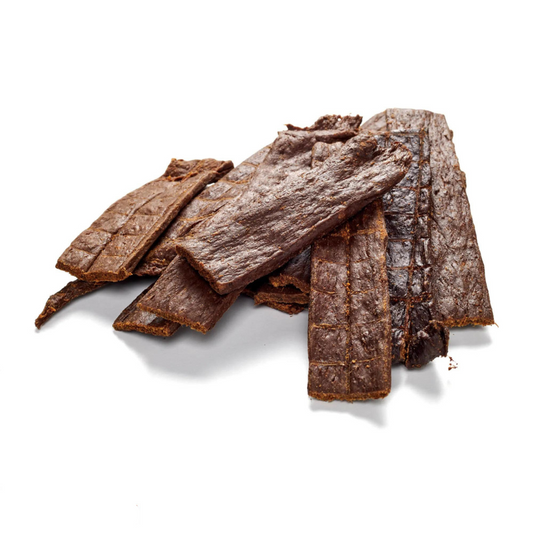
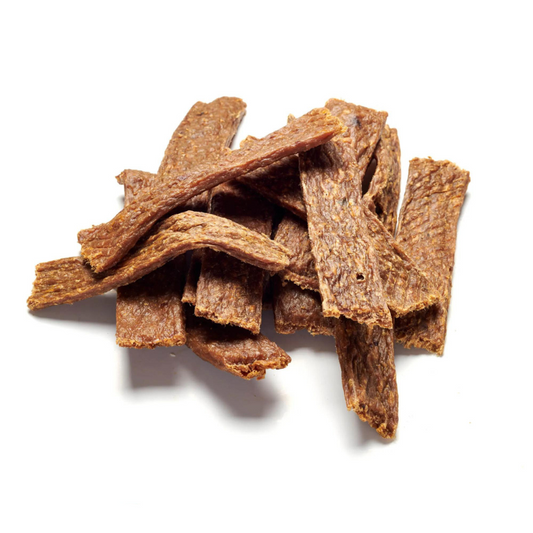
You will find suitable snacks in our categories Softies, soft meat cubes and chews for old dogs. Lean rabbit meat strips can also be pulled into small pieces.
Plan snacks into the daily budget
Snacks used for brain games also count towards the daily energy intake. Many older dogs move less and gain weight more easily. So use small pieces, subtract the snacks from the food ration or use part of the normal food as a reward. You can read more about this in our article Maintaining weight in senior dogs.
Adapting brain games to your senior dog's needs
Brain games for senior dogs work best when you adapt difficulty, duration and procedure to your dog's senses, mobility and how it feels on the day.
Adjustments for special needs
| Situation | Adjustment |
|---|---|
| Declining eyesight | stronger-smelling snacks, games on familiar surfaces |
| Declining hearing | use hand signals instead of verbal cues |
| Joint problems | games lying down, snacks at nose height, non-slip floor |
| Tiring quickly | shorter sessions, but more often a day |
| Sensitive teeth | use soft snacks only |
A simple weekly plan
Variety keeps interest alive. For example, you could use the snuffle mat on Mondays and Thursdays, practise the shell game on Tuesdays and Fridays, lay a short food trail in the garden or flat on Wednesdays and fill a food toy at the weekend. A rest day each week does no harm. What matters is not the perfect plan, but that the sessions suit your dog and your everyday life.
Watch for signals
Yawning, turning away, panting or waning interest show that your dog needs a break. Then end the game with an easy task that is sure to succeed. If your dog suddenly shows much less interest or seems confused, have it examined by the vet.
Mild softies for sensitive seniors:


Frequently asked questions about brain games for senior dogs
How do I keep an old dog busy?
With short, calm nose and brain games such as the shell game, a snuffle mat or food trails. Several short sessions a day are better than one long one. It is important that the tasks succeed and are fun.
Does brain work help against dementia?
Brain work cannot prevent or cure dementia, but regular mental stimulation is considered a helpful part of an active everyday life for older dogs. If you notice signs such as disorientation or restlessness at night, you should ask your vet.
Which games are suitable for seniors?
Games that require little physical effort are suitable: search games, snuffle mats, shell games, towel rolls or filled food toys. Adapt the difficulty to eyesight, hearing and mobility.
How long should a brain game session last?
For senior dogs, three to five minutes per session are often enough. It is better to play briefly several times a day and stop while your dog is still motivated.
Which snacks are suitable for brain games with old dogs?
Small, soft and aromatic snacks such as softies or soft meat cubes work best. They are easy to chew, easy to sniff out and can be divided into many small rewards.
Conclusion: brain games keep senior dogs mentally fit
Brain games for senior dogs are a simple and effective way to challenge older dogs mentally without overloading their bodies. Short search and puzzle games with small, soft snacks bring variety, a sense of achievement and time together. Adapt the games to your dog's needs, pay attention to its signals and plan the snacks into the daily ration. If you notice changes in behaviour, the vet is the right person to contact. That way your senior stays curious and content – day after day.
Further reading on this topic:
- Scent work for beginners: searching for food in the garden
- Soft treats for old dogs with dental problems
- 10 intelligence toys for dogs
This post was created with the help of AI