Goat Horns and Goat Scalp: Long-Lasting Chews
Goat scalp for dogs and goat horns are among the longest-lasting natural chews made from goat. Goat scalp is tough, low in fat and well tolerated by many dogs, while goat horn is extremely hard and keeps strong chewers busy for a particularly long time. In this post, you will learn how the two differ, how long they last and how to feed them safely.
Content: Goat Horns and Goat Scalp: Long-Lasting Chews
- What are goat horns and goat scalp?
- Is goat scalp good for dogs?
- How long does a goat chew last?
- Are goat horns safe? How to feed them correctly
- Goat scalp for dogs: which option suits?
- Frequently asked questions about goat chews
- Conclusion: goat scalp and goat horn for persistent chewers
Long-lasting goat chews for your dog:


What are goat horns and goat scalp?
Goat horns and goat scalp are dried natural products from the goat, sold as single-ingredient feed without additives. Both make use of parts of the animal that would often go to waste, and they give your dog a species-appropriate way to chew.
Goat scalp
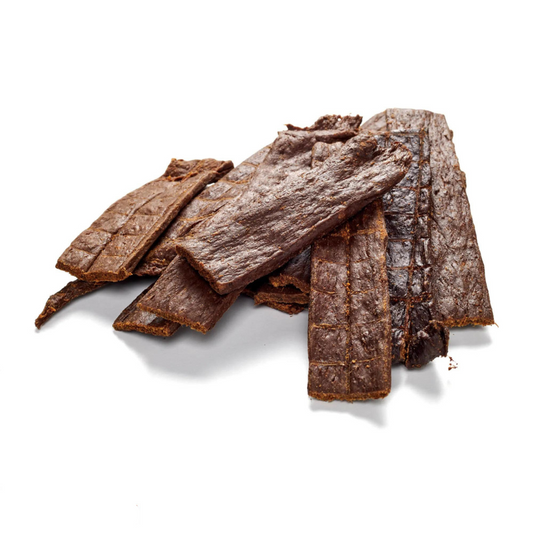
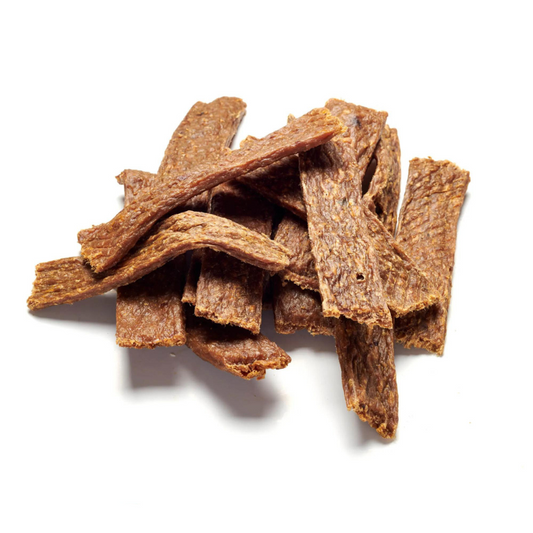
The goat’s scalp is cleaned, processed without fur and gently dried. It is firm, tough and fibrous – your dog has to work on it with the back teeth and therefore chews longer than on a soft treat. It is available as flat pieces, rolled or as a bar. Our goat scalp is the classic version.
Goat horn
Goat horn is the hardest chew made from goat. The horn sheath consists mainly of keratin and is scraped away slowly. According to the product information, the horn is particularly rich in minerals and low in fat. It is best suited to medium-sized and large dogs with a strong urge to chew. You will find an overview of all goat products in the goat category.
Is goat scalp good for dogs?
Yes, goat scalp is a good chew for most healthy dogs: it provides plenty of protein, is fairly low in fat and its tough texture encourages extended chewing.
The benefits at a glance
- Long-lasting activity: the fibrous skin is broken down slowly, and rolled versions last even longer.
- Support for dental care: the mechanical abrasion while chewing can help reduce soft plaque. It does not replace brushing.
- Good tolerance: goat is fed less often than beef or chicken. For many dogs with food intolerances it is therefore a possible alternative – find out more in our hypoallergenic chews category.
- Natural origin: a single ingredient, without preservatives, colourings or sugar.
What to keep in mind
Goat scalp is an energy-rich snack. It therefore counts towards the daily treat allowance and should be considered when portioning your dog’s food. Introduce a new chew slowly to dogs with sensitive stomachs. If your dog has a diagnosed allergy, it is best to discuss the choice with your vet. To find out why goat is also interesting as a meat snack, read our post goat meat for dogs.
How long does a goat chew last?
How long a goat chew lasts depends mainly on its hardness, its size and your dog’s chewing style: a goat horn keeps many dogs busy over several chewing sessions, while a flat piece of goat scalp is usually finished in one session.
Guide values for chewing time
- Goat horn: very long – often several days if you take it away after each chewing session.
- Rolled goat scalp (30 cm) and scalp bar: long – ideal for an extended chewing break.
- Goat scalp, flat or mini: medium – good for smaller dogs or as an activity in between.
A thorough chewer who scrapes slowly will enjoy a chew much longer than a dog that bites off large pieces. How long a chewing session should ideally last is explained in our guide chewing time by age.
How to make the chewing fun last longer
- Choose a size your dog cannot fit completely into its mouth.
- Offer the chew in a calm environment.
- End the chewing session after about 15 to 30 minutes and store the rest in a dry place.
You will find many more long-lasting chews in the chewing fun category.
Rolled goat skin for long-lasting chewing:


Are goat horns safe? How to feed them correctly
Goat horns are safe if they match your dog’s size and chewing behaviour and you supervise your dog while it chews. As with any hard chew, there are limits you should know about.
Which dogs goat horn suits
- adult, medium-sized to large dogs with healthy teeth
- dogs that love to scrape and gnaw for a long time
- dogs that need a low-fat alternative to chew bones
When to choose softer options instead
- for puppies changing their teeth and for seniors with sensitive teeth
- for dogs with dental problems or after dental treatment
- for dogs that gulp greedily and break off large pieces
Safety rules for chewing
- Stay close by while your dog is chewing.
- Take away small leftover pieces before they can be swallowed.
- Always provide fresh water.
- Check the chew regularly for sharp edges.
You will find detailed tips on safe chewing in the post safety rules for chews. For very strong chewers, our guide chews for large dogs is also worth a look. You can buy the goat horn individually, so you can try it out at your leisure.
Goat scalp for dogs: which option suits?
Which goat scalp suits your dog depends on its size and chewing needs: small dogs get on well with mini rolls, while strong chewers benefit from long rolls or the scalp bar.
| Option | Hardness | Chewing time | Suits |
|---|---|---|---|
| Goat horn | very hard | very long | medium-sized to large, strong chewers |
| Rolled goat scalp, 30 cm | firm | long | medium-sized to large dogs |
| Goat scalp bar | firm | long | persistent chewers |
| Rolled goat scalp, mini | firm | medium | small dogs |
| Goat scalp, flat | tough | medium | dogs of all sizes |
Combining with other goat chews
If your dog tolerates goat well, you can combine the chews for variety – for example with hooves, lower legs or ears. Versions with fur from the chews with fur category add extra fibre. For longer chewing breaks, the goat scalp bar is a good choice. You will find more parts from head to toe in the from head to toe category.
More goat chews:


Frequently asked questions about goat chews
Is goat scalp good for dogs?
Yes, for most healthy dogs goat scalp is a protein-rich, fairly low-fat chew that lasts a long time. Because goat is fed less often than beef or chicken, many sensitive dogs tolerate it well. Like any snack, it counts towards the daily energy intake.
How long does a goat chew last?
That depends on the type and the chewing style. A goat horn can last for several chewing sessions, and rolled scalp keeps many dogs busy for an extended chewing break. Flat or mini pieces are usually finished in one session.
Are goat horns safe?
Goat horns are safe if they match your dog’s size and you supervise your dog while it chews. Take small leftover pieces away in good time. For puppies, seniors and dogs with dental problems, softer options are the better choice.
From what age can my dog chew goat scalp?
Young dogs can have softer pieces of goat scalp in a suitable size once their adult teeth are in. The very hard goat horn is better suited to adult dogs. If in doubt, ask your vet.
How do I store goat chews correctly?
Keep the chews in a cool, dry and well-ventilated place, ideally in a paper bag or a breathable container. You can let partly chewed leftovers dry and offer them again later, as long as they have not become too small.
Conclusion: goat scalp and goat horn for persistent chewers
Goat scalp for dogs and goat horns are natural chews that last a long time and are well tolerated by many dogs. Thanks to its different sizes, the tough scalp suits almost every dog, while the hard horn is ideal for strong adult chewers. With the right size, calm chewing sessions and supervision, they become a safe, relaxing activity. If your dog has allergies or dental problems, your vet is the right person to ask.
Further reading on this topic:
- Beef scalp and beef hide: chews compared
- Chews for dogs with allergies: how to find the right ones
- Hooves and feet as chews: what to look out for
This post was created with the help of AI