
Camel Chews for Dogs: Camel Skin and Camel Ears
Camel chews such as camel skin and camel ears are an exotic alternative to beef and pork for dogs: they come from just one animal species, are usually firm and long-lasting and are therefore an option for many sensitive dogs and dogs with allergies. Camel skin is one of the harder chews, while camel ears are somewhat easier. Here you will learn which camel chews are available and which dogs they are suitable for.
Content: Camel Chews for Dogs: Camel Skin and Camel Ears
- What are camel chews?
- Which camel chews are there?
- How hard is camel skin?
- Are camel chews good for dogs with allergies?
- Frequently asked questions about camel chews
- Conclusion: camel chews as an exotic alternative
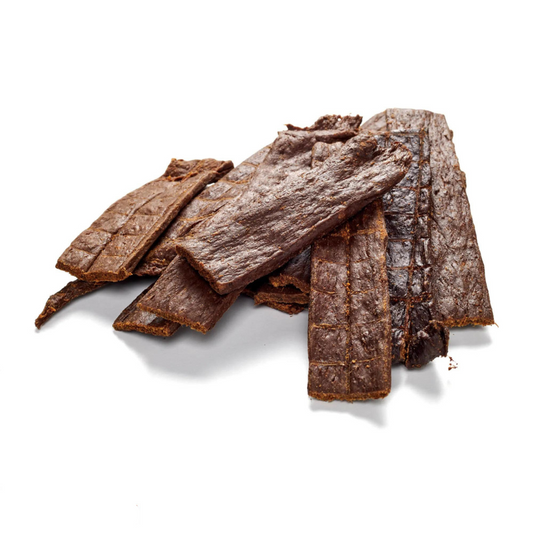
Camel skin in different shapes and degrees of hardness:


What are camel chews?
Camel chews are dried parts of the camel – mainly skin, scalp, ears and noses – that are offered as a natural single-ingredient feed without additives.
Why camel as a chew?
Camel is a rather unusual type of meat in Europe. That is exactly what makes camel chews interesting for dogs that react sensitively to frequently fed protein sources such as beef, chicken or pork. In addition, camel skin is very firm and offers long-lasting chewing fun. If you are interested in camel as a meat snack, you will find everything you need to know in the article Camel meat for dogs. This article, by contrast, is about chews made from skin and ears.
Recognising quality in camel chews
A good camel chew consists of 100 % camel and contains no chemical additives, flavourings, colourings or preservatives. The surface should be dry and the smell typical, but not musty or rancid. Slight differences in colour, shape and size are normal for natural products and not a quality defect. Also make sure that skin chews are thoroughly dried: damp patches or a whitish, furry coating are a warning sign. Store camel skin in a cool, dry and airy place so that it stays fresh for a long time. Because many camel chews are very long-lasting, it is worth putting chewed pieces away after chewing and offering them again the next day.
Exotic chews at a glance
Besides camel, kangaroo, ostrich or buffalo, for example, are among the more exotic varieties. You will find a selection in the kangaroo and ostrich categories. How lean kangaroo meat is, is explained in our article Kangaroo meat for dogs.
Which camel chews are there?
Camel chews are mainly made from skin and scalp in various shapes, plus camel ears, camel noses and smaller meat snacks.
| Camel chew | Texture | Chewing time | Suitable for |
|---|---|---|---|
| Camel scalp, short | hard | long | medium-sized to large dogs |
| Camel scalp, rolled | very firm | long | keen chewers |
| Braided camel skin | tough | long | dogs that like to chew for longer |
| Camel skin plate | hard, needs to be chewed soft | long | large, strong chewers |
| Camel scalp stick (approx. 75 cm) | firm | extra long | medium-sized to large dogs |
| Camel noses | hard | long | experienced chewers |
| Camel ears | firm | medium to long | many dogs, depending on size |
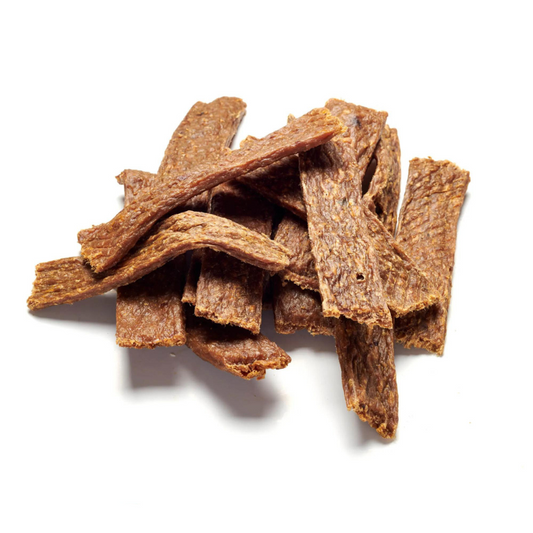
| Meat cubes and meat strips | medium | short | training, rewards |
Camel skin in many shapes
Camel skin is offered rolled, braided, as a plate or as a long stick. Rolling or braiding creates additional resistance, so your dog stays busy for longer. The rolled camel scalp is a good start for dogs that already have experience with firm chews.
Camel ears
Camel ears have a firm structure and offer long-lasting chewing fun. Depending on the season and availability, they are not always in stock – short pieces of camel scalp or other ears from the ears category are a good alternative.
How hard is camel skin?
Camel skin is very hard and tough and is therefore one of the long-lasting chews – it is similar in firmness to beef scalp and better suited to adult dogs with healthy teeth.
Hardness compared
- Camel skin plate: very firm, needs to be chewed soft first – ideal for large, keen chewers.
- Rolled camel scalp and sticks: firm and compact, long-lasting chewing fun.
- Braided camel skin: tough, with varied chewing thanks to the braid.
- Camel ears: firm, but somewhat easier to manage.
- Rolled camel scalp mini: slimmer version for smaller dogs.
You can read a detailed comparison with beef scalp in the article Beef scalp and beef hide. You will find more particularly firm chews in the chewing plates category.
Chewing safely
- Choose the right size: The chew should be considerably larger than your dog’s mouth.
- Supervision: Stay nearby, especially with new or very hard chews.
- Remove leftovers: Take away small, softened end pieces before your dog swallows them whole.
- Provide water: Long chewing sessions make dogs thirsty.
- Watch the teeth: If your dog has dental problems, check with your vet which hardness is suitable.
Long-lasting chewing fun from camel:


Are camel chews good for dogs with allergies?
Camel chews are a good option for many dogs with allergies, because camel is a rare protein source that most dogs have had no contact with so far. However, there is no guarantee that they will be tolerated.
Camel and food allergies
For food allergies, an elimination diet with a new protein source is often recommended. Camel can be an option for this, provided that all chews and snacks consist exclusively of camel. Always coordinate such a diet with your vet. Our guide Chews for dogs with allergies gives you helpful tips on choosing.
What to look out for
- 100 % camel: Look for pure chews without other types of meat.
- Start slowly: Give a small piece first and watch skin, coat and digestion.
- Note the fat content: According to the product information, the crude fat content of camel chews is roughly between 3 and 9 %, depending on the product.
- Include the calories: Large skin plates and long sticks provide quite a few calories.
You will find many more varieties for sensitive dogs in the hypoallergenic chews category.
Camel for smaller dogs and as a reward:


Frequently asked questions about camel chews
Are camel chews good for dogs with allergies?
For many dogs with allergies, yes, because camel is a rare protein source. What matters is that the chew consists only of camel and that your dog has had no contact with it before. An allergy should always be clarified by a vet.
Which camel chews are there?
There is short and rolled camel scalp, braided camel skin, camel skin plates, long scalp sticks, camel noses and camel ears. In addition, there are smaller snacks such as meat cubes and meat strips.
How hard is camel skin?
Camel skin is very firm and tough, comparable to beef scalp. It is mainly suitable for adult dogs with healthy teeth and a strong urge to chew. Slimmer mini versions are available for smaller dogs.
Which dogs are camel ears suitable for?
Camel ears are suitable for many medium-sized and large dogs that like to chew for a long time. Small dogs often cope better with smaller or thinner chews.
How often can my dog chew camel skin?
That depends on your dog’s size, weight and activity. Include large pieces in the daily ration – for many dogs, two to three larger chews a week are a good guideline.
Conclusion: camel chews as an exotic alternative
Camel chews such as camel skin and camel ears are an exciting alternative to classic varieties: they come from a rare protein source, are firm and long-lasting and are therefore an option for many sensitive dogs and dogs with allergies. Camel skin is very hard and is best suited to adult, strong chewers, while mini versions also offer smaller dogs plenty of chewing fun. Choose the right size, supervise chewing time and coordinate allergy diets with your vet. You will find the whole range in our camel category, for example the extra-long rolled camel scalp, long.
Further reading on this topic:
- Camel meat for dogs
- Single protein snacks: treats with just one type of meat
- Chews for dogs with allergies: how to find the right ones
This post was created with the help of AI