Kangaroo meat for dogs: lean and allergy-friendly
Kangaroo meat for dogs is lean, rich in protein and a completely new protein source for most dogs in Europe. That's why it is especially popular for food allergies, intolerances and elimination diets. In this guide, you'll learn what makes kangaroo special as a dog snack, which chews and treats are available and what to look out for when choosing them.
Content: Kangaroo meat for dogs: lean and allergy-friendly
- Is kangaroo meat good for dogs?
- Why is kangaroo popular for food allergies?
- Which kangaroo chews are available?
- How to feed kangaroo meat correctly
- Exotic alternatives to kangaroo
- Frequently asked questions about kangaroo meat for dogs
- Conclusion: kangaroo meat is a strong choice for sensitive dogs
Kangaroo meat snacks for your dog:


Is kangaroo meat good for dogs?
Yes, kangaroo meat is suitable for most dogs: it is lean, provides high-quality protein and is unknown to many dogs, so it is often well tolerated by dogs with allergies. As with any new variety, however, you should introduce it slowly.
Lean meat with plenty of protein
Kangaroos are very active wild animals. Their meat is therefore naturally lean and contains comparatively little fat. For dogs that need to watch their weight, this is an advantage, because low-fat snacks provide fewer calories. You'll find more lean varieties in the category low-fat chews.
Where kangaroo meat comes from
Kangaroo meat usually comes from Australia, where the animals live freely in the wild. The meat is obtained from wild populations, making it a genuine game meat. For you as a dog owner, this means you get a protein source that is clearly different from beef, chicken or pork.
What makes kangaroo meat special
- Novel protein: most dogs have never eaten kangaroo.
- Lean: low in fat, good for frequent small rewards.
- Intense flavour: many dogs find the game aroma very appealing.
- Versatile: available as meat pieces, training treats, sausages or chews.
Why is kangaroo popular for food allergies?
Kangaroo is popular for food allergies because for most dogs it is a so-called "novel protein" – a protein source that the immune system has not yet come into contact with and is therefore less likely to react to.
The principle of the novel protein
Food allergies are usually directed against proteins a dog has eaten frequently, such as beef or chicken. If it is given a protein source its body doesn't know instead, the likelihood of a reaction is lower. However, this is not guaranteed: in principle, a dog can be allergic to any protein.
Kangaroo in an elimination diet
In an elimination diet, your dog only gets one selected protein source for several weeks. If kangaroo is chosen, all treats must also be made from pure kangaroo. You can read how such a diet works in the guide Elimination diet for dogs with allergies. We explain what makes snacks with only one type of meat special in the article Single protein snacks. You'll find more snacks for sensitive dogs in the category hypoallergenic chews.

Which kangaroo chews are available?
Kangaroo chews and treats are available as dried meat pieces, small training treats, sausages, dog sausage and dog cigars. You'll find an overview in our category kangaroo.
Dried meat pieces
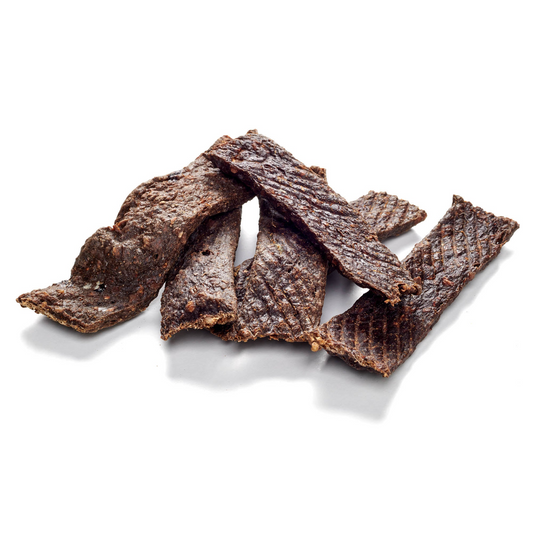
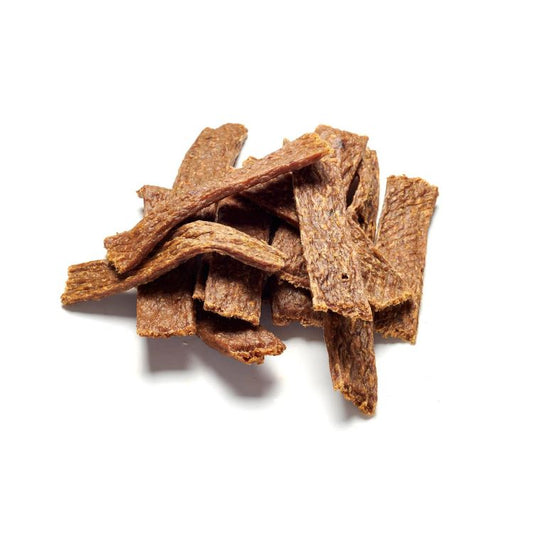
Dried kangaroo meat pieces such as the kangaroo meat pieces are the purest option. They are easy to break up and make a high-quality everyday reward.
Training treats and sausages
Small pieces that are eaten quickly are ideal for training. Sausages and dog sausage are soft and can be cut into thin slices. Please note: sausages, dog sausage and training treats may contain other ingredients besides kangaroo. For a strict elimination diet, check the composition in the product description carefully.
Dog cigars with kangaroo
Dog cigars are rolled chews with a filling and offer longer-lasting chewing fun. The same applies here: the casing can be made from a different animal species than the filling. So if your dog has allergies, read what the cigar is made of before buying.
More chewing fun with kangaroo and camel:


How to feed kangaroo meat correctly
It's best to feed kangaroo meat as a small, targeted reward, introduce it slowly and count the snacks as part of the daily food ration.
How to introduce kangaroo
- Small amount: start with one or two pieces a day.
- Observe: over the next few days, watch stools, skin and itching.
- Increase: if your dog tolerates the meat well, you can slowly increase the amount.
- Coordinate in case of allergies: talk to your vet before giving new snacks during a diet.
The right amount
Even lean snacks contain calories. As a rule of thumb, treats and chews together should make up no more than about 10 percent of the daily energy intake. Only give chews under supervision and always provide fresh water.
Kangaroo in dog training
Because kangaroo meat has an intense aroma, it is a particularly valuable reward for many dogs. You can use it specifically for difficult exercises, such as recall, distractions or training around other dogs. Cut the pieces very small – pea-sized is perfectly sufficient. That way, you can reward often without the daily ration becoming too large. For easy exercises, part of the normal food is enough.
Storing it correctly
It's best to store dried kangaroo snacks in a cool, dry, dark place in a container that seals well. This preserves aroma and quality. Soft snacks such as sausages should be used up quickly after opening, following the instructions on the packaging. Briefly check the smell and appearance before feeding – if a snack smells unusual or shows mould, throw it away.
Exotic alternatives to kangaroo
If your dog doesn't like kangaroo or you're looking for variety, camel and ostrich are good exotic alternatives. They too are new protein sources for many dogs and comparatively lean.
Camel and ostrich
Camel meat is lean and also popular with allergy sufferers – you'll find all the details in the article Camel meat for dogs. The category camel also includes chews such as camel ears. Ostrich meat is another option; read more in the guide Ostrich meat for dogs and in the category ostrich.
| Type of meat | Fat content (tendency) | New for many dogs? |
|---|---|---|
| Kangaroo | low | yes |
| Camel | low | yes |
| Ostrich | low | yes |
| Rabbit | low | partly |
| Beef, chicken | varies | no |
Exotic alternatives for variety:


Frequently asked questions about kangaroo meat for dogs
Is kangaroo meat good for dogs?
Yes, kangaroo meat is lean, rich in protein and well tolerated by most dogs. Because it is a new protein source for many dogs, it is especially suitable for dogs with allergies or sensitive digestion. Introduce it slowly, as you would any new variety.
Why is kangaroo popular for food allergies?
For most dogs, kangaroo is a "novel protein", meaning a protein source the body doesn't know yet. This makes an allergic reaction less likely than with commonly fed varieties such as beef or chicken. However, there is no guarantee.
Which kangaroo chews are available?
There are dried meat pieces, training treats, sausages, dog sausage and dog cigars with kangaroo. If your dog has allergies, check the composition, as some products may contain other ingredients.
Is kangaroo meat suitable for puppies?
Puppies can have small amounts of kangaroo snacks if they tolerate them well. Small, soft pieces and a balanced puppy food as the basis are important. If you're unsure, ask your vet.
How often can my dog have kangaroo snacks?
You can give kangaroo snacks as a reward every day, as long as all treats together make up no more than about 10 percent of the daily energy intake and your dog tolerates them well.
Conclusion: kangaroo meat is a strong choice for sensitive dogs
Kangaroo meat for dogs is lean, rich in protein and a new protein source for most dogs. This makes it a good choice for food allergies, intolerances or elimination diets. Check the composition of sausages and cigars, introduce kangaroo slowly and ask your vet for advice if your dog has allergies. You'll find a selection of snacks in our category kangaroo.
Further reading on this topic:
This post was created with the help of AI