
Goat Meat for Dogs: The Underrated Protein Source
Goat meat for dogs is a protein-rich and often well-tolerated protein source that rarely appears in conventional dog food. That is exactly why goat is interesting for many dogs with sensitive stomachs and for dogs with food allergies. Here you will learn what makes goat meat special, which goat chews are available and how to find the right one for your dog.
Content: Goat Meat for Dogs: The Underrated Protein Source
- Is goat meat good for dogs?
- Is goat suitable for dogs with food allergies?
- Which goat chews are available?
- Goat meat for dogs: fat content of the chews compared
- Frequently asked questions about goat meat for dogs
- Conclusion: goat meat for dogs – versatile and well tolerated
Goat meat snacks for training and everyday life:


Is goat meat good for dogs?
Yes, goat meat is well suited to dogs: it provides plenty of high-quality protein, is fairly lean as muscle meat and is well tolerated by many dogs – including sensitive ones.
The benefits at a glance
- High in protein: According to the product information, dried goat snacks often contain around 58 to 74% crude protein.
- Rare protein source: Goat is found in only a few standard foods, so many dogs have never come into contact with it.
- Wide range: From meat cubes to ears and tripe to braided skin, almost the whole animal is used.
- Single protein: Many goat chews are made from 100% goat.
- Strong flavour: Goat smells and tastes more intense than poultry – most dogs love it.
What is in goat meat?
Besides protein, goat meat also provides minerals such as iron and zinc as well as B vitamins – just like other types of meat. Goat muscle meat is considered rather lean compared with lamb or pork. With dried chews, however, the fat content depends heavily on the body part: ears and tripe are lean, while skin and scalp are considerably richer. Your dog still needs a balanced main food for complete nutrition – goat snacks are a supplement, not a replacement.
Where does goat meat come from?
Worldwide, goats are mainly kept for milk and meat. Chews are made from parts that are left over from food production and would otherwise go unused – such as ears, skin, tripe or hooves. When buying, look for a clear statement of the animal species and a transparent composition.
You can find the full range in our category Goat for dogs.
Is goat suitable for dogs with food allergies?
Goat is often a good choice for dogs with food allergies, because allergies usually develop to proteins the dog has already eaten frequently – and for most dogs, goat is not one of them.
Goat meat as a “novel” protein source
Typical triggers of food allergies are commonly used protein sources such as beef, chicken or dairy products. For an exclusion or elimination diet, you therefore choose a protein source your dog has not eaten before. Goat is a candidate for this. Our article Elimination diet for dogs with allergies explains how such a diet works.
What matters during an elimination diet
- Diagnosis with your vet: Itching, ear infections or diarrhoea can have many causes. Have the symptoms checked by a vet.
- Stay consistent: During the diet, treats must also consist only of the chosen protein source.
- Check the composition: Look for “100% goat” – snacks with additives or mixtures are unsuitable during the diet.
- Be patient: An elimination diet usually takes several weeks.
You can read about the signs that point to an allergy in our guide Allergy in dogs. You will find more suitable products under hypoallergenic chews.
Which goat chews are available?
For dogs, goat comes as meat snacks, ears, noses, scalp, braided skin, tripe, lung, hooves and tendons – from quick rewards to longer-lasting chews.
Meat snacks and training treats
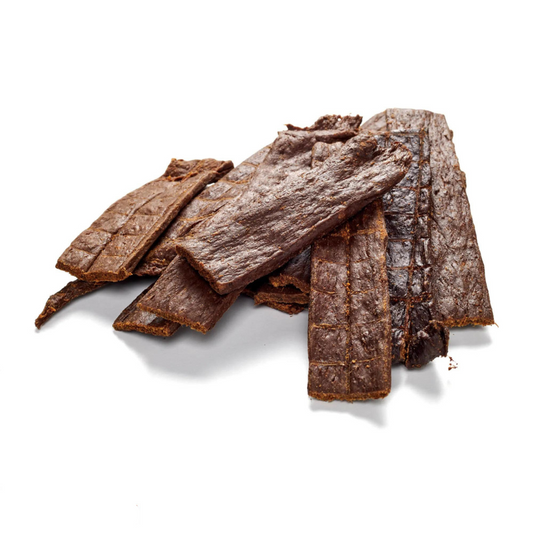
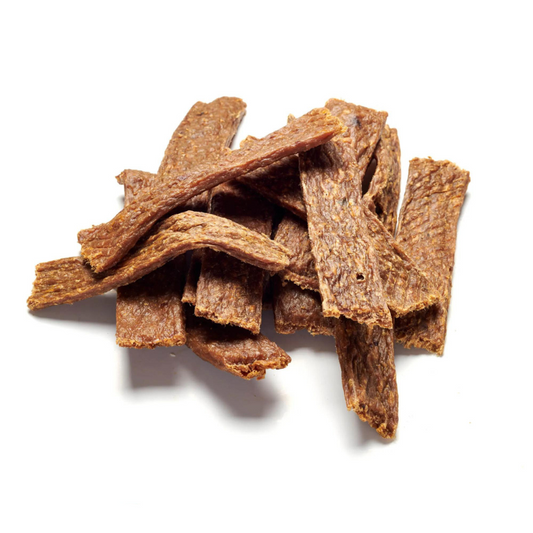
According to the product information, the goat meat cubes are made from 100% goat and have a fairly low fat content. For training there are the small goat training snacks made from 96% goat and 4% tapioca, and the goat dog sausage can be cut into thin slices.
Chews for longer chewing fun
- Goat ears: Cartilaginous, medium-hard and with medium chewing time – also available with fur.
- Scalp and skin: Rolled or braided for longer chewing, but considerably higher in fat.
- Tripe and lung: Offal with a strong smell and short chewing time. Find out more in the article Dried lung, tripe & co.
- Hooves and tendons: Hard and tough for persistent chewers.
Goat chews by dog size
Small dogs usually cope well with goat ears, lung cubes or training snacks, as these are light and easy to portion. Medium-sized dogs will also enjoy tripe or rolled scalp. Large dogs and persistent chewers can also have braided skin or hooves. Always choose chews large enough that your dog cannot swallow them whole, and take away small leftover pieces in good time.
You can find more offal snacks in the category Offal and chews with fur under Chews with fur.
Goat ears and skin for chewing:


Goat meat for dogs: fat content of the chews compared
The fat content of goat chews varies widely: at around 6% crude fat, ears and tripe are very lean, while braided skin and scalp are considerably higher at around 31%.
According to the product information, goat tripe contains approx. 6%, goat ears approx. 6%, goat meat cubes approx. 11%, the goat training snacks approx. 13%, goat lung cubes approx. 19%, goat ears with fur approx. 22% and braided goat skin approx. 31% crude fat. As these are natural products, the values vary slightly.

Which type suits your dog?
| Need | Suitable goat chews |
|---|---|
| Overweight or low-fat diet | Goat ears without fur, goat tripe, goat meat cubes |
| Training | Goat training snacks, goat lung cubes |
| Long-lasting chewing | Braided goat skin, rolled scalp, hooves |
| Small or older dogs | Goat lung cubes, goat ears |
Lean alternatives from all animal species can be found in the category low-fat chews. Our article Chew ears for dogs gives an overview of ears from different animals.
Feeding it right
Introduce goat slowly, only give chews under supervision and provide fresh water. All snacks together should make up no more than about 10 percent of the daily energy intake. Plan particularly high-fat chews such as the braided goat skin as an occasional treat.
Goat offal and long-lasting chews:


Frequently asked questions about goat meat for dogs
Is goat meat good for dogs?
Yes, goat meat is high in protein, fairly lean as muscle meat and well tolerated by many dogs. Dried goat snacks and chews are a varied addition to the main food.
Is goat suitable for dogs with food allergies?
Often yes, because goat is a novel protein source for most dogs. During an elimination diet, all snacks should be made from 100% goat. It is best to discuss the diagnosis and the procedure with your vet.
Which goat chews are available?
There are meat cubes, training snacks and dog sausage as well as ears, noses, scalp, braided skin, tripe, lung, hooves and tendons. This way you will find a suitable type for every dog size and every chewing need.
Can dogs eat raw goat meat?
Raw goat meat is also fed as part of a raw (BARF) diet. If you do this, make sure the meat is hygienically flawless and the rations are balanced. Dried snacks are the simpler choice for in between.
Is goat suitable for puppies?
Yes, soft or small goat snacks such as lung cubes or small training snacks are a good fit for puppies. It is better to wait until your dog has its permanent teeth before giving very hard chews such as hooves.
Do goat chews smell strongly?
That depends on the product. According to the product information, goat tripe has a strong smell, while ears and meat cubes are rather moderate. If the smell bothers you, let your dog chew offal outdoors or on a washable mat and store the snacks in a tightly closing container.
Conclusion: goat meat for dogs – versatile and well tolerated
Goat meat is an underrated protein source for dogs: high in protein, usually well tolerated and available in many forms. Goat is particularly interesting for dogs with food allergies, because it is hardly found in any standard food. Choose the type according to your dog’s needs – lean ears and tripe for weight-conscious dogs, braided skin for long-lasting chewing – and include snacks in the daily ration. If you suspect an allergy, your vet is the first person to contact.
Further reading on this topic:
- Food Allergies in Dogs
- Single protein snacks: treats with just one type of meat
- Kangaroo meat for dogs: lean and allergy-friendly
This post was created with the help of AI