
Introducing New Dog Chews: How to Test Tolerance
Introducing a new dog chew works best slowly: first give your dog just a small piece, watch it for 24 to 48 hours and only increase the amount once stools, skin and behaviour stay normal. That way you can tell early on whether the new snack agrees with your dog. In this post we show you step by step how to test new chews, which amounts make sense and which warning signs to look out for.
Content: Introducing New Dog Chews: How to Test Tolerance
- Why you should introduce new dog chews slowly
- Introducing a new dog chew: step by step
- How much should you give the first time?
- Recognising signs of intolerance
- Finding a favourite with a diary and variety
- Frequently asked questions about introducing new chews
- Conclusion: introducing new dog chews with patience
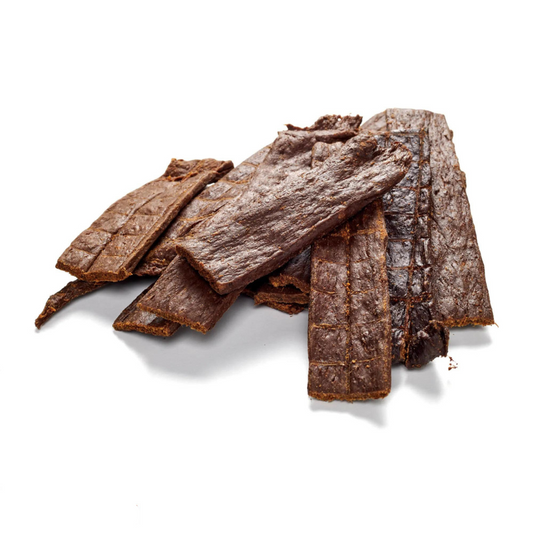
Easy-to-portion chews for the first test:


Why you should introduce new dog chews slowly
You should introduce new dog chews slowly because your dog's digestive tract first has to adapt to a new protein source, a different fat content or an unfamiliar texture.
What happens in the gut
Every snack brings its own proteins, fats and fibre. If something new arrives in a larger amount all at once, some dogs react with soft stools, gas or vomiting – even if the chew itself is of high quality. With small amounts, digestion has time to adjust.
Intolerance or simply too much?
Not every reaction is an allergy. Often the amount was too large or the snack too fatty. A genuine food intolerance or allergy, on the other hand, usually shows up repeatedly whenever the dog gets the same ingredient. That is exactly why a structured test is so helpful: it separates "too much" from "doesn't tolerate it".
New species, new texture, new production method
"New" can mean different things: an animal species your dog has never had, a harder or softer texture than usual, or a different production method, such as freeze-dried instead of air-dried. Each of these changes can briefly challenge digestion. If you only switch the size of a chew your dog already knows, a short observation is usually enough.
For whom a careful start is especially important
- Dogs with a sensitive stomach or a known food allergy
- Puppies and young dogs, whose digestion is still maturing
- Seniors and dogs with pre-existing conditions
- Dogs after a food change, whose gut is still adjusting
Our guide Changing your dog's food explains how to switch the main food gently.
Introducing a new dog chew: step by step
The safest way to introduce a new dog chew is in five steps: a small trial amount, observation, a slow increase, notes and only then the next new snack.
- Choose a calm time: Start on a day without stress, travel or a food change so you can clearly attribute any reactions.
- Test only one new item: Always try only one new chew at a time – ideally one made from a single animal species.
- Give a small trial amount: On the first day, offer a small piece, roughly a quarter to a third of the later portion.
- Observe for 24 to 48 hours: Watch stools, skin, itching, appetite and behaviour.
- Increase slowly: If everything stays normal, increase to the normal portion over a few days.
Single-protein snacks made from just one type of meat make the test especially meaningful, because you know exactly what your dog is reacting to. You can read why in Single-protein snacks. Our category hypoallergenic chews offers a large selection of well-tolerated options.
How much should you give the first time?
The first time, give only a small piece of the new chew – roughly a quarter to a third of the amount you later want to feed regularly.
Guideline by type of chew
| Type of chew | Trial amount on day one (guideline) | Note |
|---|---|---|
| Small snacks (sticks, cubes, strips) | 1–3 pieces, depending on dog size | easy to dose, ideal for starting |
| Medium-sized chews (ears, rolled scalp) | a small part, take the rest away | limit chewing time, e.g. 10–15 minutes |
| Large, hard chews (bones, chew plates) | a short chewing session under supervision | then take it away and store it |
| High-fat snacks (e.g. sausages, pig ears) | a very small amount | be careful with sensitive stomachs |
Chewing time instead of piece count
With larger chews it is easier to limit chewing time than to cut the snack up. Let your dog chew only briefly the first time, take the rest away and store it somewhere dry. Small rolled chews such as the goat scalp, rolled mini or the horse scalp, rolled mini work well for this because they are a manageable size.
Deduct snacks from the daily ration
Even while testing, chews count towards the daily snacks. As a rule of thumb, all treats together should provide no more than about 10 percent of the daily energy. Reduce the main food a little on test days if needed.
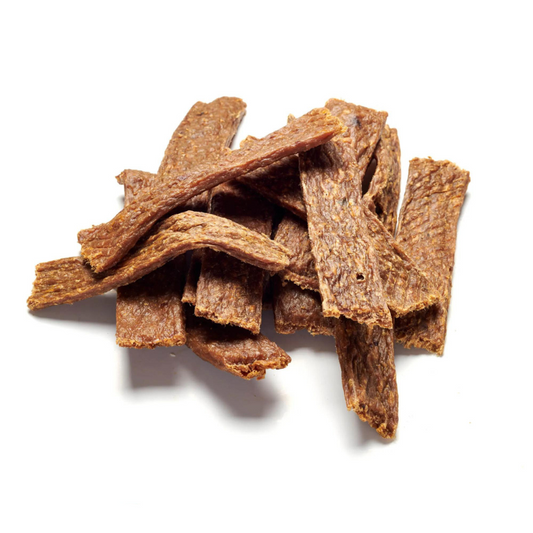
More single-species options to try:


Recognising signs of intolerance
Signs of intolerance are mainly soft stools or diarrhoea, vomiting, gas, itching, paw licking, reddened skin or noticeable restlessness after the new chew.
Typical warning signs
- Digestion: mushy stools, diarrhoea, frequent bowel movements, gas, gurgling stomach
- Stomach: vomiting, retching, eating grass, loss of appetite
- Skin: itching, scratching, paw licking, red patches, ear scratching
- Behaviour: restlessness, lip smacking, licking objects
What you should do then
- Stop the chew: Don't give the new snack again.
- Feed gently: Stick to the usual food and avoid other new items for the time being.
- Take notes: Write down what your dog had, when and how much.
- Ask your vet: If the symptoms last longer than a day, are severe or your dog seems lethargic, contact your vet promptly.
Tips on interpreting vomiting after a snack can be found in the post Dog vomiting after a chew.
Finding a favourite with a diary and variety
A simple snack diary is the quickest way to find out which chews your dog tolerates well – and then lets you add variety in a targeted way.
What goes in the diary
- Date and time
- Name of the chew and animal species
- Amount or chewing time
- Observations on stools, skin and behaviour over the following two days
Our guide Food diary for dogs offers a detailed template.
Variety with a system
Once your dog has tolerated several chews well, you can offer them in rotation. Keep testing new varieties one at a time with a few days in between. For inspiration, take a look at our category new chews, long-lasting fun under Chewing Fun and light options among the low-fat chews.
Frequently asked questions about introducing new chews
How do I introduce a new chew?
Always test only one new chew at a time, start with a small piece and observe your dog for 24 to 48 hours. If everything stays normal, increase the amount over a few days. Only then is it the next new item's turn.
How much do I give the first time?
About a quarter to a third of the later portion is enough for the test. For small snacks that means one to three pieces depending on dog size, for large chews a short chewing session under supervision.
Which signs indicate intolerance?
Typical signs are soft stools, diarrhoea, vomiting, gas, itching, paw licking or reddened skin. Stop the chew in that case and ask your vet if symptoms persist or are severe.
How long does it take for an intolerance to show?
Digestive problems often appear within hours up to about two days. Skin reactions can develop more slowly. That is why it is worth waiting a few days after each new chew before testing the next one.
Can I test several new snacks at the same time?
Better not. If your dog gets several new items at once, you cannot tell which snack caused a reaction. So always test them one after the other.
Conclusion: introducing new dog chews with patience
If you want to introduce a new dog chew, the main thing you need is patience: a small trial amount, careful observation and a slow increase. With single-protein snacks, a short diary and only one new item at a time, you can safely find out what agrees with your dog. If problems occur, stop the snack and get veterinary advice if needed. That way every new chew becomes a relaxed discovery.
Further reading on this topic:
- Chews for dogs with allergies: how to find the right ones
- Gas in dogs: is it the treats?
- The best natural dog treats for sensitive stomachs
This post was created with the help of AI