
Achilles Tendons for Dogs: Chewing Fun with Natural Collagen
An Achilles tendon for dogs is a natural, very protein-rich chew that consists mostly of collagen and keeps your dog busy for a long time. For healthy adult dogs, it is a good chew in the right size and under supervision – but it is not a miracle cure for the joints. Here you will learn what Achilles tendons contain, which types are available, from what age they are suitable and how to feed them sensibly.
Content: Achilles Tendons for Dogs: Chewing Fun with Natural Collagen
- Are Achilles tendons good for dogs?
- What is in an Achilles tendon? Collagen and protein
- Chews and joints: what collagen can and cannot do
- Beef, ostrich or deer: Achilles tendons for dogs compared
- From what age and how often? Feeding Achilles tendons properly
- Frequently asked questions about Achilles tendons for dogs
- Conclusion: Achilles tendon for dogs – natural chewing fun with collagen
Discover Achilles tendons from beef, ostrich and deer:


Are Achilles tendons good for dogs?
Yes, Achilles tendons are a well-suited chew for most adult dogs: they are natural, rich in protein, usually low in odour and give the jaw muscles a good workout.
The benefits at a glance
- Long-lasting chewing: Dried tendons are hard and tough. Your dog has to soften them slowly.
- Natural activity: Chewing can be relaxing and helps to relieve boredom.
- Support for dental care: The mechanical abrasion while chewing can reduce deposits – but it does not replace tooth brushing.
- Single ingredient: Achilles tendons are a single-ingredient feed without additives and are therefore easy to assess.
Who they are less suitable for
Dogs with loose or painful teeth, dogs that have just had surgery and puppies that are teething often struggle with very hard tendons. Dogs that gulp their food greedily also need special attention. If in doubt, check with your vet whether hard chews are suitable for your dog.
What is in an Achilles tendon? Collagen and protein
An Achilles tendon consists largely of connective tissue whose most important building block is the structural protein collagen – which is why it is very rich in protein and comparatively low in carbohydrates.
Typical nutritional values
As an example, the Beef Achilles tendon provides around 85 % crude protein and just under 7 % crude fat according to the product information. Its fat content is therefore in the medium range: higher than very lean snacks such as lung, but much lower than fatty chews such as pig ears.
What is collagen?
Collagen is the most abundant protein in the body of mammals and is found in tendons, ligaments, skin, cartilage and bone. It gives these tissues their tensile strength. During digestion, collagen – like other protein – is broken down into smaller building blocks that the body can use.
Chews and joints: what collagen can and cannot do
Collagen-rich chews such as Achilles tendons provide protein building blocks that are also found in joint structures; however, it has not been reliably proven that they relieve or prevent joint problems.
Realistic expectations
Many factors matter for the joints: a healthy body weight, appropriate exercise, a balanced diet and veterinary treatment if needed. An Achilles tendon can be part of a varied diet, but it replaces neither diagnosis nor therapy. If your dog has trouble getting up, is limping or is less keen to move, it should see a vet.
What you can do for your dog's joints
- Keep an eye on weight: Every extra kilo puts strain on the joints. Chews count towards the treat budget.
- Exercise regularly: Steady walks are often gentler than wild sprints.
- Feed a balanced diet: The main food should cover your dog's nutrient requirements.
- Discuss supplements: It is best to decide on special joint supplements together with your vet.
You can read more on this in our guide Joint problems in dogs: how nutrition can help.
More natural chews for dedicated chewers:


Beef, ostrich or deer: Achilles tendons for dogs compared
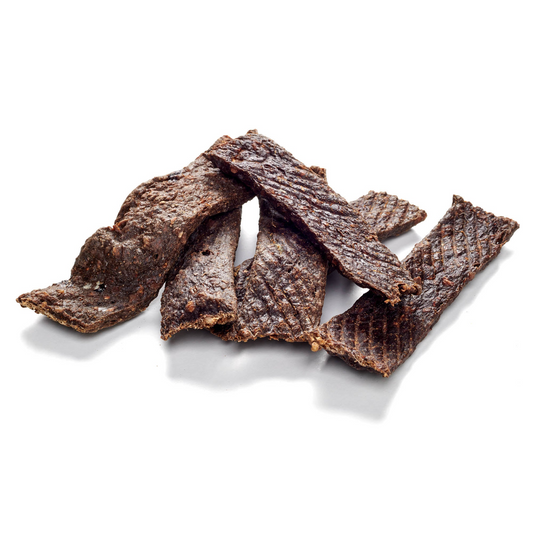
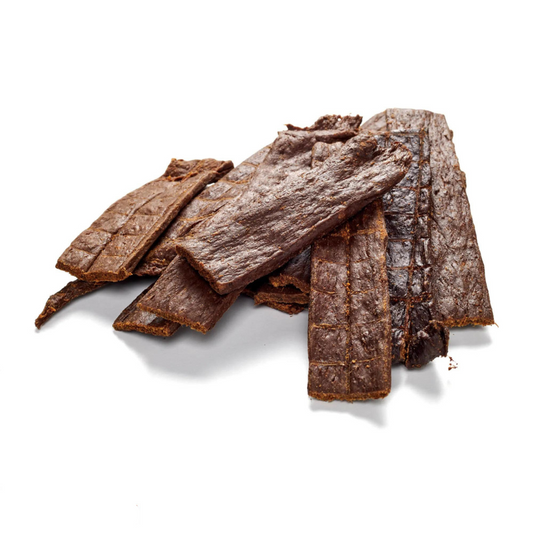
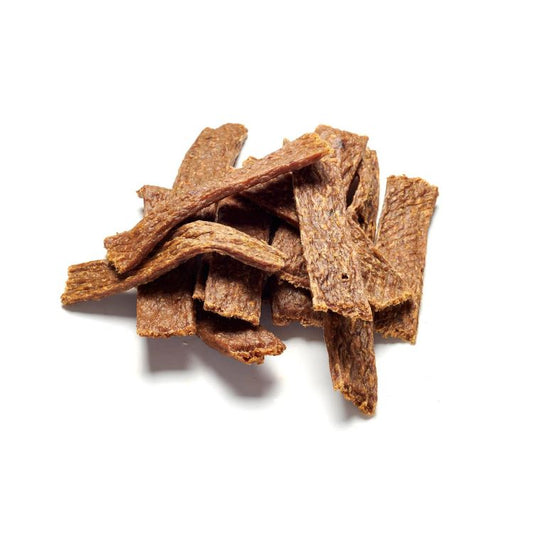
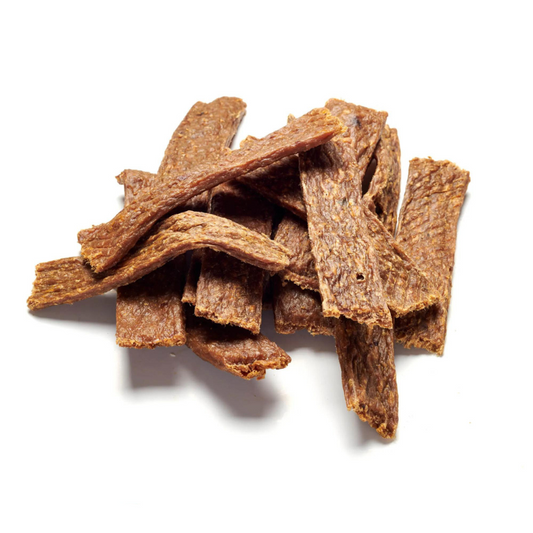
Achilles tendons for dogs differ mainly in size, hardness and animal species: beef tendons are large and sturdy, ostrich tendons are somewhat slimmer and an alternative protein source, and deer tendons are a game chew.
| Type | Properties | Suitable for |
|---|---|---|
| Beef | large, hard, long-lasting | medium-sized to large dogs, strong chewers |
| Ostrich | slimmer, fibrous, poultry as protein source | small to medium-sized dogs, variety in the diet |
| Deer | game as protein source, hard | dogs that like and tolerate game well |
Tips for choosing
- Size to match the dog: The tendon should not be able to be swallowed whole.
- Consider the protein source: If your dog has intolerances, choose an animal species it is known to tolerate well. Ostrich Achilles tendons are an alternative to beef for many dogs.
- Add variety: Alternate between different chews to keep things interesting.
How to recognise good Achilles tendons
High-quality Achilles tendons are dry, firm and free from mould or a rancid smell. An even amber to light brown colour is typical. Also look for a clear declaration as a single-ingredient feed without additives – then you know exactly what your dog is getting. Store the tendons in a dry, airy place so that they keep for a long time.
You will find all types in our Achilles tendon category, and more chews from this large bird in our Ostrich category.
From what age and how often? Feeding Achilles tendons properly
It is best to give a hard Achilles tendon only once the permanent teeth are complete – in most dogs after teething at around six to seven months of age – and then, depending on size, once or several times a week as part of the treat budget.
Puppies and young dogs
During teething, the gums are sensitive and the new teeth cannot yet take full pressure. Softer, smaller chews are then usually more suitable. You will find suitable ideas in the article Chews for Teething Puppies and in our Chews for puppies category.
Seniors
Older dogs with healthy teeth can continue to chew tendons. If their teeth are sensitive, softer snacks or smaller pieces are the better choice. You will find a selection in our Chews for old dogs category; our article Senior Dogs: How to Adjust Their Diet as They Age offers nutrition tips.
Safe chewing – how it works
- Stay with your dog while it chews.
- Remove small leftover pieces before they can be swallowed.
- Provide fresh water.
- Give chews to several dogs separately to avoid food envy.
- Include the tendon in the daily ration – if your dog is overweight, our tips on low-fat chews will help.
More collagen-rich chews made from hide:


Frequently asked questions about Achilles tendons for dogs
Are Achilles tendons good for dogs?
For healthy adult dogs, Achilles tendons are a good, natural chew. They are rich in protein, keep for a long time and keep your dog busy for a long while. The right size and supervision while chewing are important.
Do chews with collagen help the joints?
That has not been reliably proven. Achilles tendons provide collagen and protein, but they do not replace veterinary treatment or targeted joint support. Above all, a normal body weight, appropriate exercise and a balanced diet are important for healthy joints.
From what age can dogs chew Achilles tendons?
Ideally after teething, usually from around six to seven months. Before that, softer chews are gentler on the gums and new teeth. If in doubt, ask your vet.
How often can my dog have an Achilles tendon?
There is no fixed rule. For many dogs, one to several tendons per week are fine, provided they are included in the daily treat budget of around 10 percent of energy. If your dog is overweight, you should reduce the amount.
Do Achilles tendons splinter?
Tendons are not bones and therefore do not splinter like cooked bones. They become soft and fibrous as they are chewed. Nevertheless, pieces that are too large can be swallowed – so remove leftovers in good time.
Conclusion: Achilles tendon for dogs – natural chewing fun with collagen
An Achilles tendon for dogs is a natural chew rich in protein and collagen that keeps your dog busy for a long time and works the jaw muscles. As a supplement to a balanced diet, it fits well into the everyday life of healthy adult dogs – provided size and hardness are right and you stay with your dog while it chews. Do not expect miracles for the joints; if there are problems, your vet is the right person to ask. You will find many more chews in our Chewing fun category.
Further reading on this topic:
- Joint problems in dogs: how nutrition can help
- The secret of the chewing muscles: why chewing makes dogs happy
- Senior Dogs: How to Adjust Their Diet as They Age
This post was created with the help of AI