
Mackerel for Dogs: An Omega-3-Rich Fish Snack
Mackerel for dogs is an oily sea fish that provides particularly large amounts of omega-3 fatty acids. Yes, a healthy dog can eat mackerel – dried as a pet snack and in small amounts, but not smoked, pickled or seasoned from the supermarket. In this guide you will learn what makes mackerel so valuable, when it is too fatty and how to portion it correctly.
Content: Mackerel for Dogs: An Omega-3-Rich Fish Snack
- Can a dog eat mackerel?
- Mackerel for dogs: nutrients and omega-3
- Is mackerel too fatty for dogs?
- Which fish snacks contain a lot of omega-3?
- Feeding mackerel to your dog correctly: amount and tips
- Frequently asked questions about mackerel for dogs
- Conclusion: mackerel – an omega-3 snack in moderation
Mackerel and herring as small fish snacks:


Can a dog eat mackerel?
Yes, a healthy dog can eat mackerel if it is plain, fresh or gently dried and made specifically for pets. Preparation and quantity are what matter.
Suitable mackerel
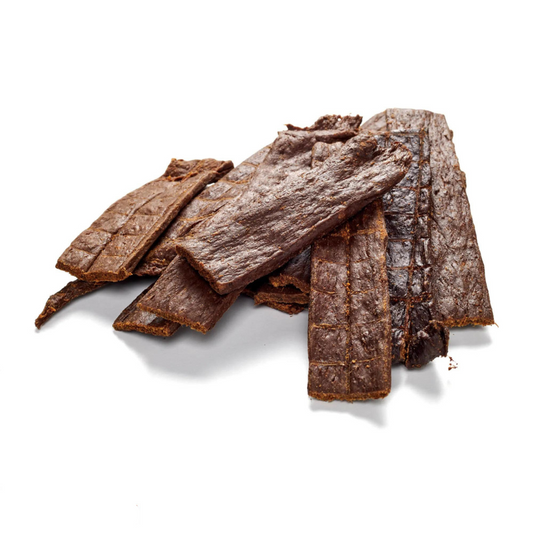
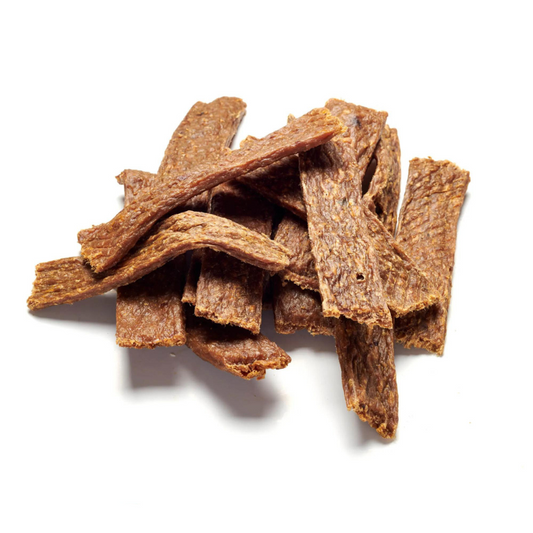
- Dried mackerel snacks for pets: for example small thalers or cubes without additives.
- Cooked fresh mackerel without seasoning: boneless, if you cook it yourself.
- In small portions: as a reward or supplement, not as a main meal.
Unsuitable mackerel
- Smoked mackerel: usually heavily salted and often seasoned.
- Mackerel in oil, tomato or mustard sauce: too fatty, salty and often with onions or spices.
- Fish that is no longer fresh: Mackerel in particular spoils quickly. If the fish smells unpleasant, it doesn't belong in the bowl.
Fresh or dried?
Fresh mackerel has to be cooked thoroughly and carefully deboned – that takes effort, and the fish spoils quickly. Dried mackerel snacks for pets, on the other hand, are ready to use straight away, keep for a long time and are easy to portion. That's why they are usually the more practical choice for everyday life.
Easy-to-portion snacks such as the Mackerel thaler mini can be found in our mackerel category.
Mackerel for dogs: nutrients and omega-3
Mackerel for dogs is one of the oily sea fish and, in addition to high-quality protein, provides above all the long-chain omega-3 fatty acids EPA and DHA.
What mackerel contains
- Omega-3 fatty acids: EPA and DHA are found mainly in oily sea fish and contribute to a balanced diet – for example as part of a feeding plan that also takes skin and coat into account.
- Protein: Mackerel provides good-quality animal protein.
- Vitamins: Oily fish naturally contain vitamin D and vitamin B12, among others.
- Taste: The intense fish flavour makes mackerel irresistible for many dogs.
Where does mackerel come from?
The Atlantic mackerel lives in large schools in the north-east Atlantic, the North Sea and the Mediterranean. It is a fast, slim schooling fish with typical blue-green striped markings. Smaller mackerel species are considered to be relatively low in contaminants compared with large predatory fish – still, variety is better than a one-sided diet here too.
What mackerel can't do
Mackerel snacks are an extra and replace neither a balanced main meal nor a fish oil recommended by your vet. If you want to supplement your dog's food specifically with omega-3, you should agree the dosage with your vet. Our article Fish chews for dogs: omega-3 to chew on gives an overview of other fish chews.
Is mackerel too fatty for dogs?
For healthy dogs of normal weight, mackerel is not too fatty in snack quantities – but if your dog is overweight or has pancreatitis or a sensitive stomach, switch to lean fish.

Fat content compared
Like herring, salmon and sprat, mackerel is one of the oily fish. Trout tends to be in the medium range, while cod and flounder are lean. However, fat content varies depending on fishing area, season and processing. The crude fat values in each product description are what count.
When you should be careful
- Overweight: Fatty snacks provide a lot of calories. Lean alternatives are a better fit here.
- Pancreatitis: If your dog has a history of pancreatitis, fatty food is usually off-limits – ask your vet.
- Sensitive stomach: Introduce mackerel slowly and in very small amounts.
You will find lean fish snacks in the cod category and other light snacks under low-fat chews. Read more about this in the article Low-Fat Dog Chews for Overweight Dogs and Pancreatitis.
Which fish snacks contain a lot of omega-3?
Above all, oily sea fish provide plenty of omega-3 – besides mackerel, that means herring, salmon and sprat. Lean fish such as cod contain much less fat and therefore less omega-3.
The omega-3 classics among fish snacks
| Fish | Fat content (tendency) | Typical snack |
|---|---|---|
| Mackerel | high | thalers, cubes |
| Herring | high | whole fish, thalers |
| Salmon | high | cubes, sticks, chew sticks |
| Sprat | high | whole small fish |
| Trout | medium | thalers, cubes |
| Cod, flounder | low | cubes, thalers, skin |
If you like feeding whole fish, our article Sprats for Dogs: Small Fish, Big Benefits tells you everything about the Sprat. Salmon fans will find what they are looking for in the salmon category – there is more background in the guide Salmon snacks for dogs.
Salmon snacks with omega-3:


Feeding mackerel to your dog correctly: amount and tips
Mackerel is best fed in small pieces as a reward and counted towards the daily snack budget – a maximum of about 10 percent of daily energy for all snacks together.
How much mackerel makes sense
There is no fixed number of grams, as fat and calorie content vary. As a rule of thumb, all treats and chews together should provide no more than about 10 percent of daily energy. With fatty snacks like mackerel, this budget is reached faster than with lean fish. A few small thalers or cubes a day are enough for most dogs.
Practical tips
- Start small: Begin with one or two pieces and keep an eye on digestion.
- Alternate: Combine oily and lean types of fish, for example mackerel and cod.
- Use in training: The Mackerel cubes mini are easy to break up and have an intense smell.
- Provide water: Fresh water should always be available after dried snacks.
- Store properly: Keep sealed, cool and dry so the fat doesn't go rancid.
Mackerel for cats?
Many cats like mackerel too. A small piece now and then is enough for them, as cats are light and need a complete cat food as their basis. You will find more fish snacks for dogs and cats in our fish category.
Lean fish snacks to balance things out:


Frequently asked questions about mackerel for dogs
Can a dog eat mackerel?
Yes, healthy dogs can eat mackerel if it is plain and made specifically for pets, for example as a dried snack. Smoked, pickled or seasoned mackerel from the supermarket, on the other hand, is unsuitable. A small, deliberate amount is important.
Is mackerel too fatty for dogs?
For healthy dogs of normal weight, mackerel is not too fatty in snack quantities. However, if your dog is overweight or has pancreatitis or a sensitive stomach, you should prefer lean fish such as cod or flounder. If in doubt, talk to your vet.
Which fish snacks contain a lot of omega-3?
Oily sea fish such as mackerel, herring, salmon and sprat contain particularly large amounts of omega-3. Lean fish such as cod and flounder contain less fat and therefore less omega-3. A mix of both is ideal for many dogs.
Can my dog eat tinned mackerel?
Tinned mackerel for humans is usually preserved in oil or sauce and salted. This is not recommended for dogs. It's better to choose snacks made specifically for pets.
How often can my dog have mackerel?
A few small pieces several times a week are fine for healthy dogs, as long as the overall snack budget is right. On days with lots of other treats, the mackerel can take a break.
Conclusion: mackerel – an omega-3 snack in moderation
Mackerel for dogs is a tasty, oily fish snack that provides high-quality protein and omega-3 fatty acids. Healthy dogs may enjoy it in small amounts – ideally as a dried pet snack and not as smoked or pickled supermarket fare. Count the pieces towards the snack budget, combine oily with lean types of fish and ask your vet first if your dog is overweight or has pancreatitis. You will find the right selection in our mackerel category.
Further reading on this topic:
- Fish for dogs
- Freeze-Dried North Sea Shrimp: Seafood for Dogs?
- How Many Treats per Day? The 10 Percent Rule
This post was created with the help of AI