
Low-Calorie Dog Treats: Rewarding Without Weight Gain
Low-calorie dog treats are low in fat and easy to portion into small pieces, which makes them especially suitable for training and diets. Lean fish, lung and snacks with a low crude fat content usually provide the least energy – but the amount always matters too. In this guide you will learn how to recognise low-calorie training snacks, how to reward your dog while it loses weight and how to use food cleverly as a reward.
Content: Low-Calorie Dog Treats: Rewarding Without Weight Gain
- What makes dog treats low in calories?
- Low-calorie treats compared
- How do I reward my dog while it loses weight?
- Can I use food as a reward?
- Frequently asked questions about low-calorie treats
- Conclusion: Low-calorie treats make training and dieting easier
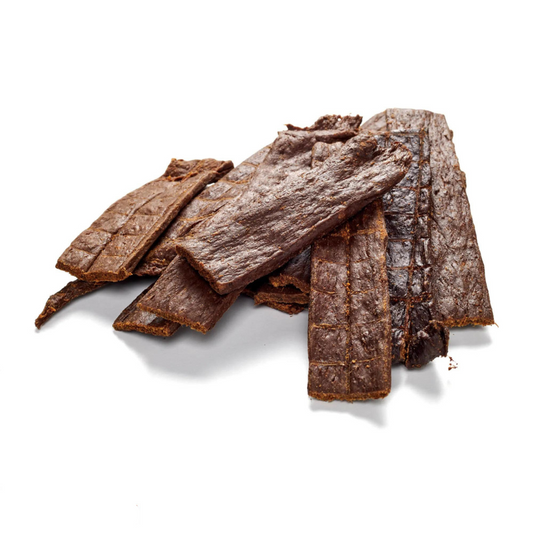
Particularly low-fat snacks for lots of rewards:


What makes dog treats low in calories?
Dog treats are low in calories above all when they contain little fat, because fat provides more than twice as much energy per gram as protein or carbohydrates.
Fat is the biggest source of energy
Dried meat and fish snacks consist mainly of protein and fat. The higher the crude fat content, the more energy-rich the snack. That's why it always pays to check the analytical constituents in the product description. You will find a large selection of lean snacks in the low-fat chews category.
Water content and size count too
Dried snacks are more energy-dense than fresh meat because the water is missing. Soft snacks contain more moisture and therefore often slightly less energy per gram. Even more important, however, is size: a pea-sized piece is perfectly enough as a reward – your dog is happy about being rewarded, not about the size of the reward.
Typically lean protein sources
- Lean sea fish such as cod or flounder
- Lung, which is light and airy and offers a lot of volume per gram
- Ostrich and rabbit – although the fat content can vary considerably depending on the product
- Sausages with a high meat content and a low crude fat content
You will find lung snacks, for example, in the offal category, and lean types of fish among our fish snacks.
Low-calorie treats compared
The quickest way to recognise low-calorie treats is by their crude fat content: values in the single-digit percentage range are low for dried snacks, values above 20 percent are rather high.
The following table shows examples from our range with the crude fat values from the respective product description. The current information on the product page always applies.
| Snack | Crude fat according to product description | Use |
|---|---|---|
| Cod cubes mini | 1.4% | lots of small rewards |
| Mini Chicken Sausages | 4.6% | sliced, soft |
| Beef Sausages Mini | 5.2% | training on the go |
| Ostrich training snack | 7.5% | everyday training |
| Flounder cubes mini | 7.5% | fish for variety |
| Lamb lung cubes mini | 7.9% | light, lots of volume |
| Rabbit training snack | 8% | everyday training |
Watch out for supposedly lean varieties
Not every animal species is automatically lean: depending on the cut and processing, even a rabbit, turkey or horse snack can have a high fat content. So don't rely on the animal species alone – check the product information.
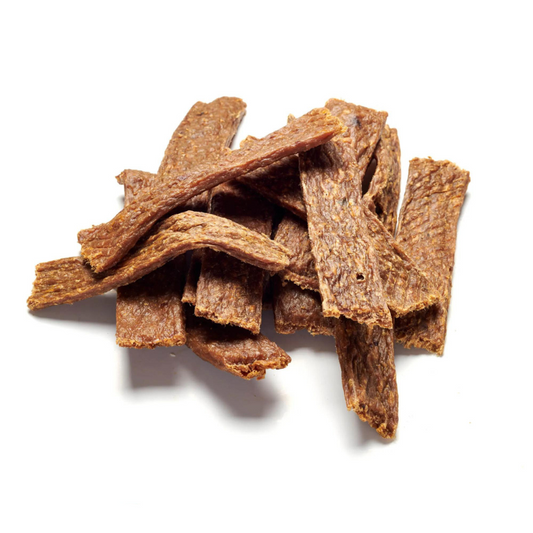
Low-fat sausages and training snacks:


How do I reward my dog while it loses weight?
While your dog is losing weight, it's best to reward it with very small, low-fat pieces, part of its daily ration and lots of food-free rewards such as praise, play and exercise together.
Ask your vet first
Before you start a diet, your vet should set the target weight and the right amount of food and rule out possible illnesses. You can get an initial idea of whether your dog is overweight with the rib test.
Plan the treat budget
The 10 percent rule is a useful guide: snacks should provide no more than about a tenth of daily energy. During a diet it can be less. Deduct the snack calories from the main food so that the total is right. Our article How many treats per day? explains exactly how.
Practical diet tips
- Cut small: Slice sausages thinly and divide cubes into several pieces.
- Pack a daily tub: Measure out the allowed amount in the morning – when it's empty, that's it.
- Involve the family: Clear agreements prevent secret extras.
- Calorie-free rewards: Praise, a short game, letting your dog sniff or a walk together are valuable too.
- Weigh regularly: Check the weight every two to four weeks.
You will find more background in our guide Obesity and weight management in dogs.
Can I use food as a reward?
Yes, you can use part of the normal daily ration as a reward – it's the easiest way to avoid feeding extra calories during training.
How it works
- Weigh the daily ration: Weigh out the complete amount of food in the morning.
- Set aside a training portion: Take part of the dry food out for training.
- Grade the rewards: Use food for easy exercises and save low-calorie snacks for difficult tasks.
- Feed the rest: Whatever is left at the end of the day is served as a normal meal.
When food isn't enough
With strong distractions, for example during the recall or in new environments, ordinary dry food isn't exciting enough for many dogs. Then a particularly coveted but lean snack is worthwhile – in small pieces and consciously planned. You will find suitable types among our training snacks.
Typical calorie traps in everyday life
Often it's not the training snacks but the many small extras that push the weight up. Pay particular attention to these situations:
- Large chews: A large ear or a chew plate can make up a considerable part of the daily budget.
- Scraps from the table: Cheese rinds, sausage ends or pieces of bread add up quickly.
- Rewards from several people: If every family member gives "just one", it quickly becomes too much.
- Food toys: Fillings for snuffle mats or lick mats also count towards the ration.
Portioning snacks cleverly
A big advantage of small cubes and sausages is that you can divide them further. Cut sausages into thin slices with a sharp knife and divide larger cubes into two to four pieces. This way a handful of snacks becomes a whole training session. Keep a small tub ready in which you collect the prepared pieces for the day – then you always keep track of the amount and don't have to improvise on the go.
Lean fish snacks for variety:


Frequently asked questions about low-calorie treats
Which treats are low in calories?
Above all, low-fat snacks such as lean fish, for example cod, as well as lung and sausages with a low crude fat content are low in calories. What matters are the analytical constituents in the product description and the portion size.
How do I reward my dog while it loses weight?
With very small, low-fat pieces, part of its daily ration and lots of food-free rewards. Deduct the snack calories from the main food. It's best to agree on the diet plan with your vet.
Can I use food as a reward?
Yes. Set aside part of the weighed daily ration for training. This way you can reward often without feeding extra calories.
Are low-fat snacks also a good idea for sensitive stomachs?
Many dogs tolerate low-fat snacks well. However, in the case of digestive problems or illnesses such as pancreatitis, feeding should always be discussed with your vet. Read more in our article on low-fat dog chews.
How small should a training treat be?
About the size of a pea – even smaller for small dogs. This way you can reward often without blowing the calorie budget.
Conclusion: Low-calorie treats make training and dieting easier
With low-calorie dog treats you can reward your dog often and gladly, even during a diet. Look for a low crude fat content, cut snacks small, count them in the daily ration and also use food, praise and play as rewards. Low-fat snacks such as cod, lung or lean sausages from our mini sausages category are good companions. If your dog is overweight or has health problems, your vet is the right person to talk to.
Further reading on this topic:
- How Many Treats per Day? The 10 Percent Rule
- Obesity and weight management in dogs
- Low-Fat Dog Chews for Overweight Dogs & Pancreatitis
This post was created with the help of AI