
Fading out treats: when your dog obeys without food
You can start fading out treats as soon as your dog performs a cue reliably in different situations – not before. The key is variable reinforcement: instead of rewarding with food every single time, you reward irregularly and add praise, play and everyday rewards to the treats. That keeps your dog motivated, even when something doesn’t come out of your pocket every time.
Content: Fading out treats: when your dog obeys without food
- Do I always have to reward my dog with treats?
- When can you start fading out treats?
- What are variable rewards?
- Alternatives to treats: praise, play and everyday rewards
- Frequently asked questions about fading out treats
- Conclusion: fading out treats with a plan
Training snacks for the learning phase:


Do I always have to reward my dog with treats?
No, you don’t have to reward your dog with treats for every cue forever – but well-established cues should still be rewarded every now and then in the long term.
Treats are a learning tool. When practising a new cue they are especially effective, because they show your dog quickly and clearly what was right. Why food rewards work so well in training is explained in our article Treats and snacks in dog training.
Behaviour that is never rewarded at all can weaken over time. So the goal is not to abolish rewards completely, but to distribute them wisely.
Treat as a bribe or as a reward?
Many owners worry that their dog will only listen when they see a treat. That happens when the food is shown before the cue – then it becomes a bribe. A reward, on the other hand, only comes after the correct behaviour and stays out of sight until then, for example in your pocket.
When can you start fading out treats?
You can start fading out treats when your dog reliably shows a cue in different places, with mild distractions and with a success rate of about eight to nine out of ten attempts.
This success rate is a rough guide from training practice, not a fixed rule. What matters: a cue that works in the living room is not yet established in the park. So fade out treats separately for each situation.

| Phase | Reward | Goal |
|---|---|---|
| 1. Learning | every correct response | understand the cue |
| 2. Strengthening | mostly, occasionally just praise | cue in new places |
| 3. Variable | irregularly, sometimes food, sometimes play | maintain motivation |
| 4. Everyday life | occasionally, for especially good performances | reliable cue |
How to tell that a cue is established
- Quick response: Your dog reacts immediately to the first cue, without you having to repeat it.
- No help needed: They no longer need a luring movement or a visible treat.
- In different places: The cue works at home, in the garden and on walks.
- With mild distractions: Even when something interesting is going on, your dog stays responsive.
If all of this applies, it is a good time to change the rewards step by step. If something is still missing, stay in the strengthening phase and keep rewarding regularly. It is perfectly normal for your dog to be further along with one cue than with another.
Setbacks are part of the process
Even if you have already reduced treats, there may be phases when a cue becomes less reliable again – for example during adolescence, after a move or in a stressful period. This is no reason to worry. In such phases, simply go back a step, reward with food more often again and then slowly fade out once more. Training is not a straight path, but a process with ups and downs.
What are variable rewards?
Variable rewards mean that your dog is not rewarded for correct behaviour every time and not always in the same way, but unpredictably – sometimes with food, sometimes with praise, play or another reward.
Unpredictable rewards often keep motivation particularly high. Your dog doesn’t know when the next treat is coming – so it’s always worth joining in. It is important that rewards don’t become too rare. Especially for difficult tasks such as the recall, you should continue to reward generously.
How to put variable rewards into practice
- Start with solid cues: Begin with cues your dog really knows reliably, such as sit.
- Stop rewarding every time: For example, give a treat after the first and third response, and only praise after the second.
- Reward the best responses: Especially fast or beautiful reactions get a particularly tasty piece.
- Mix the types of reward: Food, play, praise, stroking, sniffing or off-lead time.
- Watch your dog: If they get slower, reward more often again.
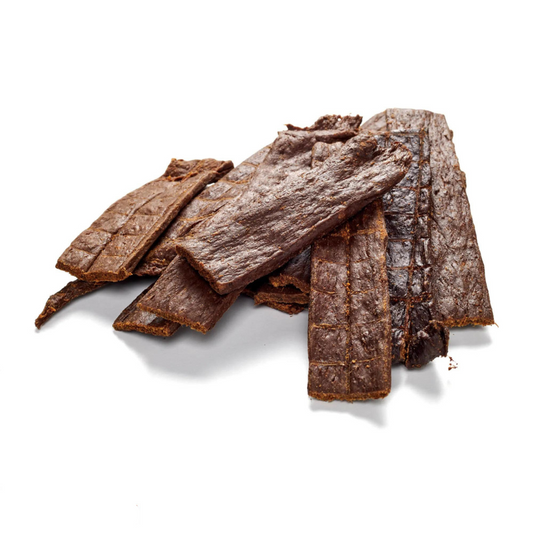
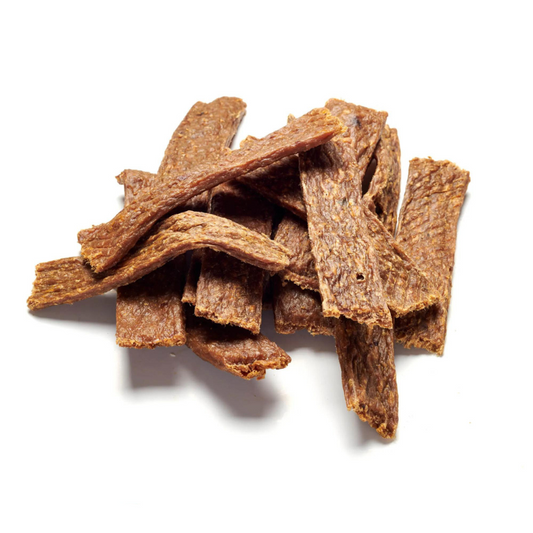
For the phases in which you continue to work with food, small snacks such as the goat training snack or the venison training snack are ideal. You will find many more ideas in our categories training snacks, Softies and mini meat cubes.
Extra-valuable rewards for top performances:


Alternatives to treats: praise, play and everyday rewards
Good alternatives to treats are anything your dog really wants at that moment – such as play, sniffing, off-lead time, attention or access to something exciting.
A tip from practice: make a short list of everything your dog likes and sort it by value. At the top you might have a particularly tasty piece of meat or their favourite game, further down a friendly word. That way you can match the reward to the difficulty of the task.
Your dog decides which reward works. A dog that loves balls is happy about a throw. A sniffer is happy when allowed to smell an interesting tuft of grass. Make targeted use of these preferences.
- Praise and attention: Kind words and stroking – as long as your dog enjoys that at the moment.
- Play: A short game of tug or fetch is a strong reward for many dogs.
- Life rewards: After a sit at the door you head outside, after a recall your dog may carry on playing.
- Chewing: After training, a chew from our chewing fun category can be a lovely reward for winding down.
- Tricks: For some dogs, simply performing a favourite trick is a joy. You will find ideas in Teach your dog tricks: 5 easy tricks with rewards.
Common mistakes when fading out treats
- Fading out too quickly: Stopping overnight risks an unreliable cue.
- Showing the treat: If you show the food before the cue, it becomes a bribe.
- Only scolding: If the reward disappears and criticism is added, motivation drops.
- Forgetting difficult situations: With strong distractions your dog will need valuable rewards in the long term too, for example from our special treats category.
If your dog won’t take any treats at all outdoors, this may be due to stress or distraction. Possible reasons are explained in our article Dog won’t take treats: causes and solutions.
Frequently asked questions about fading out treats
How do I wean my dog off treats?
Fade out treats gradually as soon as a cue is reliably established. Reward irregularly, replace some of the treats with praise, play or everyday rewards and keep food for especially good performances.
Do I always have to reward?
Not with food every time – but without any reward at all, cues can weaken over time. So keep rewarding every now and then, especially for difficult tasks such as the recall.
What are variable rewards?
With variable rewards, your dog doesn’t get a reward for every correct response, but unpredictably and with changing types of reward. That keeps motivation high.
Will my dog listen less if I reduce treats?
If you reduce them too quickly, that can happen. If you fade out rewards slowly and keep rewarding occasionally, the cue usually stays reliable.
Conclusion: fading out treats with a plan
Fading out treats doesn’t mean abolishing rewards, but using them more deliberately. As soon as a cue works reliably, you switch to variable rewards, use praise, play and everyday rewards and keep treats for difficult situations and top performances. Keep an eye on the total amount of snacks, which according to the 10 percent rule shouldn’t get too large. That way your dog stays motivated – and obeys even when the treat pouch is empty for once.
Further reading on this topic:
- Clicker training for dogs
- Low-calorie treats for dogs: rewarding without weight gain
- Stay training with treats: step by step
This post was created with the help of AI