
Stay training with treats: step by step
In stay training with treats, your dog learns to hold a position until you release them with a release cue. It works best when you build the three elements – duration, distance and distraction – separately and in very small steps, rewarding every success calmly. We show you when the treat should come, how to increase duration and which mistakes to avoid.
Content: Stay training with treats: step by step
- What does the stay cue mean for your dog?
- Which treats are best for stay training?
- Stay training with treats: step by step
- How do you increase the duration of a stay?
- Common mistakes in stay training
- Frequently asked questions about stay training
- Conclusion: stay training with patience and small steps
Small rewards for calm staying:


What does the stay cue mean for your dog?
For your dog, the stay cue means: I keep my position until my human releases me – no matter whether they move, walk away or something exciting happens.
Many dog owners confuse “stay” with “sit”. Sit describes a position, while stay describes how long that position is held. Your dog can stay while sitting, lying down or standing. What matters is that they only leave the position when you give a clear release cue such as “okay” or “free”.
Why stay is so valuable in everyday life
- Safety: At the front door, when getting out of the car or at the roadside, a reliable stay stops your dog from bolting.
- Relaxation: In a restaurant, at the vet or when guests visit, your dog learns to wait calmly.
- Impulse control: Stay is one of the best exercises for patience and self-control. Read more in our article Impulse control in dogs: exercises with treats.
Before you start stay training, your dog should already know sit or down reliably. You can find out how to practise these basics playfully in Dog training: practising basic commands in a playful way.
Which treats are best for stay training?
The best treats for stay training are small, soft and quickly eaten, so you can give them calmly and without many crumbs directly to your dog.
During stay training you reward often, frequently every few seconds. Large or hard snacks would keep your dog busy for too long and interrupt the session. Pea-sized pieces that your dog can eat in one bite are ideal.
Good options at a glance
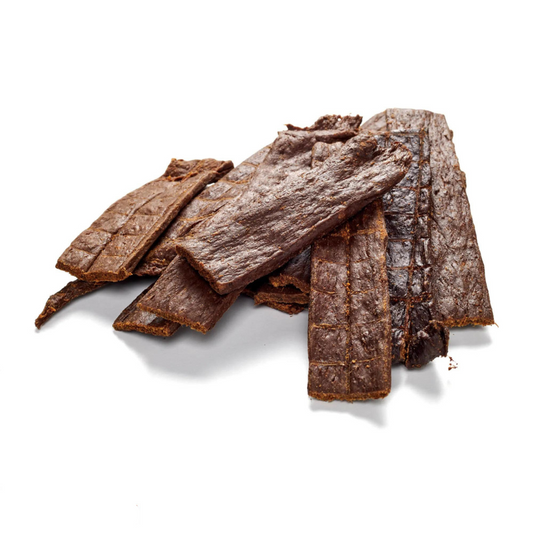
- Training snacks: Small pieces such as the beef training snack are easy to portion.
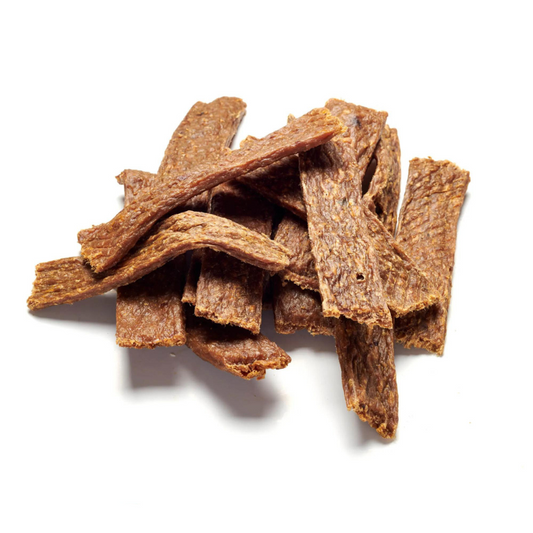
- Softies: Soft treats like the chicken and potato softies are eaten quickly and can be broken up if needed.
- Extra-valuable rewards: For difficult situations with distractions, use snacks your dog particularly loves.
You will find a wide selection in our categories training snacks for dogs and Softies. Which snacks are generally suitable for training is explained in our guide Training snacks for dog training.
Important: include the treats in the daily food ration. As a rule of thumb, snacks should make up no more than about ten percent of the daily food amount.
Stay training with treats: step by step
In stay training with treats you first build a short duration, then distance and finally distraction – and only ever increase one element at a time.

- Ask for a position: Ask your dog to sit or lie down and reward them right away.
- First seconds: Wait one or two seconds, reward your dog in position and then give the release cue.
- Add the cue: Calmly say “stay” and, if you like, show an open palm as a hand signal.
- Build duration: Extend the time in small steps – for example 3, 5, 8, 10 seconds. Reward in position again and again in between.
- Build distance: Take one step back, return immediately, reward and release. Increase the distance slowly.
- Add distractions: Only once duration and distance work do you add distractions, such as a rolling ball or a different room.
When do you give the treat during stay?
During stay, always give the treat while your dog is still in position – before you release them. That way they link the reward with staying, not with getting up. Walk back to your dog and calmly give the treat at the level of their muzzle. Only then follows the release cue. If you work with a marker signal, you will find useful tips in Clicker training for dogs.
Don’t forget the release cue
Without a release cue your dog doesn’t know when the exercise is over. They then decide for themselves – and that is exactly what you want to avoid. Always use the same word and don’t give a treat after the release, so that getting up doesn’t become more interesting than staying.
Snacks for longer stay exercises:


How do you increase the duration of a stay?
You increase the duration of a stay by extending the time only in small, irregular steps and mixing in easy, short repetitions.
Many dogs get up because the demands grow too quickly. So keep the training varied: a longer exercise is followed by a very short one, a difficult one by an easy one. This keeps your dog motivated and gives them many successes.
| Training phase | Duration (approx.) | Reward |
|---|---|---|
| Beginning | 1–5 seconds | after every repetition |
| Building | 5–30 seconds | several times during the stay |
| Advanced | 30 seconds to a few minutes | at irregular intervals |
These times are only a rough guide. Puppies and young dogs often need much shorter sessions. Keep every training session short – five to ten minutes is usually enough – and end it on a success.
Combine distance and distraction carefully
When you increase the distance, shorten the duration at the same time. When distractions are added, move closer to your dog again. This “three D rule” – duration, distance, distraction – helps you avoid overwhelming your dog.
Common mistakes in stay training
The most common mistakes in stay training are increasing too quickly, rewarding after the dog gets up and a missing release cue.
- Too much at once: Increasing duration, distance and distraction at the same time overwhelms almost every dog.
- Recalling out of the stay: If you often call your dog to you out of the stay, they will soon wait eagerly for the recall. Instead, mostly walk back to them. Practise the recall separately, for example with our article on recall training.
- Scolding mistakes: If your dog gets up, calmly put them back into position and make the next exercise easier.
- Sessions that are too long: Tired or bored dogs get up sooner.
- Unsuitable treats: Large chews interrupt the training. Use small pieces such as the horse training snack.
You can carry the rewards conveniently in a treat pouch on your belt. That keeps your hands free so you can react quickly. More suitable rewards can be found among our mini meat cubes and in special treats.
Frequently asked questions about stay training
How do I teach my dog to “stay”?
Ask your dog to sit or lie down, wait one or two seconds and reward them in position. Then give a release cue. Extend the time slowly and add distance and distractions separately later on.
When do I give the treat during stay?
Your dog gets the treat while still in the stay position. Walk back to them and reward calmly. Only then release the exercise, so that staying – not getting up – is rewarded.
How do I increase the duration?
Extend the time in small, irregular steps and mix long with short repetitions. Reward several times during longer stays. When the distance grows, temporarily shorten the duration.
At what age can a puppy learn to stay?
Even young puppies can learn the first seconds of staying if the exercises are very short and playful. Longer stays and greater distances only make sense later. Take care not to overwhelm your puppy.
My dog keeps getting up – what can I do?
Usually the exercise is too difficult. Go back a step, shorten the duration or distance and reward more often. Also check whether your dog is tired, distracted or lying uncomfortably.
Conclusion: stay training with patience and small steps
Stay training with treats succeeds when you build duration, distance and distraction separately and in small steps. Always reward your dog in position, end the exercise with a clear cue and keep sessions short. With small, soft training snacks and a little patience, the stay cue becomes a reliable companion in everyday life – at the front door as well as in a café.
Further reading on this topic:
- Recall training for dogs: the treat ranking
- How many treats per day? The 10 percent rule
- Impulse control in dogs: exercises with treats
This post was created with the help of AI