
Teaching tricks: 5 easy tricks with rewards
The easiest way to teach your dog tricks is with small treats, short training sessions and a step-by-step method called luring. Almost every healthy dog can learn tricks like Spin, Touch, Bow, Roll over or Leg weave – and trick training is not only fun, it also gives your dog a good mental workout.
Content: Teaching tricks: 5 easy tricks with rewards
- Why trick training is good for your dog
- How trick training with rewards works
- 5 easy tricks to teach your dog
- Tips for successful trick training
- Frequently asked questions about teaching your dog tricks
- Conclusion: teaching your dog tricks is fun for both of you
Small rewards for trick training:


Why trick training is good for your dog
Trick training is good for your dog because it challenges them mentally, strengthens your bond and shows them in a playful way that learning is fun.
Many dogs get plenty of physical exercise but too little mental stimulation. Just ten minutes of brain work can leave a dog pleasantly tired. You will find more ideas for mental stimulation in our article Activities for dogs: how to keep your four-legged friend mentally fit.
The benefits at a glance
- Brain work: Learning new movements is tiring and satisfying at the same time.
- Bonding: You work as a team and communicate more closely.
- Self-confidence: Insecure dogs in particular benefit from lots of small successes.
- Something to do in bad weather: Tricks can be practised in a small space indoors.
Classics like “paw” are often the starting point. You can read how that works in Teaching your dog to give paw. In this article we introduce five more easy tricks.
How trick training with rewards works
Trick training with rewards works by luring your dog into the desired movement with a treat, marking the right moment and rewarding them immediately.
Lure, mark, reward
- Lure: With a treat in your hand, you guide your dog into the desired movement.
- Mark: At the right moment you say a marker word like “yes” or use a clicker.
- Reward: Right after that, your dog gets their treat.
- Fade: Later you replace the lure with a hand signal and a verbal cue.
A precise marker signal makes learning much easier. Our article Clicker training for dogs explains how to work with one.
How many treats do I need for trick training?
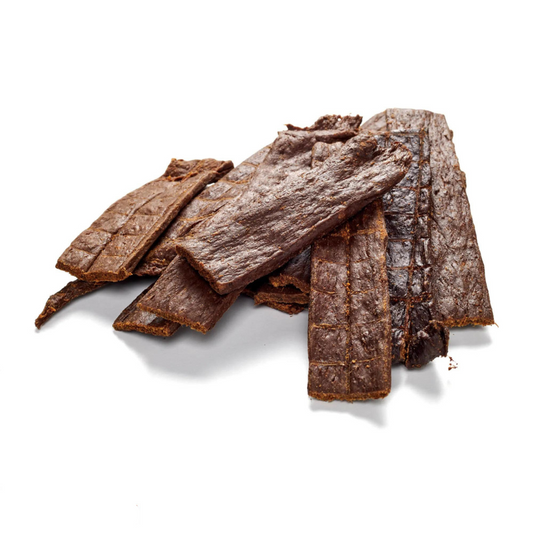
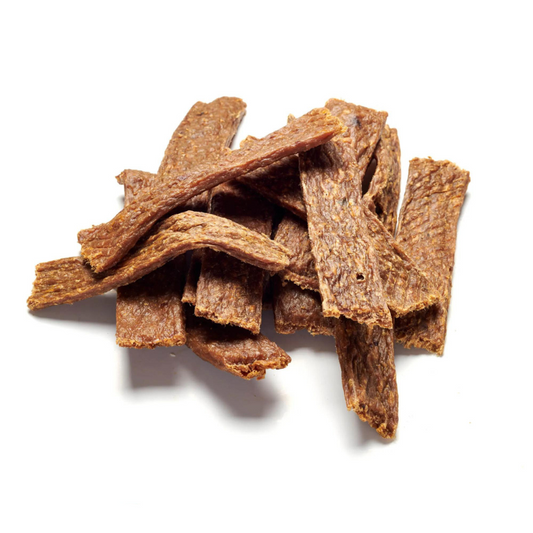
For trick training you need lots of treats, but very small ones – often 20 to 30 pea-sized pieces per session. Snacks your dog can eat quickly are ideal, such as mini chicken meat cubes or small pieces of the beef training snack. Important: subtract the treats from the daily ration. How much is allowed is explained in our guide How many treats per day? The 10 percent rule.
You will find a wide selection in our categories training snacks, mini meat cubes and mini sausages.
5 easy tricks to teach your dog
Five easy tricks that almost every healthy dog can learn are Spin, Touch, Bow, Roll over and Leg weave.

1. Spin (“turn around”)
Hold a treat in front of your dog’s nose and slowly guide it in a large circle around them. Once your dog follows the treat all the way round, mark and reward. After a few repetitions the hand movement gets smaller and you introduce the verbal cue. Later you can practise the other direction with its own cue.
2. Touch (nose touch)
Hold your flat hand a few centimetres in front of your dog’s nose. Most dogs will sniff it curiously. That is exactly the moment you mark, and you reward with your other hand. Touch is versatile: you can use it to guide your dog into a position or to get their attention back when you are out and about.
3. Bow (“take a bow”)
Your dog is standing. Slowly move a treat from their nose down between their front paws. If they lower their chest while their rear end stays up, mark immediately. If they lie down completely, the movement was too slow – try again. At first a brief dip is enough.
4. Roll over
How do I teach my dog to “roll over”? Start in the down position. Move the treat from their nose sideways towards their shoulder so that your dog lies on their side. Reward this first step. Then lure them further over their back onto the other side. Practise on a soft surface and only with healthy dogs. If your dog has back or joint problems, talk to your vet first.
5. Leg weave
Stand with your legs slightly apart. Lure your dog with a treat from behind through your legs, in one direction first. Once that works, take a step forward and lure them through around the other leg. Large dogs need a bit more space, while small dogs usually find it easier.
Snacks for lots of repetitions:


Tips for successful trick training
Successful trick training is based on short sessions, a calm environment and a willingness to break big tricks down into many small steps.
| Trick | Difficulty | Good for |
|---|---|---|
| Spin | easy | beginners and puppies |
| Touch | easy | everyday life and attention |
| Bow | medium | stretching and body awareness |
| Roll over | medium | dogs with basic training |
| Leg weave | medium | coordination |
- Train briefly: Three to five minutes per session is often enough. Stop while it is still fun.
- One trick at a time: Practise new tricks one by one until they are reliable.
- A quiet place: Start indoors; outside it gets harder later on.
- Vary the reward: Now and then it can be an especially popular snack, for example from our category special treats.
- No pressure: Never pull or push your dog into a position.
From lure to hand signal
At first, many dogs only follow the treat in your hand. To make sure the trick later works without food in your hand, you gradually fade out the lure. First perform the movement with an empty hand and reward from your other hand or from your pocket. Once that works, make the hand movement smaller until a short hand signal is enough. Only then do you add the verbal cue: say it just before the hand signal so that your dog links the new cue with the familiar one. After a while they will respond to the word alone.
When a trick doesn’t work
If you get stuck on a trick, the step is usually too big. Break it down into smaller sub-steps and reward even the first hints of the desired movement. It can also help to change the training time: some dogs learn with more focus after a walk, others are more motivated before a meal. And sometimes a break is all it takes – the next day things often go surprisingly well.
If your dog snatches treats hastily during trick training, you can teach them to take them gently – that protects your fingers and encourages calm.
Frequently asked questions about teaching your dog tricks
Which tricks can every dog learn?
Almost every healthy dog can learn easy tricks like Spin, Touch and Bow – regardless of breed and age. For physically demanding tricks such as Roll over, you should take your dog’s health and size into account.
How do I teach my dog to “roll over”?
Start in the down position and use a treat to lure your dog first onto their side, then over their back onto the other side. Reward every sub-step. Practise on a soft surface.
How many treats do I need for trick training?
A single training session often adds up to 20 to 30 very small treats. Choose pea-sized snacks and subtract them from the daily ration so that your dog doesn’t gain weight.
At what age can a dog learn tricks?
Even puppies can learn easy tricks like Touch or Spin in a playful way. Keep the sessions very short. Older dogs also enjoy learning something new – adapt the tricks to their mobility.
How long does it take for a dog to learn a trick?
That varies a lot. Easy tricks often work after a few sessions, more demanding ones take days to weeks. What matters is regular, short practice.
Conclusion: teaching your dog tricks is fun for both of you
Teaching your dog tricks is one of the most enjoyable forms of activity. With the lure, mark, reward method, small treats and short sessions, your dog will learn tricks like Spin, Touch, Bow, Roll over or Leg weave. Pay attention to their health, increase the demands slowly and enjoy your time together – that way trick training becomes your favourite ritual.
Further reading on this topic:
- Dog sports – which types of dog sport are there?
- Training treats for small dogs: choosing mini snacks
- Stay training with treats: step by step
This post was created with the help of AI