
Training treats for small dogs: choosing mini snacks
Training treats for small dogs should be tiny, soft or easy to break, lean and strong-smelling – about the size of a pea or even smaller. That way you can reward your small dog often without blowing his daily calorie budget. In this guide you will learn which mini treats are suitable, how big a training treat should be and how many rewards a small dog can handle.
Content: Training treats for small dogs: choosing mini snacks
- Which treats are suitable for small dogs in training?
- How big should a training treat be?
- How many treats can a small dog handle?
- Using training treats for small dogs correctly
- Frequently asked questions about training treats for small dogs
- Conclusion: small, lean, tasty – the recipe for successful training
Mini meat cubes for training:


Which treats are suitable for small dogs in training?
For small dogs in training, mini treats that are eaten quickly, smell intense and provide few calories are particularly suitable – for example dried mini meat cubes, lung cubes or soft meat cubes that are easy to break up.
The most important properties
- Small: A training treat should be eaten in seconds so that the training keeps flowing.
- Soft or breakable: Soft snacks are quick to chew and can be split into even smaller pieces.
- Lean: Low-fat varieties provide less energy per piece – important with many repetitions.
- Strong-smelling: The more tempting the scent, the higher the motivation.
- Easy to digest: Snacks made from a single type of meat make it easier to keep an eye on tolerance.
Tried-and-tested mini snacks
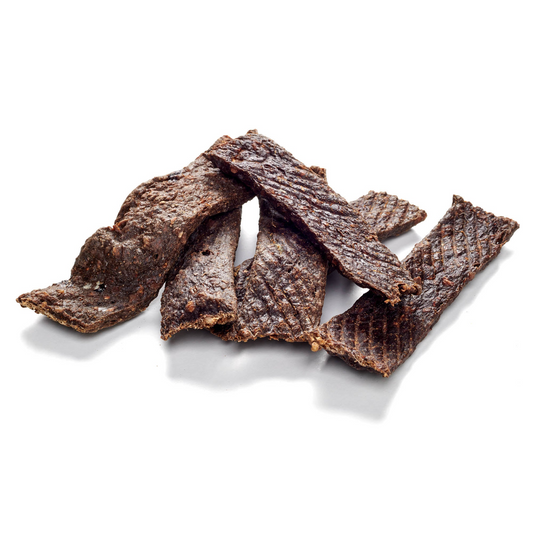
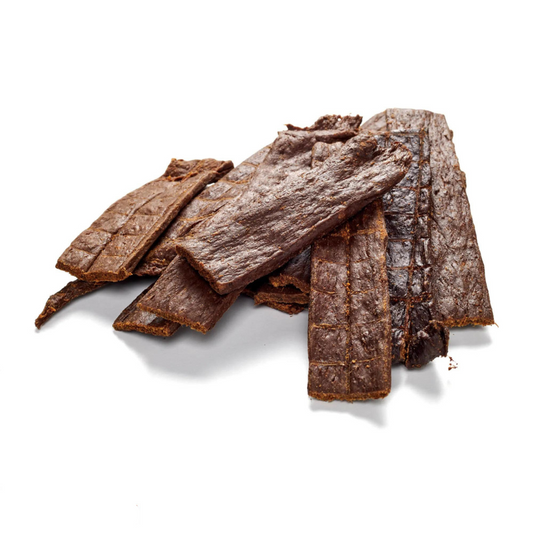
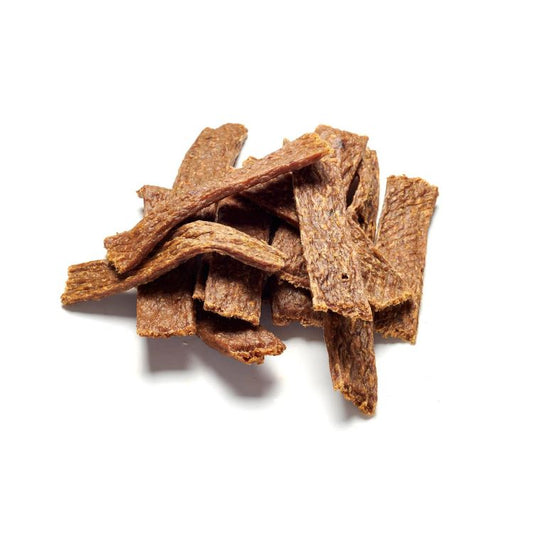
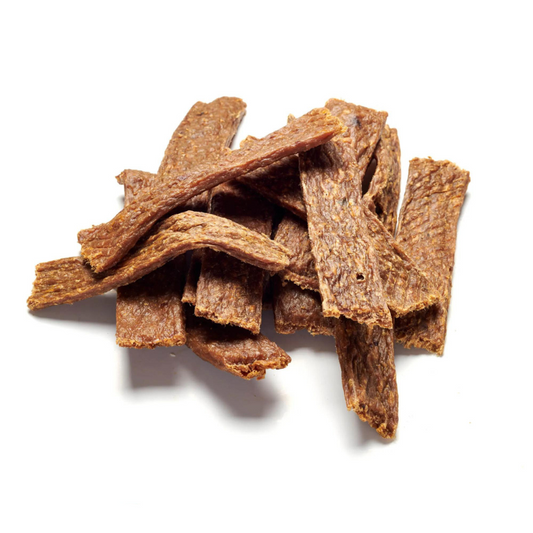
Dried mini meat cubes are a classic for small breeds. Mini lamb lung cubes are particularly light because lung is loose and airy. If you prefer soft rewards, you will find suitable snacks in the soft meat cubes category. Ready-portioned snacks are also available in the training snacks category, such as the chicken training snack.
How big should a training treat be?
A training treat for small dogs should be about the size of a pea or smaller – for very small dogs such as Chihuahuas or Yorkshire Terriers, a piece the size of a grain of rice up to a lentil is often enough.
Why small is better
What counts for motivation is above all that a reward is given, and less how big the reward is. Small pieces are eaten more quickly, your dog stays focused and you can build in more repetitions. Large treats, on the other hand, take a long time to chew and interrupt the exercise.

How to make big snacks small
- Split cubes: Soft meat cubes can be halved or quartered with your fingers or a knife.
- Slice sausages: One mini sausage turns into lots of small rewards.
- Break mini sticks: Thin meat sticks can be broken into short pieces.
- Prepare ahead: Prepare the daily portion in the morning and keep it in a treat pouch.
Soft meat cubes for splitting:


How many treats can a small dog handle?
A small dog can handle as many treats as fit into about 10 percent of his daily energy requirement – for a dog weighing around 5 kg, that is roughly 30 to 40 kcal a day. Because that is not much, tiny pieces and lean varieties are what count.
Keeping an eye on the treat budget
Dried meat snacks are energy-dense because the water has been removed. For a small dog, even a small handful can make up a large part of the daily budget. How to calculate the budget exactly is explained in our guide How many treats per day? The 10 percent rule.
Tips against too many calories
- Deduct from the food: On training days, reduce the main food by the amount of snacks.
- Use food as a reward: For simple exercises, individual pieces of dry food from the daily ration are enough.
- Grade your rewards: Save particularly tasty snacks for difficult situations, such as recall.
- Check the figure: Weigh your dog regularly and adjust the amount.
Using training treats for small dogs correctly
Training treats work best with small dogs when you reward at the right moment, plan short sessions and match the reward to the difficulty of the exercise.
Timing is everything
The reward should come within one to two seconds of the desired behaviour. A marker word or a clicker helps you mark the right moment. You can find out more in our article Clicker training for dogs.
Short sessions for small dogs
Small dogs are often quick to get excited, but also quick to tire. Several short sessions of five to ten minutes are better than one long one. Stop while your dog is still motivated.
Building a treat hierarchy
| Situation | Reward |
|---|---|
| Simple, familiar exercise at home | Dry food or lung cubes |
| New exercise or slight distraction | Mini meat cubes |
| Strong distraction, recall outdoors | Soft meat cubes or sausage slices |
By the way, chews are not training treats because they keep your dog busy for too long. Our article Suitable chews for small dogs presents chews that are right for small dogs.
Common mistakes when rewarding small dogs
- Pieces that are too big: A treat the size of a fingertip is a small meal for a 3 kg dog.
- Rewarding too late: If the reward only comes after several seconds, your dog no longer links it to the exercise.
- Always the same snack: Alternating between two or three varieties keeps motivation high.
- Treat as a lure instead of a reward: Phase out luring gradually so that your dog does not only work when he can see food.
Storing treats on the go
A washable treat pouch on your belt ensures that the reward is always quickly to hand. Dried snacks are ideal for this. Soft snacks are best kept in a small tub, and you only take the daily portion with you. You should not leave leftovers in the pouch for days.
Sausages, sticks and balls for recall:


Frequently asked questions about training treats for small dogs
Which treats are suitable for small dogs in training?
Tiny, lean and strong-smelling snacks such as mini meat cubes, lung cubes or soft meat cubes are ideal. They are eaten quickly and are easy to portion.
How big should a training treat be?
For small dogs about the size of a pea or smaller, for very small dogs often only as big as a lentil. What matters is that your dog can eat the piece in a few seconds.
How many treats can a small dog handle?
All treats together should make up no more than about 10 percent of the daily energy requirement. For a dog weighing 5 kg, that is roughly 30 to 40 kcal – which is why tiny pieces are so important.
Are soft or dried treats better?
Both have advantages: dried snacks keep for a long time and stay clean in the pouch, while soft snacks are quicker to eat and easier to split. Many owners use both depending on the situation.
From what age can puppies of small breeds have training treats?
Puppies can be rewarded with very small, soft pieces from an early age. Using part of the normal puppy ration as a reward helps keep their nutrition balanced. If in doubt, your vet will advise you.
Do small dogs need different treats from large dogs?
The ingredients can be the same – what matters is the size of the pieces and the amount. Small dogs have a much lower energy requirement, so every extra treat has a bigger effect. Choose mini varieties or consistently split larger snacks.
Conclusion: small, lean, tasty – the recipe for successful training
Good training treats for small dogs are tiny, soft or breakable, lean and smell tempting. With pea-sized pieces, an eye on the daily treat budget and a sensible reward hierarchy, you can reward your small dog often without his figure suffering. Short training sessions and good timing do the rest. That way, training becomes a success story for your small dog. You will find suitable mini snacks in our mini sausages and mini meat cubes categories.
Further reading on this topic:
- Training snacks for dog training
- Single protein snacks: treats with just one type of meat
- Suitable chews for small dogs
This post was created with the help of AI