
Relaxed Dog Encounters with the Help of Treats
Dog encounters are best trained by keeping enough distance and teaching your dog that the sight of another dog announces something good: as soon as it sees the other dog, it gets an especially tasty treat – before it barks or lunges on the lead. This principle is called counter-conditioning, and it only works with the right timing and the right distance. In this guide you will learn how to practise relaxed dog encounters step by step and which treats are best for it.
Content: Relaxed Dog Encounters with the Help of Treats
- Why does my dog react to other dogs?
- What is counter-conditioning?
- When do I give the treat during encounters?
- The best treats for dog encounter training
- Avoiding mistakes and getting help
- Frequently asked questions about dog encounters
- Conclusion: distance, timing and the right treats
Small training snacks for lots of repetitions on walks:


Why does my dog react to other dogs?
When a dog barks, growls or lunges on the lead during dog encounters, the cause is usually insecurity, frustration or being overwhelmed – only rarely real aggression. The lead often makes the problem worse, because the dog can neither move away nor make contact in a normal way.
Common causes
- Fear and insecurity: The dog wants to keep the other at a distance and loudly "chases it away".
- Frustration: It wants to go over but isn't allowed – the tension is released in barking and pulling.
- Too little distance: On narrow paths, dogs meet head-on and too close. Among dogs, this is considered rude.
- Bad experiences: An attack or a rough encounter can have a lasting effect.
- Pain: Physical problems can also lower the threshold.
Reading body language early
Before a dog starts barking, it usually shows subtle signals: it stares at the other dog, stiffens, closes its mouth, raises or tucks its tail, lifts a paw or leans forward. This phase is your window of opportunity. You can read more about how dogs communicate in our article on dog communication.
What is counter-conditioning?
Counter-conditioning means changing your dog's feelings about a trigger by repeatedly linking the trigger – here the other dog – with something very pleasant. Over time, "Oh no, a dog!" becomes "Oh, a dog – something great is coming!".
How the principle works
- The other dog appears: Your dog notices it.
- Treats come immediately: regardless of what your dog is doing – as long as it is still responsive.
- The other dog disappears: The treats stop.
This is how your dog learns that other dogs announce good things. It is important that it stays below its threshold, meaning it can still eat and notice you. Counter-conditioning is often combined with desensitisation: the distance to the other dog is only reduced very slowly.
The role of distance
The right distance is the most important factor in dog encounter training. If the other dog is too close, your dog switches into reaction mode and stops learning – and often won't take food either. Find out at what distance your dog can see the other dog but still stay relaxed. At the beginning, that may be the length of a whole meadow.

When do I give the treat during encounters?
You give the treat exactly at the moment your dog notices the other dog – and before it reacts. Timing decides whether it links the sight of the other dog with the treat.
Step by step to a relaxed encounter
- Choose the distance: Find a spot where your dog can see other dogs from far away, e.g. at the edge of a large meadow.
- Let it look: When your dog sees the other dog, say a marker word or click and give a treat straight away.
- Repeat: As long as the other dog is visible, keep giving small treats.
- Gone is gone: Once the other dog has disappeared, the treat series ends.
- Reduce the distance slowly: Only when your dog reliably stays relaxed at one distance do you move closer in small steps.
- Back off when stressed: If your dog stiffens or stops taking food, increase the distance again immediately.
Over time, your dog will look at the other dog and then turn to you expectantly of its own accord. You can reward this behaviour especially well. Tips on the right moment can be found in Clicker and treats: getting the timing right.
Helpful exercises for everyday life
- U-turn signal: A cheerful "Come on, let's go!" with a change of direction, practised beforehand without distractions.
- Scatter food: Toss a few treats into the grass – sniffing has a calming effect and draws your dog's gaze away from the other dog.
- Walk in an arc: On wide paths, pass in an arc instead of walking head-on towards each other.
- Use visual barriers: A parked car or a hedge can help when the distance gets too small.
- Strengthen the basics: A loose lead and impulse control make every encounter easier. Suitable exercises can be found in Loose leash walking with treats and Impulse control in dogs.
The best treats for dog encounter training
For dog encounter training, you need treats that are more valuable to your dog than the other dog: small, soft, strong-smelling and quick to eat. Ordinary dry food is usually not enough in these moments.
Treat ranking for difficult situations
| Level | Type of treat | Use |
|---|---|---|
| very high | cheese softies, slices of sausage, dog sausage | when a dog is spotted and in difficult encounters |
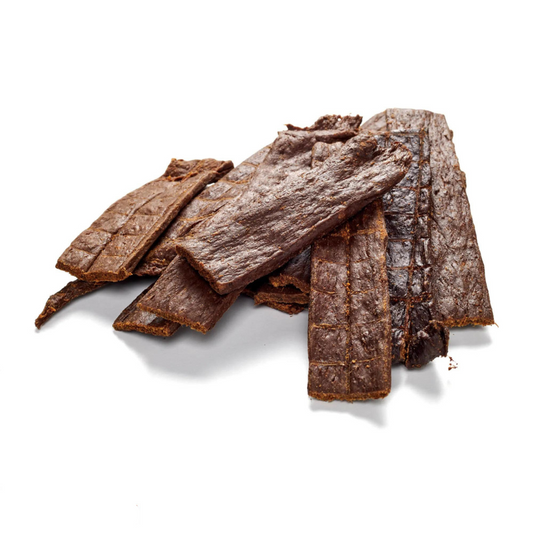
| high | soft meat or fish snacks, e.g. salmon training snack | training at medium distance |
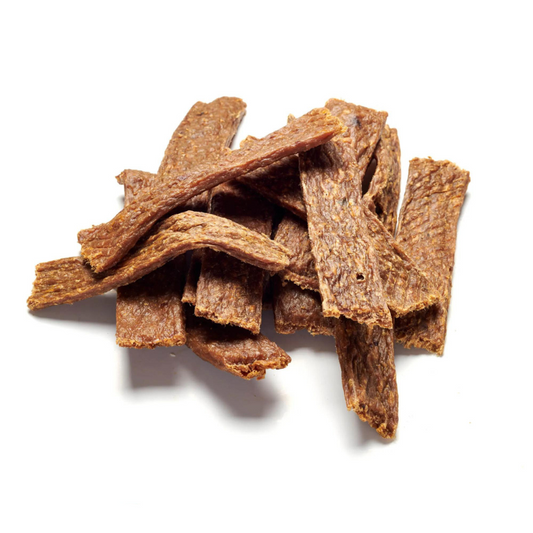
| medium | small training snacks, e.g. goat training snacks | everyday exercises, loose lead walking |
| basic | part of the daily ration | simple exercises without distractions |
Practical tips
- Pea-sized portions: Lots of small rewards work better than a few large ones.
- Keep them handy: A treat pouch on your belt saves valuable seconds. How to keep snacks fresh is explained in Treat pouch for walks.
- Offer variety: A mix of different varieties keeps motivation high.
- Count the calories: On training days, the main meal is a little smaller.
You will find a large selection in the categories training snacks, Softies and cheese snacks.
Especially valuable rewards for difficult moments:


Avoiding mistakes and getting help
The most common mistakes in encounter training are too little distance, too much at once and punishment. If you can't solve the problem on your own, a qualified dog trainer is the right support.
Typical mistakes
- Punishment and lead jerks: At best they suppress barking briefly and can intensify negative feelings towards other dogs.
- Pushing through: "He just has to get through this" overwhelms the dog and makes the next encounter harder.
- Treat only after the reaction: If the treat is only used as a distraction once the dog is already going wild, the learning effect is missing.
- Too many encounters: Several difficult encounters a day raise the stress level. Choose quiet routes and times at first.
When you need support
Get professional help if your dog reacts strongly even at a large distance, if there have been biting incidents or if you yourself are tense at every encounter. Also have your vet check whether pain plays a role.
Frequently asked questions about dog encounters
How do I practise relaxed dog encounters?
Start with so much distance that your dog sees the other dog but stays relaxed. Reward it every time it notices the other dog, and only reduce the distance in small steps. Short, successful training sessions are more effective than long ones.
What is counter-conditioning?
Counter-conditioning is a training method in which an unpleasant trigger is linked with something pleasant. Whenever another dog appears, there is always a special treat. Bit by bit, this changes how your dog feels about other dogs.
When do I give the treat during encounters?
As soon as your dog notices the other dog and before it reacts. As long as the other dog can be seen, more treats follow; after that they stop. If the treat only comes when your dog is already barking, the distance is too small.
My dog won't take treats during encounters – what now?
Then it is too stressed and the other dog is too close. Increase the distance until it can eat again. Also test whether an even more valuable, soft treat helps, and practise in quieter places at first.
How long does the training take?
That depends on the dog, its history and how often you practise. First progress often shows after a few weeks; until encounters are really relaxed, it can take several months. Setbacks after difficult encounters are normal.
Variety in your treat pouch:


Conclusion: distance, timing and the right treats
Relaxed dog encounters don't happen overnight, but they do with a clear plan: enough distance, a treat at exactly the moment your dog sees the other dog, and a distance that only shrinks slowly. Counter-conditioning changes your dog's feelings step by step – stress turns into anticipation. Especially valuable, soft rewards from the categories special treats and training snacks make training easier. Avoid punishment, plan encounters consciously and get professional support if reactions are strong.
Further reading on this topic:
- Anxious Dog: Building Trust with Treats
- Communication behavior of dogs
- Social contacts for dogs: Important for the psyche
This post was created with the help of AI