
Loose leash walking with treats
Loose leash walking with treats means rewarding your dog exactly when the leash hangs slack and they are walking at your side. If they pull, you stop moving – if they walk calmly, there is a reward and you keep going. That way your dog learns that walking on a loose leash pays off and pulling gets them nowhere.
Content: Loose leash walking with treats
- Why does your dog pull on the leash?
- Which treats are best for leash training?
- When do you reward during leash training?
- Exercises for loose leash walking
- Frequently asked questions about loose leash walking with treats
- Conclusion: loose leash walking with treats takes timing and patience
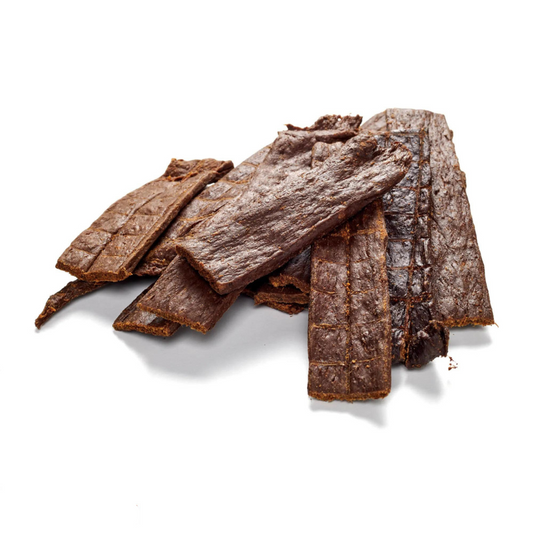
Soft rewards for on the go:


Why does your dog pull on the leash?
Your dog pulls on the leash because they are faster than you, want to reach exciting smells and have learned that pulling gets them where they want to go.
Dogs naturally walk at a different pace from humans. On top of that, every time your dog pulls and you follow, the pulling is rewarded. Without meaning to, many owners are actually training the opposite of loose leash walking. How to get your dog used to a collar or harness and leash in the first place is explained in our article Leash training: how do I get my dog used to the leash?. Here, the focus is on using rewards in a targeted way.
The right equipment
- A well-fitting harness: It spreads pressure across the chest and protects the neck. Our guide Collar or harness compares the pros and cons.
- A leash about two to three metres long: It gives your dog a little room to move without you losing control.
- A treat pouch: This keeps the rewards close at hand. You will find tips on choosing one in Treat pouch: how to keep dog treats fresh on the go.
Which treats are best for leash training?
The best treats for leash training are small, soft and strong-smelling treats that your dog can eat quickly while walking and that don’t crumble.
Out on a walk, the competition is fierce: smells, other dogs, wildlife trails. Your reward has to keep up. Soft treats have the advantage that your dog can eat them without much chewing and carry on walking straight away.
- Softies: For example ostrich and potato softies or horse training softies – soft, small and easy to portion.
- Training snacks: Small pieces such as the lamb training snack are ideal for lots of repetitions.
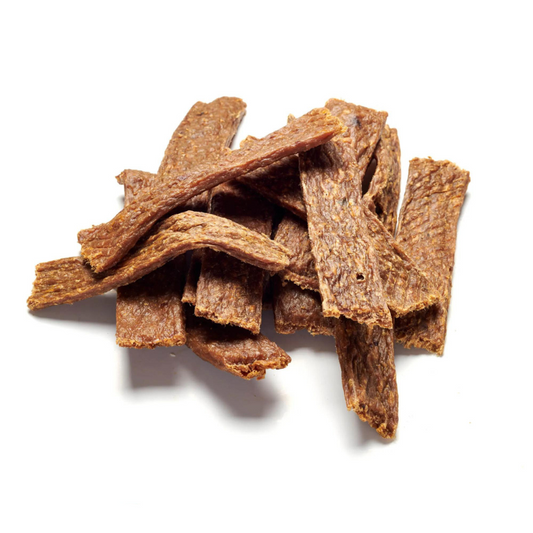
- Fish snacks: Their intense smell is often especially effective when distractions are strong.
Learn more about soft treats in our article Softies for dogs: how to use soft treats the right way. You will find a wide selection in our categories Softies, training snacks and soft meat cubes.
When do you reward during leash training?
During leash training you reward the moment the leash is slack and your dog is at your side – ideally before they start to pull.
Good timing is the most important factor for success. If you only reward after your dog has pulled and then backed off, they may learn the chain “pull – come back – treat”. So reward often while everything is relaxed.
The reward position
Always give the treat level with your leg, on the side where you want your dog to walk. This makes that spot especially attractive to them. Choose one side and stick to it, so your dog doesn’t keep switching sides in front of you.
How often should you reward?
| Training phase | Reward roughly | Environment |
|---|---|---|
| Start | every 1–2 steps | home, garden |
| Building | every 5–10 steps | quiet street |
| Advanced | irregularly | busy surroundings |
These figures are only a rough guide. When distractions increase, reward more often again.
A marker word such as “yes” or “good” helps you hit exactly the right moment – even if the treat only comes out of the pouch a second later. Say the marker word as soon as the leash is slack and your dog is walking at your side, then give the reward at your leg. That way your dog knows exactly what they were rewarded for and learns much faster.
Strong-smelling rewards for big distractions:


Exercises for loose leash walking
The most effective exercises for loose leash walking are stopping when the leash goes tight, changing direction and rewarding deliberately at your side.

- Charge the reward spot: Stand still and give your dog several treats in a row at your leg. Then take one step and reward again.
- Stop and stand: As soon as the leash tightens, stop. When your dog comes back or the leash goes slack, mark and walk on.
- Change direction: If your dog pulls in one direction, turn around in a friendly way and walk the other way. If they follow you, they get a reward at your side.
- Sniffing as a reward: After a stretch on a loose leash, use a cue such as “go sniff” to let your dog smell a strip of grass.
Keep training walks and everyday walks separate
Especially at the beginning, you can’t turn every walk into a training session – for example when you are in a hurry. That is why many trainers recommend clearly separating training rounds from everyday walks. For training rounds, for example, you always use the same harness and the same leash, and for everyday walks different equipment or a long line in a meadow where your dog is allowed to run. That keeps the rule “on this leash, pulling doesn’t pay” clear for your dog.
Increase distractions step by step
Loose leash walking that works in the hallway doesn’t mean your dog will also walk calmly on a busy street. So increase the difficulty in small stages: first home and garden, then a quiet side street, later a path with other walkers and only at the very end encounters with other dogs. At every new stage, reward more often again. If you notice that your dog no longer takes treats or becomes frantic, the distraction is too strong. In that case, increase the distance to the trigger instead of forcing the exercise.
Walks in the dark season
In autumn and winter, many walks take place at dusk. For leash training this means your dog is often more alert to sounds and smells, and you spot distractions later. So plan your focused training minutes in daylight whenever possible and make sure you are both clearly visible, for example with a light-up collar and reflective clothing.
Avoid common mistakes
- Inconsistency: If your dog is sometimes allowed to pull and sometimes not, they won’t understand the rule.
- Sessions that are too long: At the start, five to ten minutes of focused training is enough.
- Jerking the leash: Leash jerks can hurt and damage trust.
- Too little exercise: A dog with no chance to run and sniff is more likely to pull.
Frequently asked questions about loose leash walking with treats
How do I practise loose leash walking with treats?
Reward your dog at your side as long as the leash is slack. Stop when they pull and only walk on once the leash hangs loose again. Start in a low-distraction environment and increase the distractions slowly.
When do I reward during leash training?
Reward while the leash is slack – not only after pulling. Give the treat level with your leg so that the spot next to you becomes attractive.
Which treats are suitable on the go?
Small, soft and strong-smelling treats such as Softies, training snacks or fish snacks. They are quick to eat, hardly crumble and fit easily into a treat pouch.
How long does it take until my dog walks on a loose leash?
That depends on age, temperament and history. The first progress often shows after a few days, while reliable loose leash walking in busy surroundings usually takes weeks to months.
What can I do if my dog still pulls hard despite training?
Check whether the distraction is too strong and go back to training in a quieter environment. A dog trainer can also help. If your dog suddenly pulls differently from usual or is limping, have them checked by a vet.
Conclusion: loose leash walking with treats takes timing and patience
Practising loose leash walking with treats works when you consistently reward walking on a loose leash and pulling never gets your dog where they want to go. Give the reward at your side while the leash hangs slack, and use soft, strong-smelling treats. With short sessions, plenty of patience and clear rules, your walks will become more relaxed step by step.
Further reading on this topic:
- Recall training for dogs: the treat ranking
- Walking your dog in the dark: safe through the dark season
- Impulse control in dogs: exercises with treats
This post was created with the help of AI