
Anxious Dog: Building Trust with Treats
The best way to build trust with an anxious dog is to give it time, space and control over every approach, and to link good experiences with small, especially tasty treats. Treats are not bait here, but a gift with no strings attached: your dog decides how close it wants to come. In this guide you will learn step by step how to build trust, which snacks a stressed dog will accept and which mistakes to avoid.
Content: Anxious Dog: Building Trust with Treats
- Why is my dog anxious?
- Building trust with treats: how to do it
- Which treats will a stressed dog accept?
- Making everyday life safe for an anxious dog
- Avoiding typical mistakes when building trust
- Frequently asked questions about anxious dogs
- Conclusion: a confident dog through patience and treats
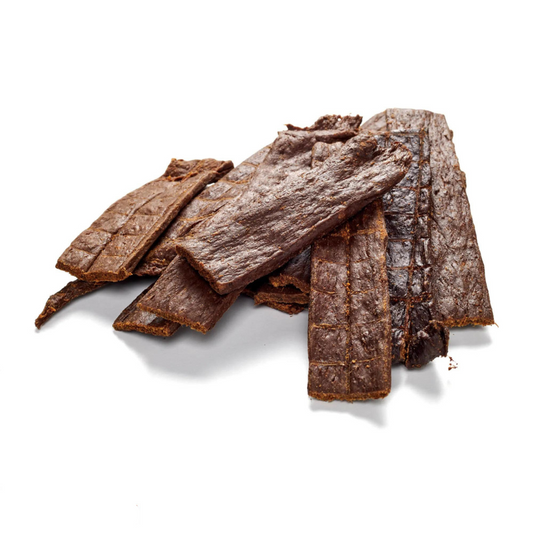
Soft treats that even stressed dogs happily accept:


Why is my dog anxious?
An anxious dog has usually never learned that people, noises or new situations are safe – or it has had bad experiences. Often several causes come together.
Common causes of anxiety in dogs
- Lack of socialisation: Dogs that hardly got to know people, everyday noises or city life as puppies often react insecurely later on.
- Bad experiences: Rough handling, punishment or a life on the street can leave deep marks.
- Temperament: Some dogs are naturally more cautious and sensitive than others.
- Big changes: A move, a new home or losing a person they were attached to unsettles many dogs.
- Pain or illness: Physical problems can also intensify fear and defensive behaviour. So always have your vet check first.
Rescue dogs in particular often bring a mix of these factors. You can read more about their special needs in our article Adopting street dogs.
Recognising fear: understanding body language
The earlier you notice insecurity, the better you can respond. Typical signs include:
- tucked tail, ears pinned back and a crouched posture
- lip licking, yawning or looking away
- visible whites of the eyes ("whale eye") and dilated pupils
- freezing, trembling, panting without heat or exertion
- retreating, hiding or – if there is no way out – growling and snapping
An important warning sign: if your dog suddenly stops taking treats, it is usually too stressed to eat. The situation is too much for it. Increase the distance instead of pressing the treat on your dog. You can find further reasons in the article Dog won't take treats.
Building trust with treats: how to do it
Building trust with treats works when your anxious dog is always allowed to decide how close it comes to you, and every approach is linked with something good without any pressure. That way it learns: being near you is safe and worthwhile.
Basic rules for handling an anxious dog
- Don't crowd it: Don't walk straight towards the dog, don't lean over it and don't reach for it.
- Stay side-on: Sit sideways on the floor and look past the dog. Direct eye contact feels threatening to many insecure dogs.
- Speak calmly: A soft, friendly voice helps more than lots of words.
- Respect its retreat: A dog in its bed or hiding place is left in peace – by every member of the family.
- Short sessions: A few minutes several times a day is better than one session that goes on too long.
The treat as a gift – not as bait
Many owners hold out a treat to an anxious dog and wait until it dares to come closer. This can create a conflict: the dog wants the food but has to come uncomfortably close to get it. If it grabs the snack and then gets a fright at how close it is, the experience tends to get worse. It is better to offer the treat so the dog can reach it without having to overcome its fear – for example by calmly rolling or tossing it in its direction.

Five stages to trust
- Give space: Toss the treat from a distance at which your dog can still eat in a relaxed way, and look away while you do it.
- Place it closer: Toss the next treats gradually a little closer to you – but only as close as your dog is comfortable with.
- Place it beside you: Put the treat on the floor next to you while you sit calmly.
- From a flat hand: Offer the snack on your open hand, held low, without moving your hand.
- A brief touch: Only when your dog seeks contact of its own accord do you stroke it briefly from the side on the chest or shoulder – and then stop again.
Always go back a stage whenever your dog becomes unsure. If your dog is mainly afraid of hands, our guide Understanding hand-shy dogs will help you.
Which treats will a stressed dog accept?
A stressed dog is most likely to accept small, soft and strong-smelling treats that it can swallow without much chewing. Hard snacks or large chews are usually unsuitable in tense moments.
What matters with treats for anxious dogs
| Property | Why it helps | Example |
|---|---|---|
| soft | eaten quickly, no chewing needed | Softies |
| small | lots of repetitions without too many calories | soft meat cubes |
| intense smell | sparks interest even when the dog is unsure | rabbit dog sausage |
| single protein | better tolerated when the history is unknown | soft rabbit meat cubes |
Using especially valuable rewards in a targeted way
For the most difficult moments, a "jackpot treat" that is only given then is worthwhile – for example soft chicken meat cubes or slices of sausage. You will find a large selection of snacks for special situations in the category special treats. Remember to deduct all treats from the daily food ration so your dog doesn't put on weight.
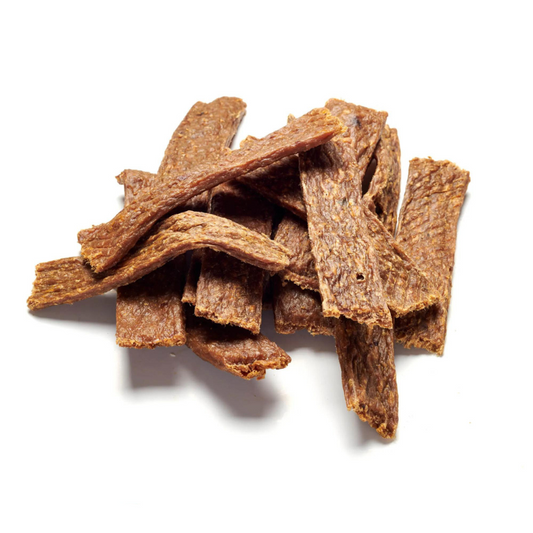
Small training softies for lots of calm repetitions:


Making everyday life safe for an anxious dog
An anxious dog gains trust more quickly when its daily routine is predictable, it has a safe place to retreat to and it is not constantly confronted with new stimuli.
Routines and a safe retreat
- Fixed routines: Feeding, walks and rest periods at the same times wherever possible.
- Quiet resting place: A corner away from foot traffic where your dog is never disturbed.
- Chewing to relax: A suitable chew in the safety of its bed can help reduce stress. How this works is explained in Chewing against stress.
- Dose new stimuli: Introduce visitors, noise and new places slowly and with breaks.
Safety on walks
Anxious dogs can panic when startled and wriggle out of their collar or harness. A well-fitting safety harness and an additional safety line are therefore sensible, especially in the early days. Choose quiet routes and times at first. On walks you can scatter treats in the grass for a little search game – sniffing has a calming effect on many dogs.
When you should get support
If your dog shows very strong fear, injures itself in a panic or reacts defensively, get help: your vet will rule out physical causes, and a professional trained in behaviour therapy or an experienced dog trainer will support you with the training. In some cases your vet can also advise on additional measures.
Avoiding typical mistakes when building trust
The most common mistakes when building trust are too much closeness, too much speed and well-meant comforting that crowds the dog. With patience you can avoid setbacks.
- Luring it close: Holding the treat close to your body and coaxing the dog in puts it under pressure.
- Touching straight away: If the dog takes the treat, that is not yet an invitation to be stroked.
- Everyone at once: Every family member wants to meet the new dog – better one after the other and at a distance.
- Overwhelming it: Outings, the training ground and visitors in the first few days are usually too much for an anxious dog.
- Punishment or scolding: Fear cannot be trained away. Punishment increases insecurity.
Setbacks are normal. Especially with dogs that have a difficult past, building trust can take weeks to months. Every small step forward counts.
Frequently asked questions about anxious dogs
How do I gain the trust of an anxious dog?
Give it time and space, let it make contact of its own accord and link your presence with good things such as treats, calm and food. Avoid approaching head-on, staring and grabbing. Small, regular successes build trust bit by bit.
Can I lure an anxious dog with treats?
Better not, in the sense of coaxing it towards you. If you hold the treat close to your body, the dog is caught in a conflict between food and fear. Instead, toss or roll the treat so it can reach it in a relaxed way, and only reduce the distance gradually.
Which treats will a stressed dog accept?
Small, soft and good-smelling snacks such as softies, soft meat cubes or slices of sausage work best. They can be eaten without much chewing. If your dog won't take anything at all, the stress is too high – then increase the distance to the trigger.
How long does it take for an anxious dog to trust you?
That varies a lot. Some dogs come out of their shell after a few days, others need weeks or months. What matters is patience, fixed routines and never asking more of your dog than it can cope with.
Does chewing help an anxious dog?
Chewing and licking have a relaxing effect on many dogs. A suitable chew in a safe retreat can therefore help it calm down. However, only give chews under supervision and never in a situation in which your dog is already very stressed.
Natural chews for quiet moments in the dog bed:


Conclusion: a confident dog through patience and treats
With an anxious dog, trust doesn't come from persuasion but from many small, good experiences in which it sets the pace itself. Treats are a valuable tool here – as a gift from a safe distance, not as bait. Soft, small and easily tolerated snacks such as Softies or soft meat cubes make it easy for your dog to accept them. Fixed routines, a safe retreat and patience with setbacks do the rest. If the fear is severe or you are unsure, your vet and a qualified professional are the right people to talk to. You will also find well-tolerated snacks in the category hypoallergenic chews.
Further reading on this topic:
- Understanding and supporting hand-shy dogs
- Chewing against stress: how chews calm dogs
- Softies for dogs: How to use soft treats the right way
This post was created with the help of AI