
Trimming dog nails without stress: success with rewards
Trimming your dog's nails works without stress when you get your dog used to having its paws handled in small steps and reward every bit of progress with a particularly tasty, soft treat. It is important to trim only small pieces of the nail at a time and not to injure the quick, the part of the nail that contains blood vessels. In this post you will learn how often nails should be trimmed, which tools are suitable and how reward-based training makes nail care easier, even for an anxious dog.
Content: Trimming dog nails without stress: success with rewards
- Why trimming your dog's nails matters
- How often should dog nails be trimmed?
- Trimming your dog's nails: the right tools
- Dog afraid of nail trimming: training with rewards
- Trimming dog nails step by step
- Frequently asked questions about trimming dog nails
- Conclusion: nail care with patience and treats
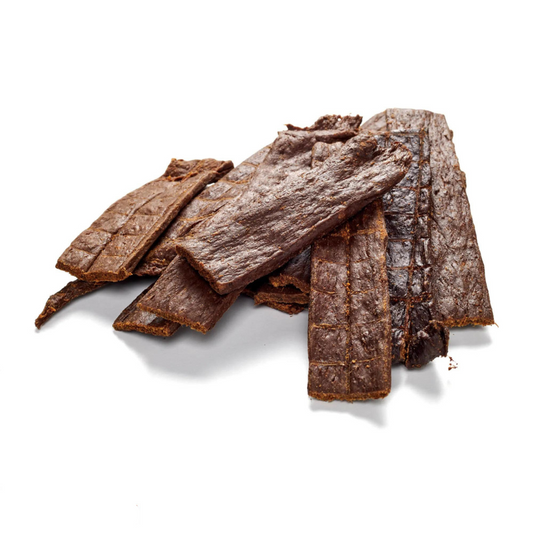
Soft rewards your dog can swallow quickly:


Why trimming your dog's nails matters
Nails that are too long change the position of the toes and can make walking uncomfortable – which is why trimming your dog's nails is part of regular care as soon as the nails no longer wear down enough on their own.
What happens when nails get too long?
If the nails touch the ground while your dog is standing, they push the toes upwards or to the side. Many dogs then shift their weight slightly, which can strain joints and tendons over time. Long nails can also tear or break more easily, which is painful and may bleed. The dewclaw on the inside of the front leg is particularly tricky: it does not touch the ground, so it hardly wears down and, in extreme cases, can curl and grow into the paw pad.
How can you tell that nails are too long?
- Clicking on hard floors: If you can hear your dog tapping across tiles or parquet, the nails are usually too long.
- Contact with the ground when standing: When your dog stands straight, the nails should barely touch the floor, if at all.
- Splayed or twisted toes: A sign that the nails are pushing the toes out of their natural position.
- Getting caught: If your dog snags on carpets or blankets, it is time for nail care.
The quick inside the nail
Blood vessels and nerves run through the inside of every nail – this is called the quick. In light-coloured nails you can see it as a pink area; in dark nails it is not visible from the outside. If the quick is cut, the nail bleeds and it hurts – and it is exactly this experience that makes many dogs permanently afraid of nail trimming. The longer the nails, the further forward the quick often grows. Trimming regularly in small steps is therefore gentler than rare, large cuts.
How often should dog nails be trimmed?
How often nails need to be trimmed depends mainly on how much they wear down while walking: many dogs need a trim every few weeks, while others get by with hardly any trimming thanks to lots of walking on asphalt.
Factors that determine the rhythm
| Situation | Wear | Recommendation |
|---|---|---|
| Lots of walks on asphalt and paving | high | check regularly, often only trim occasionally |
| Mainly meadows, forest, soft ground | low | check about every few weeks and trim as needed |
| Seniors and less active dogs | low | check more often, trim small pieces |
| Dewclaw | hardly any | look at it during every paw check |
As a rule of thumb, you can check the nails roughly every two to four weeks and only trim them when they touch the ground again. A small piece more often is better than a lot rarely – this is good both for the quick and for the training.
Older dogs often move less, so their nails get too long more quickly. Soft rewards from the category chews and snacks for older dogs are a gentle choice here. In winter it is worth taking an extra look at the paw pads during every nail check, as road salt and cold can dry them out.
Trimming your dog's nails: the right tools
For trimming your dog's nails, a sharp nail clipper in the right size or a nail grinder is suitable; ordinary human nail scissors are not, because they can squash or split the nail.
Nail clipper or nail grinder?
- Nail clipper: Quick and quiet. What matters is a sharp blade and a size that suits your dog. Blunt clippers squash the nail, which is unpleasant.
- Nail grinder: Removes the nail layer by layer, making it easier to spare the quick. The noise and vibration are unfamiliar to some dogs at first and should be practised separately.
- Nail file: Good for smoothing sharp edges after trimming.
What else you should have ready
- Styptic powder in case you do hit the quick
- Good light so you can see the nail clearly
- A non-slip mat on which your dog can stand or lie securely
- Small, soft treats that can be eaten quickly without long chewing
Why soft treats are the best reward
During paw training you reward very often at short intervals. Hard chews would interrupt the exercise. Soft Softies or soft meat cubes, on the other hand, are eaten in seconds and can easily be broken into very small pieces. For sensitive dogs there are single-protein varieties such as Softies Rabbit. You can read more about using soft rewards in a targeted way in our guide how to use Softies for dogs.
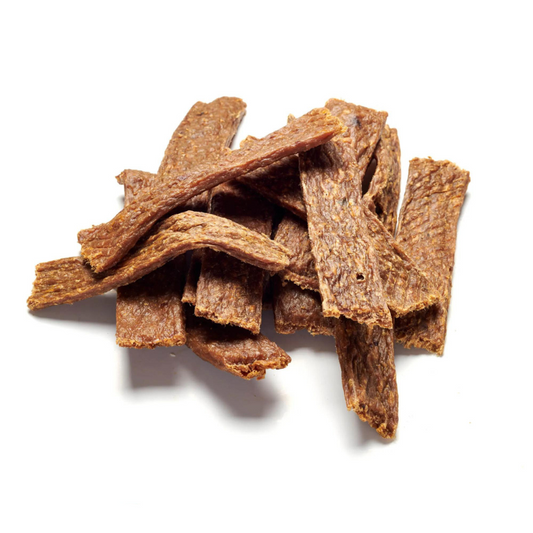
Tasty soft meat cubes for paw care:


Dog afraid of nail trimming: training with rewards
If your dog is afraid of nail trimming, step-by-step reward training helps: you only move on to the next stage – from briefly touching the paw to trimming a single nail – once your dog stays relaxed in the previous one.
The principle: small steps, big rewards
The goal is for your dog to associate nail care with something pleasant. To achieve this, every small touch is immediately followed by a treat. Our post Clicker and treats: getting the timing right explains how important the right timing is. It is better to practise for one to three minutes several times a day than once for a long time. End each session while your dog is still relaxed.

Recognising stress signals
Pay close attention to your dog's body language during training. Typical signs of discomfort are:
- Pulling the paw away, turning the head away or wanting to get up
- Licking the lips, yawning or panting without exertion
- A stiff body, flattened ears or visible whites of the eyes
- Suddenly refusing treats
If your dog shows such signals, go back one step and make it easier. You can read how to build trust in general in our post Anxious dog: building trust with treats.
A start signal that gives your dog a say
Many dogs relax when they are allowed to have a say. Teach your dog to rest its chin on your hand or a cushion. As long as the chin stays down, you continue – if your dog lifts its head, you pause immediately. This way your dog learns that it can influence the situation, and trust grows. Small training snacks such as Softies Poultry are particularly well suited to this exercise.
Trimming dog nails step by step
When actually trimming the nails, you shorten each nail by just a small tip, cut slightly at an angle in the direction of growth and reward your dog after every single nail.
- Choose a calm moment: Many dogs are tired and relaxed after a walk.
- Hold the paw gently: Hold the paw firmly but without pressure and spread the toe slightly.
- Check the nail: In light nails you can see the pink quick and stay a little away from it.
- Trim a small tip: Place the clipper at the tip and cut swiftly. With dark nails, take off wafer-thin slices.
- Look at the cut surface: If a dark, moist dot appears in the centre, you are close to the quick – stop here.
- Reward: There is a treat after every nail and a small extra portion after the last one.
- Smooth the edges: You can round off sharp edges with a file.
What to do if it bleeds
Stay calm and press a little styptic powder or a clean compress onto the nail for a few minutes. The bleeding usually stops quickly. Then end the session with a relaxed exercise and a reward. If the bleeding does not stop or the nail looks injured, inflamed or ingrown, contact your vet.
When the vet should take over
For very dark, very overgrown or ingrown nails, and for dogs with strong anxiety, it makes sense to have the nails trimmed at the vet's practice at first. You can find out how to make the visit more pleasant in the post Vet visit without stress. For dogs with food intolerances you will find suitable rewards among our hypoallergenic chews.
Variety for the reward after every nail:


Frequently asked questions about trimming dog nails
How do I trim my dog's nails?
Hold the paw gently, use a sharp nail clipper to trim only a small tip at a time and cut slightly at an angle in the direction of growth. With light nails, watch out for the pink quick; with dark nails, take off wafer-thin slices. Your dog gets a treat after every nail.
How often should a dog's nails be trimmed?
That depends on natural wear. Check the nails roughly every two to four weeks and trim them as soon as they touch the ground when your dog is standing or click on hard floors. The dewclaw often needs attention more frequently.
How do I make nail trimming stress-free?
Practise in short sessions and small stages: first touch the paw, then hold it, then show the tool and finally trim a single nail. Reward every step with a soft treat and end the exercise while your dog is relaxed.
Which treats are suitable as a reward for nail trimming?
Small, soft treats such as Softies or soft meat cubes, which your dog eats in seconds, are best. They do not interrupt the training and are easy to portion. Include the amount in your dog's daily food ration.
What do I do if I cut too short?
Press styptic powder or a clean compress onto the nail until the bleeding stops. Stay calm and end the session on a positive note. If it bleeds for longer or the paw seems painful afterwards, you should ask your vet.
Conclusion: nail care with patience and treats
Trimming your dog's nails does not have to be a battle: with regular checks, sharp tools, small cuts and patient reward-based training, nail care becomes routine for many dogs. Short training sessions, paying attention to stress signals and soft treats that are eaten quickly are what matter. If nails are ingrown, injured or your dog is very anxious, your vet can help. You will find a large selection of soft rewards in our Softies category.
Further reading on this topic:
- Dog care - care guide for your pet
- Winter paw care: salt, ice and cracked paw pads
- Vet visit: How to reduce stress for your dog
This post was created with the help of AI