
Deer Tendons and Deer Bones: Game Chews for Dogs
A deer tendon is a low-fat, tough game chew for dogs that keeps them busy for a long time and is well tolerated by many sensitive dogs. Deer bones, on the other hand, offer harder, particularly long-lasting chewing fun for strong chewers. In this overview you will learn which deer chews are available, how they differ and which dogs they are suitable for.
Content: Deer Tendons and Deer Bones: Game Chews for Dogs
- Are deer tendons good for dogs?
- Which deer chews are there?
- How hard are deer bones?
- Which dogs are deer chews suitable for?
- Feeding and storing deer chews correctly
- Frequently asked questions about deer tendons and deer bones
- Conclusion: deer chews for every type of chewer
Deer chews from tough to hard:


Are deer tendons good for dogs?
Yes, deer tendons are a good chew for most healthy dogs: they are low in fat, naturally dried and tough enough to keep your dog busy for a while.
What makes a deer tendon special
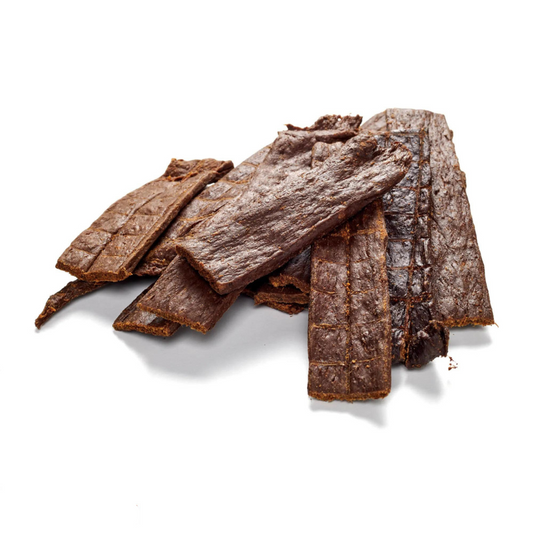
Tendons consist mainly of firm connective tissue. When dried they become hard and fibrous, but they gradually soften as they are chewed. As a result, your dog chews for a long time without the chew being as hard as a bone. Deer tendons include, among others, the neck tendon and the Achilles tendon. You can read more about Achilles tendons in general in our article Achilles tendons for dogs.
Advantages of deer tendons
- Low in fat: Tendons naturally contain little fat and fit well into a conscious diet.
- Game as a protein source: Deer is fed less often than beef or chicken and is therefore an option for many sensitive dogs.
- Long-lasting chewing fun: Depending on its size, a tendon keeps your dog busy for a medium to long time.
- Low odour: Dried deer tendons usually smell only moderately.
Which deer chews are there?
There is a wide range of deer chews – from tendons, bones, ribs and shoulder blade to skin, trachea, ears and antlers.
| Deer chew | Texture | Chewing time | Suitable for |
|---|---|---|---|
| Neck tendon | tough, fibrous | medium to long | most dogs |
| Deer bone | very hard | long | strong chewers |
| Shoulder blade | hard, flat | long | medium-sized to large dogs |
| Rib | hard | long | experienced chewers |
| Lower leg | hard, with bone | long | large dogs under supervision |
| Trachea | crunchy, rather soft | short to medium | small and older dogs |
| Skin and skin bones | firm | medium | sensitive dogs, dogs with allergies |
| Antler | very hard | very long | keen chewers |
Tendons and trachea
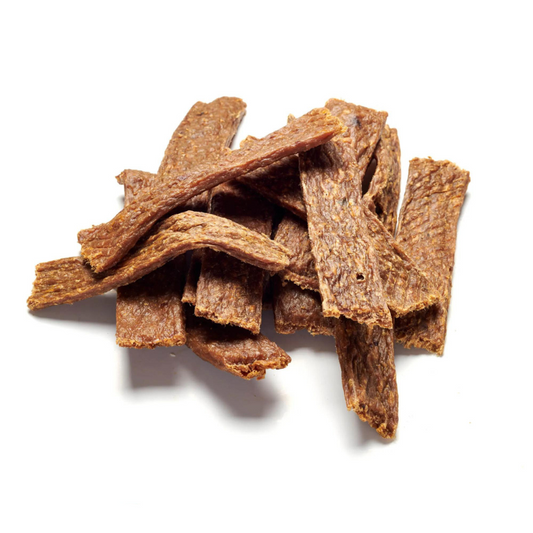
Tendons and trachea are among the more delicate deer chews. The deer trachea is crunchy and also suitable for smaller dogs or seniors.
Bones, ribs and shoulder blade
Deer bones, ribs and the shoulder blade are considerably harder and offer long-lasting chewing fun. They are better suited to dogs with healthy, strong teeth.
Antlers as a classic
Deer antlers are not tissue but bone substance that deer shed every year. They are very hard and long-lasting. How safe antlers are for dogs is explained in detail in the article Deer antler for dogs.
Game chews for small and large dogs:


How hard are deer bones?
Deer bones are among the hardest natural chews and are therefore mainly suitable for adult dogs with healthy teeth and a strong urge to chew.
What to look out for with hard chews
- Check the teeth: If your dog has dental problems, tartar or sensitive teeth, talk to your vet first.
- Choose the right size: The bone must be considerably larger than your dog’s mouth so that it cannot swallow it.
- Only dried bones: Never give cooked bones – they can splinter and cause injuries.
- Let your dog chew under supervision: Stay nearby, especially with lower legs that contain bone.
- Remove leftovers: Take small, sharp-edged pieces away from your dog in good time.
For some products, such as the deer lower leg, the product description itself explicitly points out the risk of splintering. You will find general safety rules in the article Leaving your dog alone with chews?.
Which dogs are deer chews suitable for?
Deer chews are suitable for many dogs – especially for sensitive dogs, dogs with allergies that react to frequently fed types of meat, and dogs that need low-fat chews.
Sensitive dogs and dogs with allergies
Game such as deer or roe deer is considered a rather rare protein source. For dogs with food allergies, deer can therefore be an option if they have had no contact with it so far. An allergy should, however, always be clarified by a vet. You will also find many deer chews in the hypoallergenic chews category.
Small, large and older dogs
- Small dogs: short tendons, trachea or thin deer skin
- Medium-sized dogs: neck tendons, skin bones and ribs
- Large dogs: bones, shoulder blade and lower leg under supervision
- Seniors: softer options such as trachea or tripe
- Puppies: preferably no very hard bones, but more delicate chews of a suitable size
You will find more game chews in the game and roe deer categories. Our guide Venison treats for dogs gives you ideas for small game snacks.
Feeding and storing deer chews correctly
The best way to feed deer chews is as a supplement in moderate amounts, introducing them slowly and storing them in a dry, cool and airy place.
Amount and frequency
Low-fat chews also provide energy. So include larger pieces such as a deer rib or a bone in the daily snack budget and reduce other treats on those days. For many dogs, a larger chew two to three times a week is a good guideline; smaller tendons or trachea can also be given more often.
Introducing new chews
If your dog is getting deer for the first time, start with a small piece and watch its stool, skin and behaviour over the following days. If it tolerates the chew well, you can slowly increase the amount. Always provide fresh water while it chews.
Storing correctly
Natural chews stay fresh longest when they are stored dry, cool and protected from direct sunlight. Breathable bags or boxes in which no moisture builds up are ideal. Do not leave chewed leftovers lying around for days, but put them away after chewing.
More delicate deer chews for sensitive dogs:


Frequently asked questions about deer tendons and deer bones
Are deer tendons good for dogs?
Yes, deer tendons are a low-fat, natural chew that keeps dogs busy for a medium to long time. They become fibrous and softer as they are chewed and are therefore well suited to most healthy dogs. Give them in a suitable size and under supervision.
Which deer chews are there?
There are deer tendons, deer bones, ribs, shoulder blades, lower legs, trachea, skin, skin bones, ears, tripe and antlers. This gives you both delicate and very hard game chews.
Which dogs are deer chews suitable for?
They are suitable for many dogs, especially sensitive dogs, dogs with allergies to common types of meat and dogs that need a low-fat diet. Hard bones are better suited to adult, strong chewers.
How long does a deer tendon last?
That depends on the size of the tendon and your dog’s chewing strength. A small dog can keep itself busy with it for longer, while a large, strong chewer is usually finished more quickly. As a rule of thumb, tendons offer medium to long-lasting chewing fun.
Do deer bones splinter?
Dried, natural deer bones are very hard. As with all bones, pieces can come loose during chewing, so you should always supervise your dog and remove small leftovers. Cooked bones are strictly off limits.
Conclusion: deer chews for every type of chewer
Deer tendons are a low-fat, tough game chew for dogs that keeps them busy for a long time and is well suited to many sensitive dogs. If you are looking for particularly long-lasting chewing fun, choose deer bones, ribs or shoulder blade – always in a suitable size and under supervision. More delicate options such as trachea or skin suit small and older dogs. In the case of allergies, dental problems or uncertainty, your vet will advise you. You will find all deer chews in our deer category.
Further reading on this topic:
- Game meat for dogs
- Deer as a Chew: Game Meat for Sensitive Dogs
- Achilles Tendons for Dogs: Chewing Fun with Natural Collagen
This post was created with the help of AI