
Deer as a Chew: Game Meat for Sensitive Dogs
Venison for dogs is a great choice if your four-legged friend has a sensitive stomach or reacts to common meats such as beef or chicken: roe deer meat is lean, well tolerated by many dogs and available as chews in many forms – from deer skin to deer bones. In this post, you'll find out which deer chews are available, which dogs they suit and what to keep in mind when feeding them.
Content: Deer as a Chew: Game Meat for Sensitive Dogs
- Why is deer a special chew for dogs?
- What deer chews are there?
- Is deer good for dogs with allergies?
- Is roe deer meat low in fat? Deer snacks compared
- Feeding deer chews correctly: safety and amount
- Frequently asked questions about deer for dogs
- Conclusion: deer for dogs with sensitive stomachs
Deer chews for relaxed chewing:


Why is deer a special chew for dogs?
Deer is a special chew for dogs because it combines lean game meat with a protein source that many dogs have never eaten before. For sensitive dogs in particular, this is an advantage over the classics made from beef, pork or poultry.
Game instead of everyday meat
Most dog foods and snacks are based on beef, chicken or lamb. If a dog has eaten these meats for years, an intolerance can develop. Deer, on the other hand, rarely ends up in the bowl and is therefore a new, so-called "novel protein" source for many dogs. You'll find a general overview of red deer, wild boar and the like in our post Game meat for dogs – here we focus on chews and snacks made from roe deer.
What makes deer chews special
- Lean: Roe deer meat is considered a particularly low-fat meat.
- Single protein: Dried deer chews usually consist of just one animal species.
- Versatile: From soft cubes to hard bones, there is something for every chewing intensity.
- Natural: Gently dried, without additives such as sugar or artificial flavourings.
You'll find all products from this species in our category deer chews and snacks. Discover other game meats such as red deer or wild boar under game chews.
What deer chews are there?
The main deer chews are made from skin, skin with fur, lower legs, bones and back, plus small snacks such as meat cubes and meat strips. They differ mainly in hardness, chewing time and size.
Deer chews at a glance
| Chew | Hardness | Chewing time | Suitable for |
|---|---|---|---|
| Deer skin | medium | medium | small to medium-sized dogs, beginners |
| Deer skin with fur | medium | medium | dogs that tolerate fur as roughage well |
| Deer lower leg | high | long | medium-sized to large, experienced chewers |
| Deer bones | high | long | adult dogs, only under supervision |
| Deer back | medium to high | medium | dogs with chewing experience |
| Meat cubes and meat strips | soft to medium | short | training, rewards, seniors |
Deer skin: the gentle introduction
Dried deer skin is a comparatively light chew. It is easy to chew up and suits dogs trying deer for the first time. The deer skin with fur variant also contains the natural fur, which passes through the gut like dietary fibre. However, there is no evidence that fur in the gut actually helps against worms – read more in our post Rabbit ears with fur. You'll find more products with fur in the category chews with fur.
Deer lower leg, bones and back: for persistent chewers
Lower legs consist of skin, tendons and bone and are considerably harder than skin alone. They keep strong dogs busy for longer and work the chewing muscles. The deer back contains vertebrae with meat attached and is also better suited to dogs with chewing experience. Similarly long-lasting chews are also available from other species, such as hooves and feet.
For dogs with chewing experience:


Is deer good for dogs with allergies?
Deer is well suited to many dogs with food allergies because most dogs have never eaten this protein source. What matters is that your dog has not reacted to deer before and that the chew really consists of deer only.
Why a new protein source helps
Food allergies are usually directed against certain proteins the dog has frequently been in contact with. A previously unknown meat such as deer lowers the risk of a reaction. That is why game is often used in an elimination diet, in which the vet finds out step by step what your dog tolerates.
What to look out for with allergies
- Talk to your vet: If you suspect an allergy, a veterinary examination should come first.
- Just one type: Choose single-protein chews without other meats or additives.
- Introduce slowly: Start with a small amount and watch skin, coat and digestion for a few days.
- Stay consistent: During an elimination diet, only the foods and snacks recommended by your vet are allowed.
Find out why snacks with just one type of meat make feeding so much clearer in our guide single protein snacks. Our category hypoallergenic chews offers a wide selection of well-tolerated varieties.
Is roe deer meat low in fat? Deer snacks compared
Yes, roe deer meat is low in fat: it is one of the leanest meats suitable for dogs. With chews, however, the fat content also depends on which part of the animal is used.
Meat, skin and bones compared
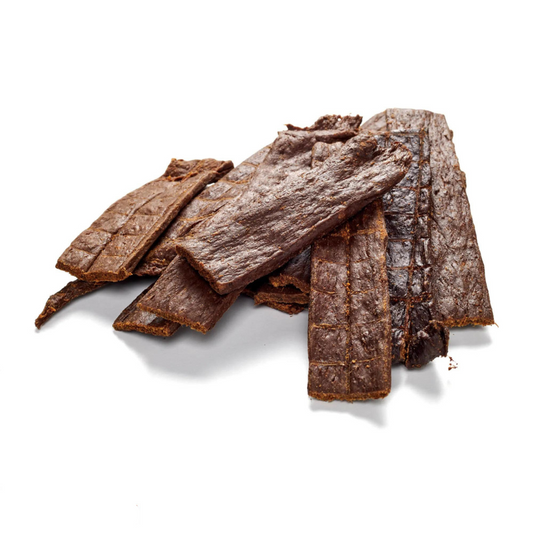
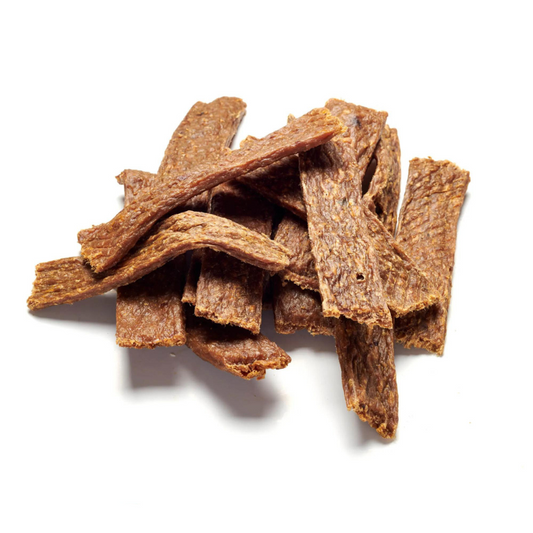
Pure deer meat, for example in the form of deer meat strips, is particularly lean. Skin, tendons and bones contain more connective tissue and minerals, and bones also contain some marrow. You'll always find the exact crude fat content in the product description – compare it if your dog needs a low-fat diet.
Who benefits from low-fat deer snacks
- Overweight dogs that still shouldn't miss out on rewards
- Dogs with a sensitive digestive tract that don't tolerate fatty snacks well
- Dogs prone to pancreatic problems – please always discuss this with your vet
- Seniors that move less and need less energy
You'll find more lean varieties in our category low-fat chews.
Deer treats for training and everyday life
Besides classic chews, deer is also available as small rewards. The venison meat cubes mini are great for training, while the soft deer meat cubes are tender and therefore also pleasant for older dogs with sensitive teeth.
Small deer treats for in between:


Feeding deer chews correctly: safety and amount
You feed deer chews correctly if size and hardness suit your dog, you stay close while it chews and you count the snacks towards the daily food ration.
Safety while chewing
- Only raw dried bones: Deer bones and lower legs are raw dried. Never give your dog cooked or roasted bones, as they can splinter.
- Always under supervision: Stay nearby while your dog chews and remove small leftover pieces before it swallows them whole.
- Choose the right size: The chew should be large enough that your dog cannot swallow it in one go.
- Provide fresh water: Dried chews make dogs thirsty.
- Not for gulpers: Dogs that wolf down their food are better off with softer snacks.
How much deer is OK?
Chews and treats together should make up no more than about 10 percent of the daily energy requirement. A large chew such as a lower leg therefore replaces part of the other snacks that day. Bones are best given only occasionally, as too much bone can lead to hard stools or constipation.
For puppies and seniors
Teething puppies and older dogs with sensitive teeth are better served by softer options such as deer skin or soft cubes than by hard bones. If your dog has dental problems or you are unsure, ask your vet for advice.
Frequently asked questions about deer for dogs
Is deer good for dogs with allergies?
Yes, deer is well suited to many allergic dogs because it is a protein source most dogs don't know yet. It is important that the chew consists of deer only. If your dog has an existing allergy, discuss new snacks with your vet.
What deer chews are there?
Typical options are deer skin, deer skin with fur, deer lower legs, deer bones and deer back. There are also smaller snacks such as meat cubes and meat strips. They differ mainly in hardness and chewing time.
Is roe deer meat low in fat?
Yes, roe deer meat is one of the leanest meats for dogs. Chews with skin, bone or marrow can contain a little more fat than pure meat. You'll find the exact value in the product description.
Can dogs eat deer bones?
Raw dried deer bones are suitable for many adult dogs if size and chewing behaviour fit. Give them only occasionally and always under supervision. Cooked bones are off-limits as they can splinter.
Is deer suitable for puppies?
Soft deer snacks and deer skin are also suitable for puppies if given in small amounts. Hard chews such as bones or lower legs are less suitable for growing teeth. During teething, softer chews are the better choice.
Conclusion: deer for dogs with sensitive stomachs
Venison for dogs is a lean, well-tolerated alternative to the usual meats and is particularly suitable for sensitive dogs and allergy sufferers. Whether deer skin for beginners, lower legs and bones for persistent chewers or small deer treats for training – there is a suitable chew for almost every dog. Pay attention to the right size, only feed raw dried bones under supervision and count snacks towards the daily ration. If your dog has allergies or digestive problems, your vet is the right person to ask. You'll find the full selection in our category deer.
Further reading on this topic:
- Game meat for dogs
- Single protein snacks: treats with just one type of meat
- Hooves and Feet as Dog Chews: What to Look Out For
This post was created with the help of AI