
Rabbit Ears with Fur: Natural Dewormer or Myth?
Rabbit ears with fur are considered a natural dewormer by many dog owners – but there is no scientific evidence that they work against worms. Chews with fur are a popular, fibre-rich snack, but they replace neither a deworming treatment nor regular faecal tests at the vet. In this article, you'll learn what's behind the myth, what the fur actually does in the gut and how often your dog can eat rabbit ears with fur.
Content: Rabbit Ears with Fur: Natural Dewormer or Myth?
- Do rabbit ears with fur help against worms?
- What does the fur do in a dog's gut?
- Rabbit ears with fur: benefits for dogs
- How often can a dog eat rabbit ears with fur?
- Other chews with fur compared
- Frequently asked questions about rabbit ears with fur
- Conclusion: A tasty chew, not a dewormer
Natural rabbit chews with fur:


Do rabbit ears with fur help against worms?
No – based on current knowledge, rabbit ears with fur do not reliably help against worms. There is no scientific evidence that fur prevents or eliminates a worm infestation.
Where does the myth come from?
The idea comes from the observation that wild dogs and wolves eat their prey including fur and feathers. According to this notion, the indigestible fur acts like a kind of “brush” in the gut and mechanically sweeps worms out. This explanation sounds plausible and is often passed on in forums and on social media. However, there are no robust studies showing a deworming effect.
Why fur is no substitute for deworming
- Worms hold on tight: Many intestinal parasites anchor themselves in the intestinal lining and can't simply be “brushed away”.
- Eggs and larvae remain: Even if individual worms were expelled, eggs and developmental stages would remain in the body or the environment.
- Not all worms live in the gut: Fur in the gut doesn't reach heartworms or lungworms at all.
- No measurable protection: Only a faecal test shows whether a dog has worms – not its diet.
How often deworming or a faecal test makes sense depends on your dog's individual risk. Expert bodies recommend deciding this together with your vet. You can read more in our articles Worm treatment for dogs and Parasite protection for your dog.
What does the fur do in a dog's gut?
Dogs barely digest fur, so in the gut it acts mainly as roughage: it increases the volume of the intestinal contents and is passed out again with the stool.
Fur as natural roughage
Fur consists mostly of keratin, a protein that dogs can't break down. In the gut, it absorbs fluid, loosens the stool and stimulates bowel movement. Many owners notice slightly firmer, bulkier stools after chews with fur. This can be a welcome change, especially for dogs that mainly eat very finely processed food.
What you should keep an eye on
- Bowel movements: Bits of fur in the stool are normal. Hard, dry stools or straining, on the other hand, can be a sign of too much fur.
- Vomiting: Occasionally dogs bring up bits of fur. If this happens more often, reduce the amount.
- Water: Always provide fresh drinking water so that the fur can pass through the gut easily.
Our guide Bowel movements in dogs explains what's normal and when you should take a closer look.
Rabbit ears with fur: benefits for dogs
Even without a deworming effect, rabbit ears with fur have real benefits: they are lean, usually well tolerated, light and offer a short, natural chewing experience for dogs of all sizes.
What makes rabbit ears special
- Lean meat: Rabbit is considered a low-fat type of meat. The ears consist mainly of cartilage and skin.
- Single protein: Dried rabbit ears are made from just one ingredient – handy for dogs with sensitive stomachs or food intolerances.
- Chewing and enrichment: Chewing can have a calming effect and supports the mechanical cleaning of the teeth.
- For small and large dogs: Thanks to their handy size, they are also suitable for small breeds and older puppies.
- Naturally dried: Without additives such as sugar, flavourings or preservatives.
With or without fur?
| Feature | Rabbit ears with fur | Rabbit ears without fur |
|---|---|---|
| Roughage | higher thanks to the fur | low |
| Fat content | low | low |
| Tolerance | usually good, introduce slowly | usually good |
| Suitable for | healthy adult dogs with stable digestion | very sensitive dogs as well |
If your dog is sensitive to fur, rabbit ears without fur are a good alternative. You'll find all varieties in our rabbit category.
Rabbit snacks without fur for sensitive dogs:


How often can a dog eat rabbit ears with fur?
For most healthy adult dogs, rabbit ears with fur are fine several times a week – what matters is that the amount suits the size of the dog and that snacks make up only a small part of the daily ration overall.
A guide by dog size
| Dog size | Recommendation (guide) |
|---|---|
| small dogs (up to approx. 10 kg) | half an ear to one ear, on a few days a week |
| medium-sized dogs (approx. 10–25 kg) | one to two ears, on a few days a week |
| large dogs (over 25 kg) | two to three ears, on a few days a week |
These values are a rough guideline. Watch how your dog reacts and adjust the amount. As a rule of thumb, all treats and chews combined should provide no more than about 10 percent of daily energy needs.
How to introduce rabbit ears with fur
- Start small: Offer a single ear or half an ear to begin with.
- Monitor digestion: Pay attention to stool and wellbeing over the next one to two days.
- Supervise chewing: Greedy dogs in particular like to gulp – stay close by.
- Increase gradually: If your dog tolerates the ear well, you can slowly increase the frequency.
When you should be careful
- with dogs prone to constipation or digestive problems
- with young puppies – it's better to choose soft chews without fur
- after gastrointestinal surgery or with known medical conditions – talk to your vet first
Other chews with fur compared
Besides rabbit ears, there are many other chews with fur that differ mainly in size, hardness and chewing time – from short fur strips to long strips of beef scalp.
Popular varieties at a glance
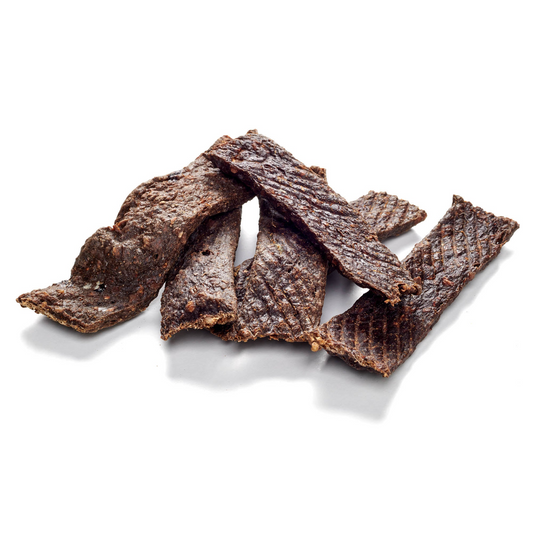
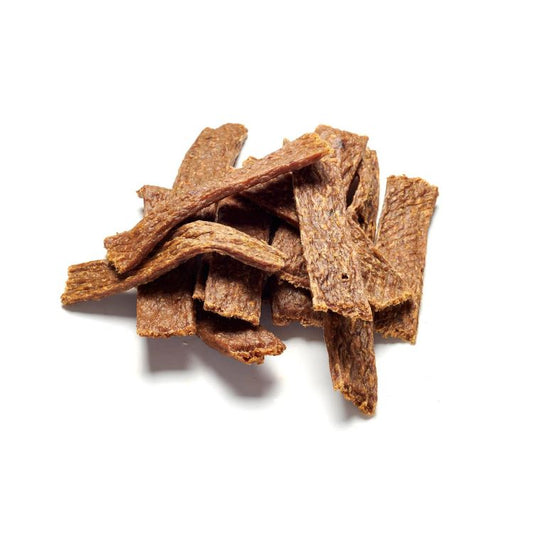
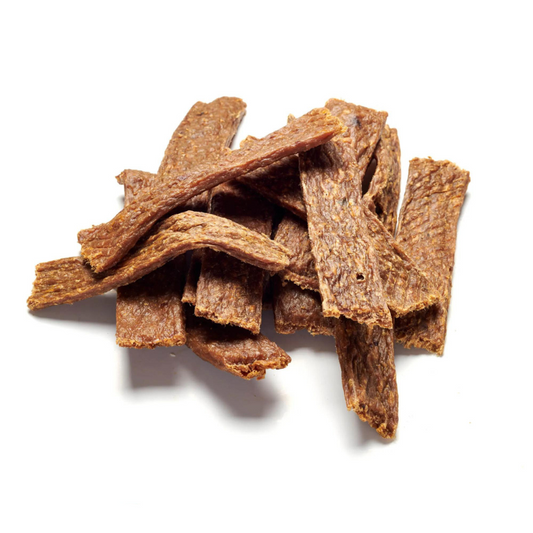
- Rabbit fur strips: thin and light, easy to portion – for example our Rabbit fur strips.
- Rabbit paws with fur: small and crunchy, a short chewing treat.
- Lamb, goat or cow ears with fur: larger and sturdier, for medium-sized and large dogs.
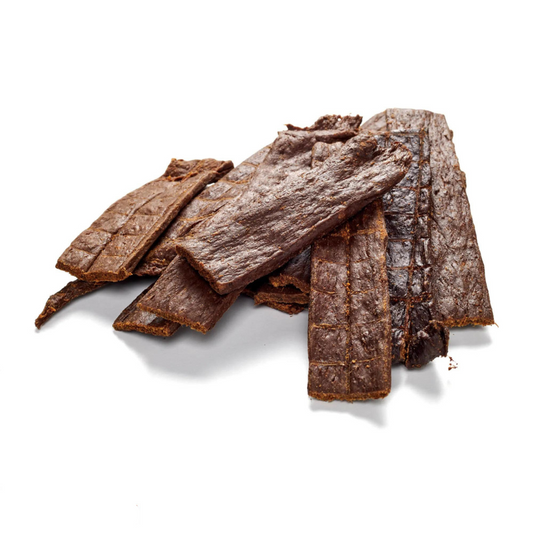
- Beef fur strips: tougher and longer, providing extended chewing time.
- Noses with fur: from goat or lamb, for example, with a varied texture.
You'll find the complete range in our chews with fur category. If you're looking for ears in all varieties, take a look at the ears category. For dogs with intolerances, the hypoallergenic chews category is a good place to start.
Chews with fur for more chewing time:


Our article Proper storage of chews explains how to store chews with fur so that they stay fresh for a long time.
Frequently asked questions about rabbit ears with fur
Do rabbit ears with fur help against worms?
A deworming effect has not been scientifically proven. The fur acts as roughage in the gut, but it can neither reliably prevent nor treat a worm infestation. Only a faecal test at the vet shows whether your dog has worms.
Are chews with fur good for dogs?
For healthy adult dogs, chews with fur are a natural, fibre-rich snack in moderation. They provide chewing enrichment and are often lean. Dogs with sensitive digestion or a tendency towards constipation should only have them with caution and after consulting the vet.
How often can a dog eat rabbit ears with fur?
For most healthy dogs, they're fine on a few days a week, adjusted to the size of the dog. It's important that all snacks combined make up only a small part of the daily ration. Monitor digestion and reduce the amount if the stool becomes very hard.
From what age can puppies have rabbit ears with fur?
For young puppies, soft chews without fur are usually the better choice. Older puppies with stable digestion can occasionally try a rabbit ear – ideally in small amounts and under supervision. If you're unsure, ask your vet.
Is it normal to see fur in the stool?
Yes, that's normal, because fur is barely digested and is passed out again. It only becomes a concern if your dog has trouble passing stool, vomits frequently or seems unwell. In that case, reduce the amount and see your vet if necessary.
Conclusion: A tasty chew, not a dewormer
Rabbit ears with fur are not a natural dewormer – this effect is a widespread myth without a scientific basis. As a chew with fur, they still have their place: they are lean, usually well tolerated, provide roughage and offer natural chewing fun. Only appropriate deworming or regular faecal tests, best agreed with your vet, help against worms. That way your dog can enjoy its snack – and stay reliably protected against parasites at the same time.
Further articles on this topic:
- Worm treatment for dogs
- Chew articles for dogs: Why they're important and which ones are available
- Low-Fat Dog Chews for Overweight Dogs & Pancreatitis
This post was created with the help of AI