
Chews for Labradors and retrievers: greedy but healthy
The best chews for Labradors and retrievers are robust, fairly low in fat and long-lasting – for example chew plates made from scalp, rolled hide or lean lung, complemented by small, low-calorie training snacks. Because many Labradors are highly food-motivated and gain weight easily, every treat counts. In this post you will learn why Labradors are so greedy, how to prevent weight gain and which chews suit your retriever.
Content: Chews for Labradors and retrievers: greedy but healthy
- Which chews are suitable for Labradors?
- Why are Labradors so greedy?
- Preventing weight gain in Labradors
- Dosing chews for Labradors correctly
- Activities for retrievers: chewing, searching, retrieving
- Frequently asked questions about chews for Labradors
- Conclusion: chews for Labradors and retrievers with a sense of proportion
Long-lasting chew plates for strong retrievers:


Which chews are suitable for Labradors?
Large, firm chews with a low fat content that keep a Labrador busy for a long time and cannot be gulped down in one go are the best choice. Chew plates, scalp and rolled hide are typical examples.
Robust chews for long-lasting fun
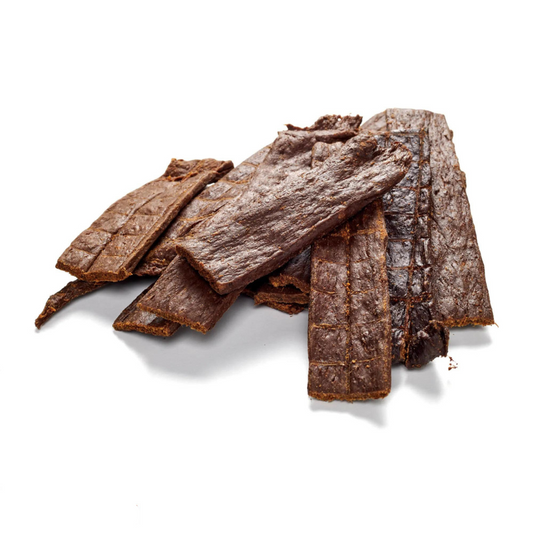
- Chew plates: Flat, large chew plates such as our buffalo scalp plate challenge even strong jaws.
- Long scalp: Long strips such as beef scalp, long are tough and easy to hold.
- Rolled or braided hide: Thanks to the shape, chewing takes longer and your dog has to work its way through piece by piece.
- Low-fat varieties: In our low-fat chews category you will find many lean alternatives.
The right size for large dogs
Labradors and golden retrievers tend to break chews down as quickly as possible or swallow large pieces. So it is better to choose one size up and take away small end pieces in good time. Our post chew plates for dogs gives you helpful tips.
Why are Labradors so greedy?
Labradors are often particularly greedy because they were bred as working dogs that respond well to food rewards, and because researchers have found a gene variant in some Labradors that is associated with stronger hunger and higher food motivation. On top of that, eating is simply a great pleasure for many retrievers.
Reasons for strong food motivation
- Genetics: Research suggests that a change in the so-called POMC gene can affect the feeling of fullness in some Labradors and flat-coated retrievers. Not every Labrador carries this variant.
- Breeding history: As retrieving and working dogs, retrievers have been rewarded with food for generations and selected for cooperation.
- Learning experience: A dog that succeeds at begging will beg more often. Every titbit from the table reinforces the behaviour.
- Boredom: Under-challenged retrievers look for something to do – often at the food bowl or in the bin.
For you as an owner, this means that a Labrador who always seems hungry does not automatically need more food. Fixed mealtimes, conscious snack planning and enough activity are much more important. You can read more about this group of breeds in our post retriever dogs.
Redirecting begging kindly
Consistency is the best remedy for begging at the table: never give anything from your plate and reward your dog instead when it lies calmly in its place. Its own chew on its blanket can turn the family's mealtime into a regular chewing time for your dog. Plan this chew into the daily budget. It also helps to split the daily ration into two or three meals to avoid long hungry spells. Special food toys or snuffle mats extend eating time without your retriever taking in more energy.
Preventing weight gain in Labradors
The best way to prevent weight gain in Labradors is with weighed food portions, planned snacks, regular weight checks and plenty of exercise. Since the breed can be prone to joint problems, a slim weight is especially valuable for Labradors.
How to keep your retriever slim
- Weigh the food: Use kitchen scales instead of a measuring cup to portion the daily ration precisely.
- Plan snacks: Treats and chews together should provide no more than about 10 percent of daily energy.
- Deduct from the main food: Subtract the energy from snacks from the main food, especially on training days.
- Check the figure: The ribs should be easy to feel but not visible. A waist should be visible from above.
- Involve the family: Clear rules prevent everyone from slipping the dog "just a little bit".
- Ask your vet: If your dog is clearly overweight, your vet can help you with an individual plan.
Our post recognising if your dog is overweight: the rib test shows you how to assess your dog's figure yourself. You will find the calculations for the snack budget in how many treats per day?.
Lean snacks for food-loving retrievers:


Dosing chews for Labradors correctly
You dose chews for Labradors correctly by counting large chews as part of the daily budget and reducing other treats on those days. A single large chew can already provide a considerable share of the snack energy.
Roughly estimating energy content
| Chew | Fat content (tendency) | Tip for Labradors |
|---|---|---|
| Lung, dried | low | light, ideal for lots of small rewards |
| Scalp, hide plates | low to medium | long-lasting, keep an eye on weight |
| Chicken fillet, dried | low | lean, easy to split |
| Pig ears, marrow bones | high | only rarely and consciously |
Practical rules for everyday life
- Chews in stages: Take large chew plates away after one chewing session and give them again the next day.
- Train with food: Use part of the normal daily ration as a reward on walks.
- Small pieces: What counts for your dog is the reward, not its size. Mini pieces are enough.
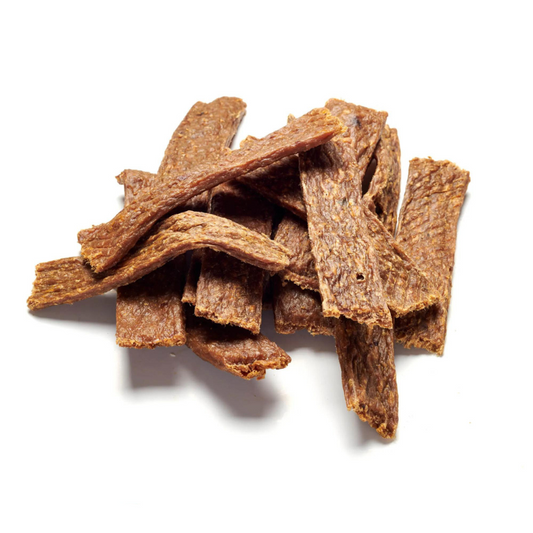
- Lean snacks: Lamb lung or chicken training snack are light rewards.
Activities for retrievers: chewing, searching, retrieving
Besides chews, retrievers above all need activities that appeal to their nose and their retrieving instinct. If you keep your Labrador physically and mentally busy, you will often reduce constant begging too.
Ideas for a well-exercised Labrador
- Dummy training: Retrieving dummies reflects the original task of retrievers.
- Food search: Hide part of the daily ration in the garden or at home and let your dog search for it.
- Chewing time: A calm chewing session in the evening helps many dogs wind down.
- Swimming: Many Labradors love water. Swimming is easy on the joints and tiring at the same time.
Labrador and golden retriever compared
Labradors and golden retrievers are similar in their love of food and their need for tasks. Both breeds are medium-sized to large with strong jaws, so they usually take to robust chews well. With golden retrievers, too, it pays to keep an eye on weight and joints and to prefer lean varieties. For both breeds: chews do not replace exercise, they complement it.
You will find more chews for long-lasting activity in our chewing fun category, and small rewards for training among our training snacks.
Tough chews for calm chewing breaks:


Frequently asked questions about chews for Labradors
Which chews are suitable for Labradors?
Large, robust and fairly low-fat chews such as chew plates, long scalp or rolled hide are well suited. They keep dogs busy for a long time and cannot be swallowed in one go. Lean snacks such as lung or dried chicken fillet are good rewards in between.
Why are Labradors so greedy?
Strong food motivation has several causes: the breed's history as a working dog, learned begging and, in some dogs, a gene variant associated with stronger hunger. More food is therefore not the solution – fixed rations and activity help more.
How do I prevent weight gain in my Labrador?
Weigh the food, count snacks in and deduct their energy from the main food. Check weight and figure regularly and make sure your dog gets enough exercise. If your dog is clearly overweight, your vet will draw up a plan with you.
How often can a Labrador have a chew?
Many Labradors enjoy a short chewing session every day. What matters is that the chew fits into the daily budget and that other treats are reduced on that day. You can spread large chew plates over several days.
Are chews also suitable for young retrievers?
Yes, but puppies and young dogs need softer, smaller chews, especially while their teeth are changing. Very hard chews are not suitable for them. Always offer chews under supervision.
Conclusion: chews for Labradors and retrievers with a sense of proportion
Chews for Labradors and retrievers should be robust, big enough and as low in fat as possible. Because many retrievers are very greedy and gain weight easily, snacks belong firmly in the daily budget: weigh the food, deduct treats and check the weight regularly. With chew plates, scalp and lean training snacks combined with dummy training and nose work, your Labrador stays busy and slim. If there are weight problems or joint complaints, your vet is the right person to ask. You will find suitable snacks in our categories low-fat chews and chew plates.
Further reading on this topic:
- Low-Fat Dog Chews for Overweight Dogs & Pancreatitis
- Dummy Training: Retrieving with a Food Pouch
- Chews for pugs, French bulldogs & co.
This post was created with the help of AI