
Chew Plates for Dogs: Long-Lasting Fun for Big Chewers
A chew plate for dogs is a flat, large dried chew – usually made of cowhide, buffalo hide or tripe – that keeps large and powerful chewers busy for a long time. Thanks to its wide shape, your dog can't simply bite pieces off but has to work on the plate bit by bit. Here you'll find out which chew plates are available, which dogs they suit and how to feed them safely.
Content: Chew Plates for Dogs: Long-Lasting Fun for Big Chewers
- What is a chew plate for dogs?
- Benefits of a chew plate for dogs
- Which chew plates are there? Overview of types
- Are chew plates suitable for small dogs?
- Feeding chew plates safely: here's how
- Frequently asked questions about chew plates for dogs
- Conclusion: chew plates for dogs – long-lasting chewing fun for big chewers
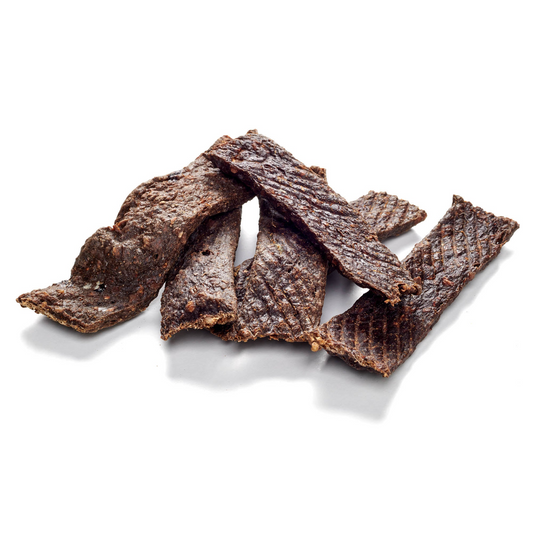
Hide chew plates – for persistent chewers:


What is a chew plate for dogs?
A chew plate is a flat, large piece of dried hide or offal that serves dogs as a natural long-lasting chew.
Production and shape
Chew plates are made by cleaning hide or tripe from cattle, buffalo, horse, goat, lamb or camel, cutting it into flat pieces and drying it gently. As they are natural products, shape, size and thickness vary from plate to plate.
Why the flat shape makes the difference
Compared to elongated chews, a wide plate offers fewer points for quickly biting off pieces. Your dog has to work on it with its molars, turn it and hold it in place – this prolongs chewing time and challenges the jaw muscles. You can read why intensive chewing is so good for dogs in the article The secret of the chewing muscles.
Benefits of a chew plate for dogs
A chew plate gives dogs long, calm occupation, challenges the jaw muscles and can support dental care through mechanical abrasion while chewing.
Occupation and relaxation
Chewing is a natural need. Many dogs seem calmer and more content after an extensive chewing session. Especially on days when less exercise is possible – for example in bad weather or after surgery with restricted movement – a chew plate can help prevent boredom. You'll find more ideas for keeping your dog busy in the category Chewing fun.
Supporting dental care
When working on a firm plate, the teeth rub over its surface. This mechanical effect can reduce soft deposits. However, chews replace neither tooth brushing nor regular check-ups at the vet. If your dog already has tartar, bad breath or inflamed gums, have this checked by a vet.
Natural and without additives
Good chew plates consist of only one raw material, for example 100% cowhide, and are dried without flavourings or preservatives. It's still always worth checking the composition – especially if your dog is prone to intolerances.
Which chew plates are there? Overview of types
Chew plates are mainly available as hide plates (for example beef, buffalo or horse scalp) and as tripe or lung plates, which differ in hardness, smell and chewing time.
| Type | Examples | Properties |
|---|---|---|
| Hide plates | beef, buffalo, bull, horse, camel | firm, long chewing time, usually low in fat |
| Tripe plates | goat, lamb | intense smell, particularly attractive to many dogs |
| Lung plates | beef | light and airy, rather short chewing fun |
Cowhide and buffalo hide
According to the product information, the Beef scalp plates are 100% beef and have a crude fat content of around 9%. The Buffalo scalp plate is similarly low at about 7% crude fat. Both are therefore also suitable for dogs whose calories you are watching. Our comparison Buffalo hide vs. cowhide explains the difference between the two hides.
Alternative animal species
For dogs that react sensitively to beef, plates from other species are an option, such as the Camel skin plate or horse hide plates. Single-protein chews help you keep an eye on intolerances. You'll find many of them in the category Hypoallergenic chews.
Which chew lasts long for large dogs?
For large dogs, thick hide plates in particular last a long time because they are firm, hard to bite off and have to be worked on evenly with the molars.
What influences chewing time:
- Thickness and size: The thicker and larger the plate, the longer the chewing takes.
- Material: Hide is firmer than lung or tripe.
- Chewing type: Patient chewers take longer than dogs that bite off hastily.
- Experience: Dogs that know chew plates often develop their own technique.
Particularly powerful chewers benefit from large, thick plates. Always give them under supervision at first so you can see how quickly your dog progresses. We present more robust chews in the article Chews for strong chewers. The category Chewing plates offers a large selection of chew plates.
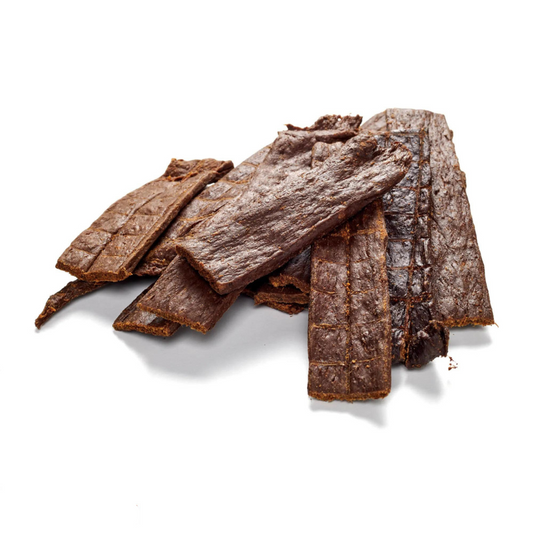
Chew plates from horse, camel and cattle:


Are chew plates suitable for small dogs?
Chew plates are also suitable for small dogs if you choose a thinner or smaller plate or divide it into suitable pieces and supervise your dog while it chews.
Tips for small dogs
- Choose thinner plates: They are easier to work on and don't overtax small jaws.
- Portion: You can cut large plates into smaller pieces with strong scissors or a saw.
- Softer alternatives: Lung plates or tripe plates are usually easier to chew.
You'll find suitable ideas for small breeds in the article Suitable chews for small dogs.
Puppies and seniors
Very hard hide plates are often too firm for teething puppies. Softer chews from the category Chews for puppies are better suited to them. For older dogs with sensitive teeth, it's also better to choose lighter variants.
Feeding chew plates safely: here's how
You feed chew plates safely by choosing a plate that matches your dog's size, supervising your dog while it chews, providing water and removing small remaining pieces in good time.

Step by step
- Choose the right size: The plate should be clearly larger than your dog's mouth.
- Supervise: Don't leave your dog alone with a chew, especially not with a new type.
- Provide water: Dried chews make dogs thirsty.
- Remove the last piece: Once the plate has become small enough for your dog to swallow, take it away.
- Count it in: Chew plates provide energy and belong in the daily treat budget.
A quiet chewing spot
Give the chew plate in a quiet place, for example on your dog's blanket. A fixed chewing spot helps your dog settle down and keeps crumbs and saliva off the carpet and sofa. Large plates in particular are often carried around the home while chewing – a washable mat is therefore practical. If several dogs live in the household, each gets its own spot so that no food envy arises.
Storage
Store chew plates in a dry, cool and dark place. You can let chewed plates dry after chewing and give them again later, provided they are clean and don't smell unpleasant.
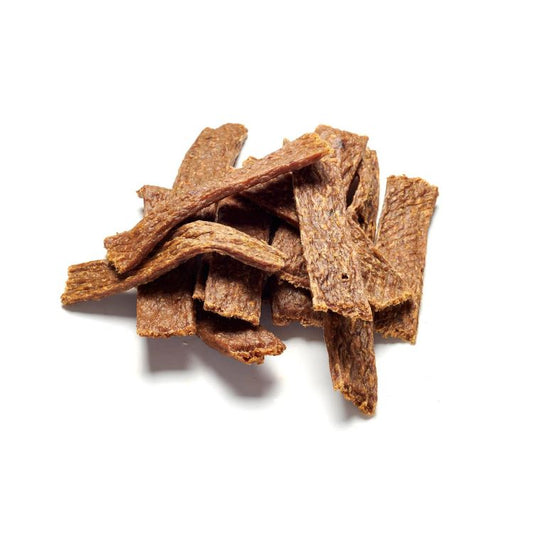
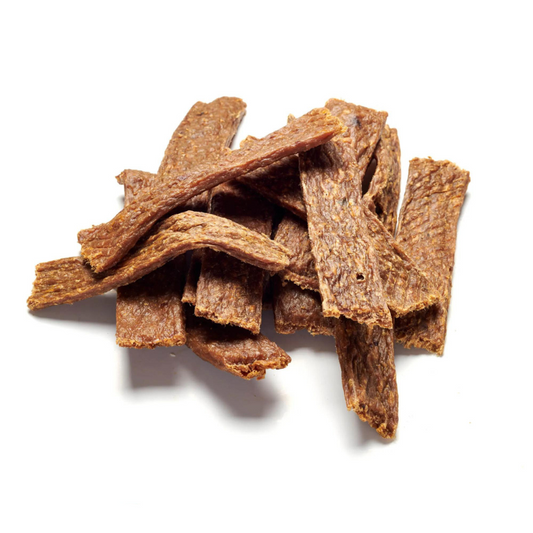
Tripe plates and other chewing classics:


Frequently asked questions about chew plates for dogs
What are chew plates for dogs?
Chew plates are flat, dried chews made from the hide, tripe or lung of various animal species. Thanks to their wide shape, they are hard to bite off and therefore provide long-lasting occupation.
Which chew lasts long for large dogs?
Thick hide plates made from beef or buffalo are among the longest-lasting natural chews for large dogs. How long a plate lasts, however, depends heavily on your dog's chewing type.
Are chew plates suitable for small dogs?
Yes, if the plate is thinner or smaller or you divide it into suitable pieces. For very small dogs, lighter lung or tripe plates are often the better choice.
How often can my dog have a chew plate?
Many dogs get a chew a few times a week. Count the plate in the daily energy intake and reduce the main food if necessary.
Can my dog swallow a piece of chew plate?
That is possible if the plate gets too small. So always supervise your dog and remove small leftover pieces. If your dog gags or shows difficulty breathing, contact a vet immediately.
Conclusion: chew plates for dogs – long-lasting chewing fun for big chewers
A chew plate for dogs is a natural, usually low-fat way to keep large and powerful chewers busy for a long time. Beef or buffalo hide plates last particularly long, while tripe and lung plates are easier to chew and also suit smaller dogs. With the right size, supervision and water within reach, the chew plate becomes a safe highlight in your dog's everyday life.
Further reading on this topic:
This post was created with the help of AI