
Buffalo Hide vs. Cowhide: Chew Bones Compared
A buffalo hide chew bone is usually a little harder, thicker and leaner than a comparable chew made from cowhide – which is why it often lasts longer with strong chewers. Cowhide, for example as beef scalp, is a proven choice for dogs that tolerate beef well and prefer a slightly gentler chewing challenge. In this comparison you will learn how the two materials differ, which chew bone suits which dog and what to look out for so that chewing stays safe.
Content: Buffalo Hide vs. Cowhide: Chew Bones Compared
- What is the difference between buffalo hide and cowhide?
- Buffalo hide chew bones: properties and benefits
- Cowhide chew bones: what makes them special
- Buffalo hide or cowhide: which chew bone suits your dog?
- Safety: how your dog chews chew bones properly
- Frequently asked questions about buffalo hide and cowhide
- Conclusion: buffalo hide chew bone or cowhide – both have their place
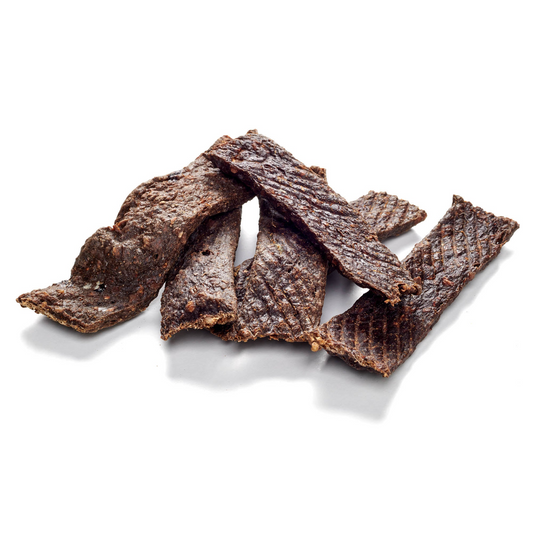
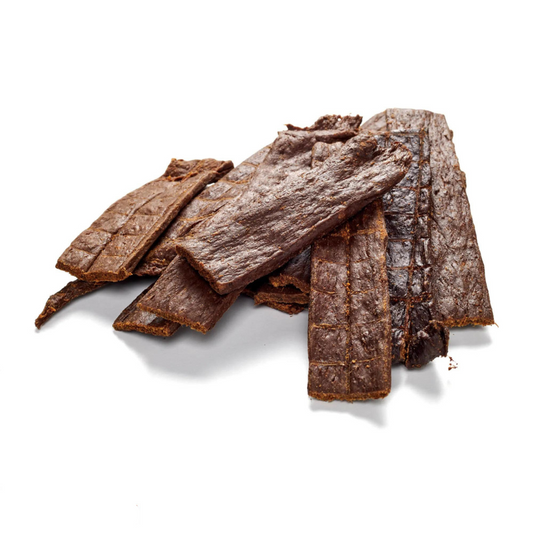
Sturdy buffalo hide chew bones for dedicated chewers:


What is the difference between buffalo hide and cowhide?
The main difference between buffalo hide and cowhide is thickness and firmness: buffalo hide comes from the water buffalo, is generally thicker and more fibrous and becomes particularly tough when dried, while cowhide is somewhat thinner and softens more quickly while chewing.
Origin and structure
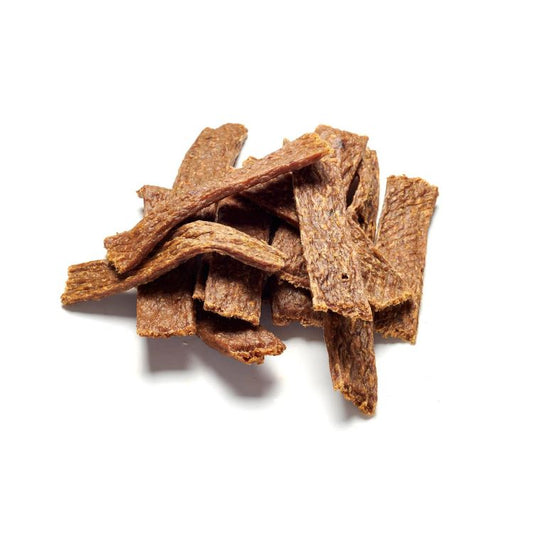
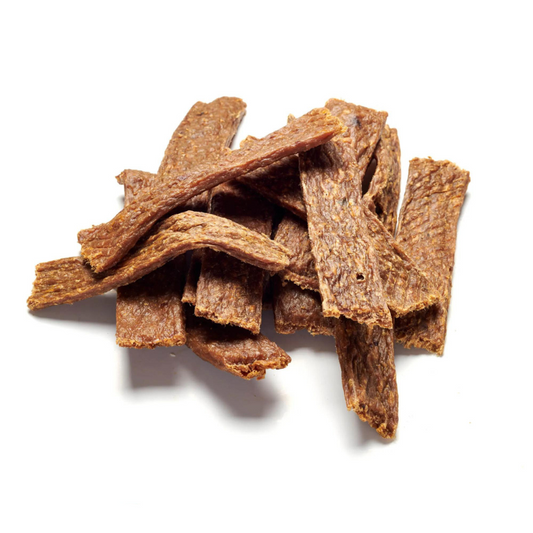
Both hides are by-products of food production and are cleaned, cut and dried to make chews. Water buffalo are strong, heavy animals – and their hide is correspondingly robust. For dog chews, cowhide is often taken from the head (beef scalp). It is usually lighter in colour, often golden yellow, and comes as strips, plates or sticks.
Nutritional values compared
Both materials consist almost entirely of protein, mainly connective tissue. The fat content is low in both cases but can vary from product to product. Two examples from our range according to the product information:
| Product | Crude protein | Crude fat | Texture |
|---|---|---|---|
| Buffalo hide bones | 84.0 % | 1.0 % | hard, long-lasting |
| Beef scalp, short | 92.6 % | 6.0 % | hard, long-lasting |
The figures show that both are very rich in protein and comparatively lean. The information on the respective product page is always binding. You can read more about water buffalo meat in our guide Buffalo meat for dogs.
Buffalo hide chew bones: properties and benefits
Buffalo hide chew bones are particularly suitable for dogs that chew hard and for a long time, because the tough material keeps them busy while usually providing little fat.
What speaks for buffalo hide
- Long chewing time: The thick, tough hide has to be softened layer by layer.
- Low fat content: Many buffalo hide chews are lean and therefore fit well into a calorie-conscious diet.
- Low odour: Dried buffalo hide usually smells only faintly – pleasant for your home.
- Alternative protein source: Some dogs that do not tolerate beef well cope better with buffalo. However, as water buffalo and domestic cattle are closely related, this is not guaranteed.
Types of buffalo hide chews
In addition to classic knotted chew bones, there are twisted sticks, braids, filled bones and large plates. Filled versions such as the Buffalo hide bones with pizzle filling are especially aromatic. For very large dogs, a Buffalo Scalp Plate is a good option. You will find the full selection in our Buffalo chews category.
Cowhide chew bones: what makes them special
Chew bones and chews made from cowhide are a little more yielding than buffalo hide and are therefore well suited to moderate chewers and to dogs that have no experience yet with very hard chews.
Beef scalp as a natural option
At snack4pet, cowhide is mainly available as natural, dried beef scalp – in short and long strips, as a stick or as a plate. Because your dog has to chew the scalp until it is really soft, it stays busy for a while. There may still be the odd hair on the scalp; that is normal for a natural product.
What to look out for with cowhide
- Choose natural products: Look for chews without colourings, flavourings or preservatives.
- Origin and processing: A clearly declared single-ingredient feed is easier to assess.
- Intolerances: If your dog reacts to beef, cowhide chews are not suitable.
Longer pieces such as the Beef scalp, long are suitable for larger dogs. You will find more beef chews in our Beef category.
Natural beef scalp for extended chewing:


Buffalo hide or cowhide: which chew bone suits your dog?
For strong, experienced chewers, buffalo hide is usually the better choice; for moderate chewers, smaller dogs and beginners, cowhide is often more suitable.

Decision guide by chewing type
| Your dog … | Recommendation |
|---|---|
| chews very hard and destroys chews quickly | buffalo hide, preferably large and thick pieces |
| chews leisurely and for a long time | cowhide or buffalo hide, depending on preference |
| is small or has little chewing experience | cowhide in short, thin pieces |
| does not tolerate beef | no cowhide; buffalo only after consulting your vet |
| needs to watch its weight | lean buffalo hide, included in the daily treat budget |
Choosing the right size
A chew bone should be big enough that your dog cannot swallow it whole. As a rule of thumb: better one size too big than too small. Our article Chew bones for dogs explains how to choose chew bones in general. For particularly strong chewers, it is also worth taking a look at our heavy-duty selection for strong chewers.
Safety: how your dog chews chew bones properly
Buffalo hide and cowhide chew bones are safe if you choose the right size, supervise your dog while it chews and remove small leftover pieces in good time.
Five rules for relaxed chewing
- Always supervise: Do not leave your dog alone with a chew bone.
- Remove leftovers: Once the chew bone is small enough to be swallowed, take it away.
- Provide water: Many dogs drink more when chewing dried hide.
- Let it chew in peace: Give chews in a quiet place and, with several dogs, separately.
- Plan the amount: Chew bones provide energy and count towards the daily treat budget.
When to see your vet
If your dog gags, seems restless after chewing, vomits or stops eating, contact your vet promptly. The same applies if you suspect it has swallowed a large piece. If your dog has sensitive teeth or dental problems, it is best to check with your vet in advance which hardness is suitable. You can read how chewing can support dental care in our article Dental care for dogs: How chews can prevent tartar.
Proper storage
Hide chew bones are dried and keep for a long time if you store them in a dry, cool and airy place. Moisture can lead to mould. A tightly closing container in a dry place is ideal.
Twisted, braided or as a stick – buffalo hide in many shapes:


Frequently asked questions about buffalo hide and cowhide
Which is better for dogs: buffalo hide or cowhide?
That depends on how your dog chews. Buffalo hide is usually tougher and leaner and lasts longer with strong chewers. Cowhide is a little more yielding and suits moderate chewers and smaller dogs well. Both are natural, protein-rich chews.
How long does a buffalo hide chew bone last?
That varies greatly from dog to dog. A leisurely chewer often spends several chewing sessions on one buffalo hide bone, while a very strong chewer may finish it in a short time. Larger and thicker pieces generally last longer.
Are chew bones safe for strong chewers?
Yes, if size and hardness are right and you supervise your dog. Choose large, thick pieces for strong chewers so that nothing can be swallowed whole, and remove small leftovers. If your dog has dental problems, talk to your vet first.
Is buffalo hide suitable for dogs with a beef allergy?
Sometimes. Some dogs with a beef intolerance tolerate buffalo well, but because the two animals are closely related, your dog may still react. If your dog has a known allergy, only introduce new chews after consulting your vet.
From what age can dogs chew hide chew bones?
Very hard chew bones are usually too firm for puppies. During teething, softer and smaller chews are a better choice. Adult dogs can have buffalo hide and cowhide in a suitable size.
Conclusion: buffalo hide chew bone or cowhide – both have their place
A buffalo hide chew bone is the right choice if your dog chews hard and for a long time and you are looking for a lean, long-lasting chew. Cowhide is a little more yielding and suits moderate chewers, smaller dogs and beginners – provided your dog tolerates beef. Whatever the material: choose the right size, stay with your dog while it chews and include chews in the daily treat budget. You will find many more ideas in our Chew bones and Chewing fun categories.
Further reading on this topic:
- Chew bones for dogs
- Chew Articles for Strong Chewers: Our "Heavy Duty" Selection Reviewed
- Proper storage of chews: How to keep them fresh and safe
This post was created with the help of AI