
Muscle building in dogs: diet and training
Muscle building in dogs works through a combination of regular, adapted training and a balanced diet with enough high-quality protein. More protein alone does not build muscle – what matters is the right exercise stimulus, recovery and a food ration that matches your dog's needs.
Content: Muscle building in dogs: diet and training
- How does a dog build muscle?
- Does a dog need more protein to build muscle?
- Muscle building in dogs: the right diet
- Training for more muscle in dogs
- Which snacks support muscle building?
- Frequently asked questions about muscle building in dogs
- Conclusion: muscle building in dogs takes time
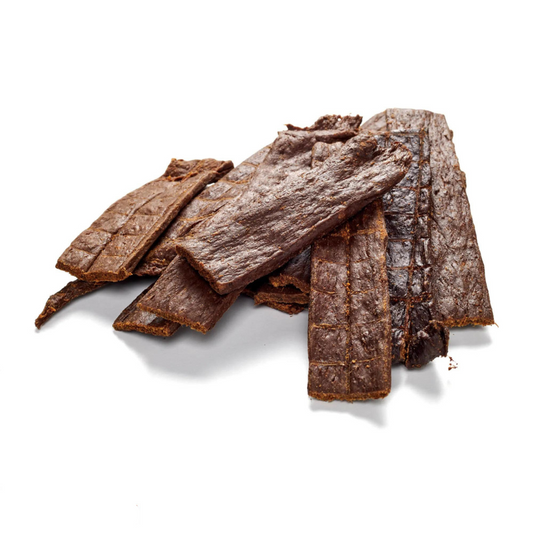
Lean meat snacks as a reward after training:


How does a dog build muscle?
A dog builds muscle when its muscles are regularly challenged a little more than usual and it then gets enough time and nutrients to recover. This principle applies to the young sporting dog just as much as to the senior.
Stimulus, recovery, adaptation
Training creates small loading stimuli in the muscles. During rest, the body repairs the fibres and adapts them to the new load. Without breaks the muscles cannot grow – on the contrary, the risk of injury increases.
When muscle building is especially important
- After illness or surgery: Weeks of rest quickly lead to muscle loss.
- With joint problems: Strong muscles stabilise hips, knees and elbows.
- In old age: Seniors often lose muscle unnoticed, especially in the hindquarters.
- In sporting dogs: Targeted strengthening protects against overload.
If you notice visible muscle wasting, lameness or sudden weakness, take your dog to the vet first, as illness can be behind it.
Does a dog need more protein to build muscle?
A healthy dog does not automatically need more protein to build muscle – it is more important that its food contains enough high-quality, easily digestible protein and that the total energy is right.
What protein does in the body
Proteins provide amino acids, the building blocks for muscles, tendons, skin, coat and enzymes. Some of them are essential and must come from food. A high-quality complete food usually covers the needs of a normally active dog. How to read the protein content on labels correctly is explained in our article Protein content in dog chews.
Quality over quantity
- Digestibility: Muscle meat and heart provide well-utilised protein.
- Variety: Different protein sources complement each other in their amino acid profile.
- No excess: Too much protein is not turned into muscle but used for energy or excreted.
- Caution with illness: With kidney or liver disease, the vet decides on the right amount of protein.
Very active sporting and working dogs have higher energy and partly also nutrient needs. Nutritional advice is worthwhile here. Tips on choosing snacks can be found in Snacks for sport dogs.
Muscle building in dogs: the right diet
The right diet for muscle building in dogs consists of a balanced main food, the right amount of energy and deliberately used, protein-rich snacks as rewards.
Main food as the basis
The main food provides most of the nutrients. Look for a clear declaration with meat as the main ingredient. If your dog's workload changes significantly, adjust the amount of food gradually and keep an eye on its weight.
Using protein-rich snacks in a targeted way
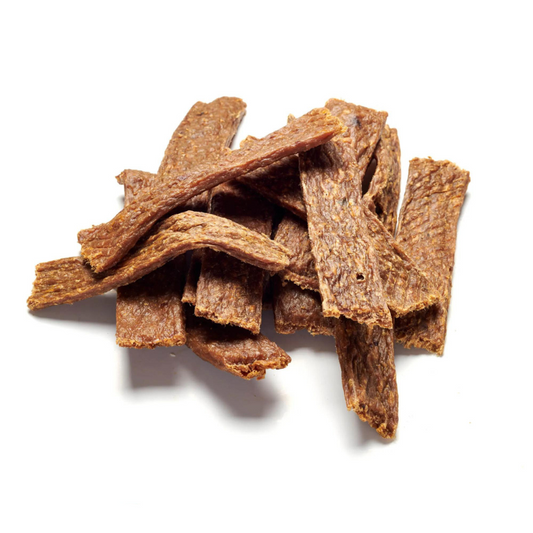
Dried meat consists largely of protein and makes a good reward during training. Poultry such as Chicken breast meat or turkey is particularly lean. Offal such as heart is also a muscle and provides protein; lung, on the other hand, is especially light. Overall, snacks should only make up a small part of the daily energy.
| Type of snack | Properties | Use |
|---|---|---|
| Meat strips (poultry, kangaroo, goat) | rich in protein, mostly lean | reward after training |
| Meat cubes | easy to portion | many small rewards |
| Heart | muscle meat, aromatic | special reward |
| Lung | very light and airy | training with many repetitions |
You can read more about heart as a snack in Heart as a dog treat.
Heart snacks with plenty of muscle meat:


Timing of feeding
Do not feed right before intense exercise; plan a gap of about one to two hours. After training, let your dog calm down before the main meal follows. Small rewards during the exercises are no problem.
Training for more muscle in dogs
Good training for more muscle in dogs combines endurance at a walk and trot with targeted strength and coordination exercises that are increased slowly.
Exercises that build muscle
- Walking uphill: Calm walking on gentle slopes strengthens the hindquarters.
- Trotting on the lead: An even trot on soft ground trains both sides of the body.
- Sit – stand – sit: The "squat" for dogs strengthens the thighs and hindquarters.
- Ground poles: Stepping over them slowly improves coordination and mobility.
- Swimming: Joint-friendly full-body training, as long as your dog enjoys the water.
Example of a training week
For a healthy adult dog, a week of muscle building could look like this: on three days, there is a short strength session with sit-stand exercises and ground poles in addition to the normal walks. On two days, calm, longer walks with gentle slopes are on the plan, and on one day an even trot or swimming. One day is deliberately quiet, with sniffing games instead of training. Start each session with a few minutes of walking to warm up and finish with an exercise your dog has mastered. Reward with small pieces of meat and deduct the snacks from the daily ration so that muscle building does not turn into fat building. After a few weeks, you can slowly increase the repetitions.
How to increase correctly
- Start small: Few repetitions, short sessions.
- Stay consistent: Several times a week is more effective than rarely and for a long time.
- Plan rest days: Muscles grow during recovery.
- Watch for signals: Limping, stiffness the next day or reluctance are signs to take a step back.
You will find many ideas for sessions together in Dogs and fitness. Small rewards for training are available in the category training snacks.
Which snacks support muscle building?
Muscle building is mainly supported by lean, protein-rich snacks made from pure meat that can be portioned into small pieces and are well tolerated.
What to look for when choosing
- Monoprotein: One type of meat per snack makes it easier to check tolerance.
- No unnecessary additives: No sugar, no artificial flavourings.
- The right size: Meat cubes are easier to dose than large chews.
- Check the fat content: For dogs with weight problems, lean varieties such as Turkey meat strips are suitable.
You will find a large selection in the category meat strips.
Frequently asked questions about muscle building in dogs
How does my dog build muscle?
Through regular training that is increased slowly, with enough breaks, and a balanced diet. Walking uphill, even trotting, sit-stand exercises and swimming are well suited. The first progress usually only shows after a few weeks.
Does a dog need more protein for muscles?
A healthy dog fed a high-quality complete food usually gets enough protein. Quality, digestibility and the right total energy are more important than extra protein. Very active dogs or dogs with illnesses should receive individual advice.
Which snacks support muscle building?
Lean, dried meat snacks from a single protein source, for example poultry, turkey, kangaroo or goat, as well as heart. They make good rewards during training but do not replace the main food.
How long does muscle building take in dogs?
That depends on age, starting condition and training. Visible changes usually take several weeks to months of consistent training. After surgery, the vet or canine physiotherapist sets the pace.
Can older dogs still build muscle?
Yes, seniors also benefit from gentle, regular training. The load should be lower and the breaks longer. Have the joints and heart checked by the vet beforehand.
Protein-rich meat snacks for every training day:


Conclusion: muscle building in dogs takes time
Muscle building in dogs is not a sprint: regular, adapted training, enough recovery and a balanced diet with high-quality protein bring the best results. Protein-rich snacks such as Kangaroo meat strips are a lovely reward but do not replace the main food. With muscle wasting, pain or after surgery, your vet is the first point of contact. You will find freeze-dried alternatives in the category freeze-dried.
Further reading on this topic:
- Snacks for sport dogs: energy for agility & co.
- Protein content in dog chews: what the figures mean
- Joint problems in dogs: how nutrition can help
This post was created with the help of AI