
Puppy treats: what is allowed in the first months?
Puppy treats are usually allowed from the day your puppy moves in, as soon as it eats solid food and has settled in well – provided they are small, soft, easy to digest and only make up a small part of the daily ration. In the first months, the right choice matters more than the quantity. Here you will learn which treats are suitable for puppies, what is off-limits and how many treats a puppy can tolerate.
Content: Puppy treats: what is allowed in the first months?
- When can puppies have treats?
- Which puppy treats are suitable?
- Puppy treats: what is off-limits in the first months
- How many treats can a puppy tolerate?
- Using treats correctly: tips for training and everyday life
- Frequently asked questions about puppy treats
- Conclusion: small, soft and in moderation
Soft meat cubes, ideal for little puppy teeth:


When can puppies have treats?
Puppies can have treats as soon as they reliably eat and tolerate solid food – for most puppies this is the case by the time they move to their new home at around eight to ten weeks at the latest.
The first days in the new home
Moving is exciting enough for a puppy. During the first days, it is best to give it the food it is used to from the breeder or shelter and only start with treats once its digestion is stable. Individual kibbles from the daily ration are often suitable as a first reward. You can read how to find the right time for the first reward in training in our article Puppy training: when is the right time for the first reward?.
Introduce new treats slowly
Introduce new treats one at a time and in small amounts. This way you can quickly see whether your puppy tolerates a type well. Soft stools, flatulence or itching can be signs that a type does not agree with it. If digestive problems persist, your vet is the right person to talk to.
Which puppy treats are suitable?
Suitable puppy treats are soft, small, made from few natural ingredients and ideally from just one type of meat – for example soft meat cubes, softies or tender meat strips.
What matters
- Soft texture: Milk teeth and later the teeth during teething are sensitive.
- Small size: Pea-sized pieces are perfectly sufficient and can be eaten quickly.
- Easy to digest: Poultry, rabbit or turkey are well tolerated by many puppies.
- Single protein: Treats made from one type of meat make it easier to identify intolerances.
- No sugar or artificial additives: The shorter the list of ingredients, the better.
Proven types of treats for puppies
| Type of treat | Suitability | Tip |
|---|---|---|
| Soft meat cubes | very good | easy to divide, ideal for training |
| Softies and training softies | very good | soft and strongly scented |
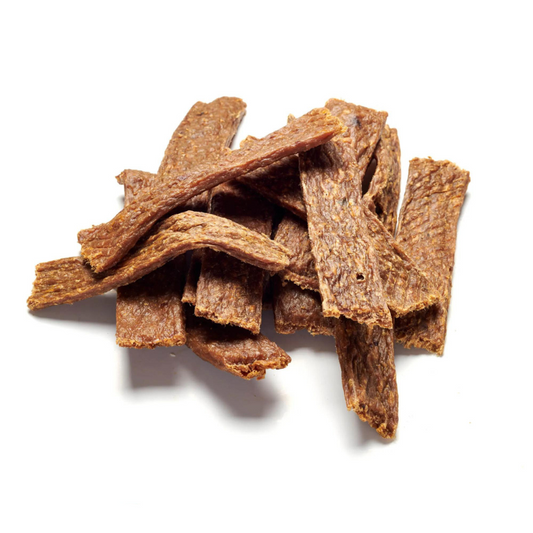
| Tender meat strips | good | break into small pieces |
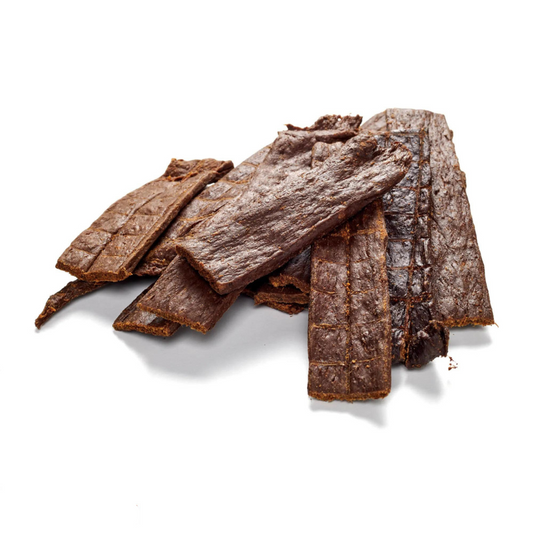
| Soft chews such as fur strips | good, under supervision | for short chewing sessions |
Particularly popular are soft chicken meat cubes and poultry training softies. You will find a large selection in the categories soft meat cubes and Softies.
Softies for first puppy training sessions:


Puppy treats: what is off-limits in the first months
When it comes to puppy treats, the main things that are off-limits are very hard chews, fatty or seasoned food from the table and anything that is toxic to dogs.
Too hard for young teeth
Deer antlers, large bones or very hard chew plates are unsuitable for puppies. They can damage milk teeth, and during teething the gums and new teeth are particularly sensitive. We explain which chews really help in this phase in Chews for teething puppies.
Not suitable for puppies
- Cooked bones: They can splinter and are dangerous for dogs of all ages.
- Leftovers: Spices, salt and fat put a strain on the digestive tract.
- Sweets: Chocolate, biscuits and sugary foods do not belong in the bowl.
- Toxic foods: Grapes, raisins, onions, garlic and xylitol are dangerous for dogs.
- Very fatty treats: They can quickly cause diarrhoea in puppies.
How many treats can a puppy tolerate?
A puppy can tolerate as many treats as together provide no more than about 10 percent of its daily energy – by far the largest part must come from a balanced puppy food so that growth is well supported.
Main food comes first
Puppies grow quickly and need food that is precisely matched to their need for energy, protein, calcium and phosphorus. Too many treats can upset this balance. You can read what matters with the main food in our guide Puppy food.
How to keep the amount in check
- Divide up the daily ration: Use part of the puppy food as a reward for easy exercises.
- Use special treats in a targeted way: High-value treats only for difficult situations such as recall or encounters.
- Cut into small pieces: One soft meat cube makes several rewards.
- Adjust the food: Lots of treats in one day? Then the food portion is a little smaller.
- Keep an eye on weight: Weigh your puppy regularly and ask your vet if you are unsure.
Our article How many treats per day? explains how to calculate the treat budget.
Using treats correctly: tips for training and everyday life
With puppies, it is best to use treats in a targeted way, in small portions and at the right moment – directly after the desired behaviour, so that your puppy understands the connection.
Timing is everything
Reward within one to two seconds of the desired behaviour. Short training sessions of a few minutes suit the attention span of young dogs best. Soft treats that are eaten quickly keep the training flowing. You will find suitable treats in the category training snacks.
Rewarding without food
Not every reward has to be edible. A friendly word, a short round of play with a favourite toy or sniffing together are just as motivating for many puppies. If you alternate between food and social rewards, your puppy stays attentive and the amount of treats automatically stays within limits. Especially in calm everyday situations – such as lying relaxed on the blanket – a gentle stroke is often better than a treat that brings new excitement.
Chewing as an activity
In addition to small rewards, puppies also need something to chew. Soft chews such as rabbit fur strips are suitable for short, supervised chewing sessions. You will find more ideas in our category Chews for puppies.
Tender chews for short chewing sessions:


Frequently asked questions about puppy treats
When can puppies have treats?
As soon as your puppy eats and tolerates solid food, it can have small treats – usually from the time it moves in at around eight to ten weeks. Start after the first few days of settling in and introduce new types one at a time.
Which treats are suitable for puppies?
Small, soft and easily digestible treats made from ideally one type of meat are ideal, such as soft meat cubes or softies. Hard chews, leftovers and sweets are unsuitable.
How many treats can a puppy tolerate?
Treats should make up no more than about 10 percent of daily energy. For easy exercises it is best to use part of the normal puppy food and save special treats for difficult tasks.
Can puppies have chews?
Yes, soft chews of a suitable size are allowed under supervision and satisfy the need to chew. You should only give very hard chews such as antlers or large bones once the permanent teeth are complete.
What should I do if my puppy gets diarrhoea from treats?
Leave out the new type and give only the usual food. If the diarrhoea persists, is very watery or your puppy seems lethargic, you should see your vet promptly.
Conclusion: small, soft and in moderation
Puppy treats are allowed in the first months and very helpful in training – as long as they are small, soft, easy to digest and given sparingly. Balanced puppy food remains the basis, treats are the supplement. By introducing types slowly, getting the timing right and keeping an eye on weight, you lay the foundation for relaxed training. If you are unsure, your vet will advise you.
Further reading on this topic:
- Puppy Training: When is the Right Time for the First Reward?
- Chews for Teething Puppies: What Really Helps?
- Puppy food - what you need to know
This post was created with the help of AI