
Puppy chewing everything? Chews as an alternative
If your puppy chews everything, in most cases this is completely normal exploring and chewing behaviour – and the best solution is to redirect it to suitable chews instead of simply forbidding it. Puppies explore the world with their mouths, and during teething the need to chew is particularly strong. In this article you will learn why puppies chew everything, how to redirect chewing step by step and which chews will spare your furniture.
Content: Puppy chewing everything? Chews as an alternative
- Puppy chewing everything: why does it happen?
- What to do when your puppy chews everything? Redirecting chewing
- Which chews will save my furniture?
- Puppy destroying furniture: how to puppy-proof your home
- When chewing can be a warning sign
- Frequently asked questions when your puppy chews everything
- Conclusion: redirect instead of forbid
Chews that puppies prefer to chair legs:


Puppy chewing everything: why does it happen?
A puppy chews everything because it explores its surroundings with its mouth, because teething irritates its gums and because chewing is an innate need – it has nothing to do with disobedience.
The most common reasons
- Exploring: Puppies "grasp" objects with their mouths and teeth, much like toddlers do with their hands.
- Teething: Roughly between the fourth and seventh month of life, the milk teeth are replaced. Chewing apparently relieves the pressure in the gums.
- Boredom: An under-stimulated puppy looks for its own entertainment.
- Overexcitement: Tired, overstimulated puppies often chew particularly wildly.
- Attention: If chewing always triggers a reaction, it can be worthwhile – from the puppy's point of view.
Chewing objects or nipping hands?
Chewing objects is different from playful nipping at hands and feet. We explain how to stop your puppy biting people in our article Stopping puppies from biting. Here, the focus is mainly on furniture, shoes and cables.
What to do when your puppy chews everything? Redirecting chewing
If your puppy chews everything, it is best to redirect the chewing consistently: calmly interrupt unwanted chewing, immediately offer a permitted chew and reward chewing on it.
Redirecting step by step
- Interrupt calmly: Take the object away or distract your puppy with a friendly signal – without scolding.
- Offer an alternative: Give it a suitable chew straight away.
- Reward: If it chews on it, praise it calmly.
- Repeat: Consistency is more important than strictness. After many repetitions your puppy will understand what is allowed.
- Vary: Offer different textures so that the chews stay interesting.
Plan rest times
Puppies need a lot of sleep – often 18 hours or more a day. An overtired puppy chews more often. Fixed rest periods in a cosy spot, ideally with a chew, help it to wind down.
Mental stimulation instead of boredom
Many puppies chew less when they are exercised in an age-appropriate way. This is not about long walks, but about short, varied tasks: small search games with food, first tricks, getting to know new surfaces or calm sniffing in the garden. Just a few minutes of brain work make young dogs content and tired. It is important that a rest period follows – otherwise the excitement quickly turns into new chewing.
Which chews will save my furniture?
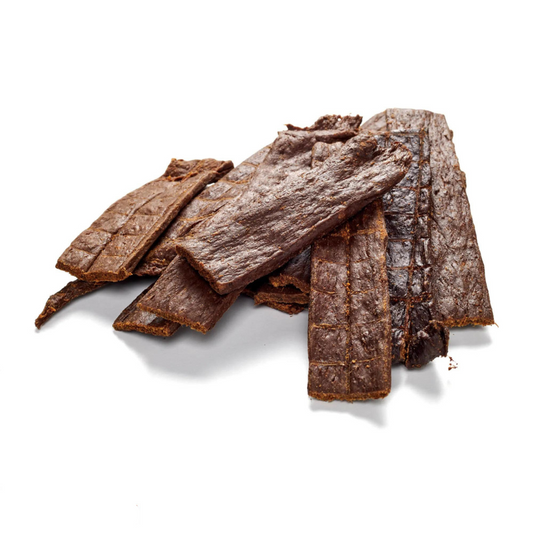
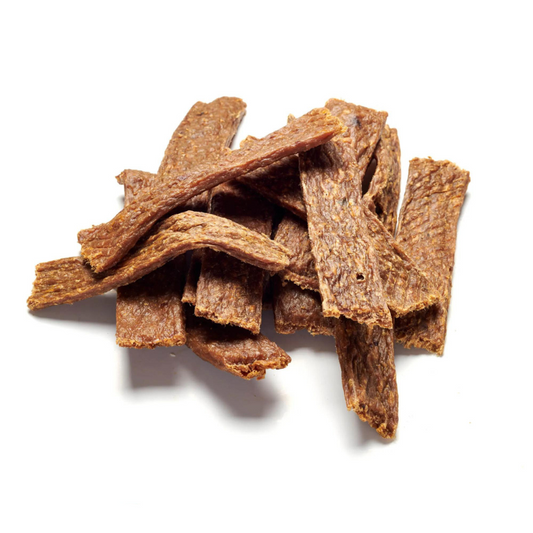
Your furniture is best saved by soft to medium-firm natural chews of a suitable size that your puppy is allowed to work on extensively – for example fur strips, rolled scalp, intestine sticks or Achilles tendons for older puppies.
Suitable chews by age
| Age (approx.) | Suitable chews | Note |
|---|---|---|
| 8 to 16 weeks | soft meat strips, fur strips | short chewing sessions, always supervised |
| 4 to 7 months (teething) | rolled scalp, ear strips, intestine sticks | elastic rather than hard |
| from approx. 7 months | Achilles tendons, scalp sticks | adapt the size to the mouth |
Our recommendations
For young puppies, long beef scalp with fur is a popular choice because it is soft and fibrous. During teething, rolled scalp such as the rolled mini lamb scalp has proven its worth. Older puppies with a strong urge to chew love ostrich Achilles tendons. You will find a large selection in the category Chews for puppies as well as under Chews with fur and Chew sticks.
Elastic chews for teething:


What you should avoid
- Very hard chews: Antlers, large bones or hard chew plates can damage milk teeth and new teeth.
- Pieces that are too small: They can be swallowed.
- Old shoes as toys: Your puppy cannot tell the difference between old and new shoes.
You can read more about this in our article Chews for teething puppies.
Puppy destroying furniture: how to puppy-proof your home
If your puppy is destroying furniture, prevention helps most alongside redirecting: what it cannot reach, it cannot chew.
Practical measures
- Secure cables: Cable ducts or covers protect your puppy from electric shocks.
- Put away shoes and small items: Everything on the floor counts as a toy.
- Limit areas: A puppy gate or a safe puppy area prevents destruction when you cannot keep an eye on it.
- Remove toxic plants: Many houseplants are harmful to dogs.
- Keep chews ready: There should always be a permitted alternative in its favourite spots.
You can find out what else a puppy-proof home needs in our overview Puppy starter kit.
When chewing can be a warning sign
Chewing is a warning sign if it suddenly increases a lot, is linked to stress or being alone, or if your puppy regularly swallows inedible things.
What to watch out for
If your puppy mainly destroys things when it is alone, separation stress may be behind it. Gentle training for being left alone is then worthwhile. If it swallows stones, fabric or plastic, there is a risk of intestinal blockage. If it vomits, has abdominal pain or loses its appetite after swallowing an object, go to the vet immediately.
If your puppy chews very intensely and frantically for weeks despite enough chews, rest and activity, it is worth talking to an experienced dog trainer. Together you can often quickly find out whether the daily routine should be adjusted.
For older puppies with a big urge to chew:


Frequently asked questions when your puppy chews everything
What should I do if my puppy chews everything?
Calmly interrupt the chewing, immediately offer a permitted chew and praise your puppy when it chews on it. Put tempting objects away and plan enough rest time. With patience and consistency, your puppy will quickly learn what is allowed.
How do I redirect chewing behaviour?
Swap the forbidden object for a more interesting chew. Good timing, repetition and variety in the chews are important. Scolding, on the other hand, helps little and can unsettle your puppy.
Which chews will save my furniture?
Soft to medium-firm natural chews of a suitable size are best, such as fur strips, rolled scalp or intestine sticks. Older puppies can also have Achilles tendons. Offer them where your puppy otherwise likes to chew.
When does the chewing stop?
In most dogs, intense chewing decreases significantly after teething – from around the seventh month. The need to chew remains for life, though. That is why it is worth establishing fixed chewing rituals early on.
How many chews can a puppy have per day?
That depends on size and calorie content. Chews count towards the daily treat budget and, together with treats, should make up no more than about 10 percent of daily energy.
Conclusion: redirect instead of forbid
If your puppy chews everything, this is a normal part of its development. With suitable chews, consistent redirecting, enough rest and a puppy-proof home, you can get the chewing under control – and your furniture stays intact. If your puppy shows signs of stress or swallows objects, talk to your vet or a dog trainer. You will find suitable chews in our category Chewing fun.
Further reading on this topic:
- How to stop biting puppies - this is how it works
- Chews for Teething Puppies: What Really Helps?
- Puppy treats: what is allowed in the first months?
This post was created with the help of AI