
Goose meat for dogs: rare but valuable
Goose meat is a rare but valuable protein source for dogs: healthy dogs can eat goose – ideally as a naturally dried snack or as part of a balanced diet, but never with cooked bones, skin or seasoning from the holiday roast. Because goose hardly appears in most dog foods, it is also an exciting change for dogs with sensitive stomachs or food intolerances.
Content: Goose meat for dogs: rare but valuable
- Can my dog eat goose meat?
- Goose meat for dogs: properties and nutritional value
- Is goose suitable for allergic dogs?
- Goose chews: which types are there?
- How to feed goose meat to your dog: amount and tips
- Frequently asked questions about goose meat for dogs
- Conclusion: goose meat as a valuable change
Natural snacks made from 100% goose to try:


Can my dog eat goose meat?
Yes, dogs can eat goose meat: lean goose muscle meat is well tolerated and provides high-quality protein. What matters is the form in which you offer it.
Suitable forms of goose meat
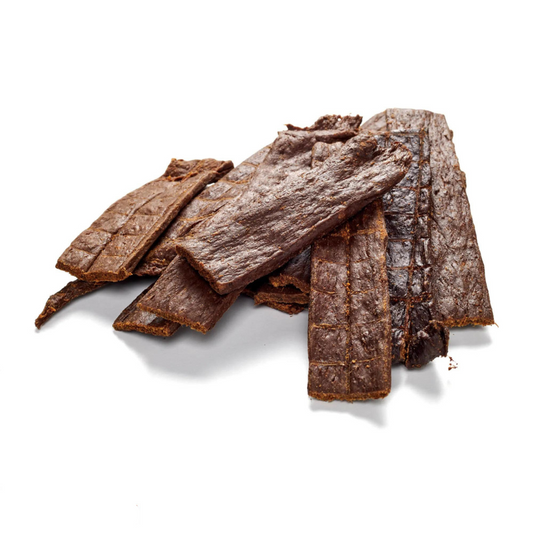
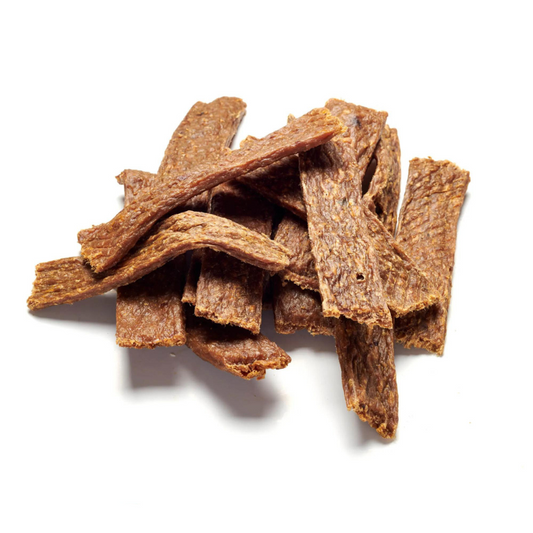
- Gently dried: as meat strips, cubes or a chew snack – practical, long-lasting and free from additives, e.g. goose meat strips.
- Cooked and unseasoned: lean meat without skin, bones or gravy as an occasional extra.
- Raw as part of BARF: only in perfectly hygienic quality and as part of a balanced feeding plan.
What your dog should not get
Especially around St. Martin’s Day and Christmas, leftovers quickly end up in the bowl. However, they are not suitable for dogs:
- Cooked or roasted bones: they become brittle, can splinter and injure the mouth, oesophagus or intestines.
- Skin and dripping: goose skin and goose fat are very rich and can cause diarrhoea; in sensitive dogs they also put strain on the pancreas.
- Stuffing and gravy: onions, garlic, salt and spices have no place in a dog’s bowl.
If you want to treat your dog to something special over the holidays, a dried goose snack is the safer choice compared to leftovers from the roast.
Goose meat for dogs: properties and nutritional value
Goose meat is poultry, but it is darker, stronger in flavour and naturally fattier than chicken or turkey. This makes goose particularly appealing to many dogs.
What makes goose special
- High-quality protein: goose muscle meat provides all the essential amino acids your dog needs for muscles, skin and coat.
- Dark meat: like duck, goose is “dark” poultry that contains iron and B vitamins, among other nutrients.
- Intense flavour: goose smells and tastes strong – ideal for picky eaters or as a special reward.
- Rare protein source: goose appears much less often in conventional dog food than chicken, beef or lamb.
Goose compared with other poultry
| Type of poultry | Fat content (tendency) | Flavour | Special feature |
|---|---|---|---|
| Chicken | low | mild | very common in dog food |
| Turkey | low | mild | lean and easy to portion |
| Duck | medium to high | strong | dark meat, popular with gourmets |
| Goose | medium to high | strong | rare protein source, dark meat |
These values are only a rough tendency, as the fat content depends heavily on the cut: dried fillet is much leaner than meat with skin. You will always find the binding nutritional values in the respective product description. Learn more about the closely related duck in our article duck meat for dogs. You can find more varieties in our poultry snacks category.
Is goose suitable for allergic dogs?
Goose can be a good option for dogs with food allergies, because many dogs have had little contact with this protein source so far. However, there is no guarantee that it will be tolerated.
Why rare protein sources can help
Food allergies are usually directed against proteins that a dog has eaten frequently – often beef, chicken or dairy products. Meat your dog does not know yet is therefore an obvious candidate for an elimination diet. Goose meets this requirement for many dogs. Our guide elimination diet for dogs explains how such a diet works.
What you should pay attention to
- Cross-reactions: if your dog reacts to chicken, it may also react to other poultry. Clarify this with your vet.
- Choose single protein: look for snacks made from just one animal species without additives. You can find out more in our article single protein snacks for dogs.
- One new variety at a time: introduce goose slowly and watch your dog’s skin, coat and digestion over several days.
- Diagnosis by a professional: itching, ear infections or diarrhoea can have many causes. Diagnosis belongs in the hands of your vet.
You can find background information on symptoms and causes in our article food allergies in dogs. Our hypoallergenic chews category offers a large selection of alternative varieties.
Goose and related poultry for sensitive dogs:


Goose chews: which types are there?
Goose chews and snacks are mainly available as dried meat strips, meat cubes and soft Softies; in shops you will also find goose necks and other body parts as natural chews.
Goose snacks at a glance
- Meat strips: dried fillet for chewing in between. The strips are eaten quickly and make a special reward.
- Meat cubes: handy pieces that are easy to portion and use in training, e.g. goose meat cubes.
- Softies: soft bites, ideal for small dogs, seniors or dogs with sensitive teeth, such as Softies goose.
- Goose neck: a natural chew with cartilage and bone content that is mainly used in raw feeding. When dried, it should only be given under supervision and in a suitable size.
Goose neck for dogs: alternatives with necks
If your dog likes to chew on a neck for longer, dried necks from related poultry are a good alternative. Duck necks or turkey necks are easy to get and offer a similar chewing experience. As with all chews containing bone: only give them to your dog under supervision and choose a size that cannot be swallowed whole.
You can find the complete selection in our goose, duck and turkey categories.
How to feed goose meat to your dog: amount and tips
It is best to feed goose meat to your dog as a snack in moderation: treats and chews together should provide no more than about 10 percent of the daily energy.
How to introduce goose
- Start small: give only a small piece on the first day and watch the digestion.
- Increase slowly: if your dog tolerates goose well, you can increase the amount over a few days.
- Adjust the food: deduct the snacks from the daily ration so that your dog does not gain weight.
- Provide water: dried snacks make dogs thirsty – fresh water should always be available.
- Supervise chewing: stay close by when your dog is chewing on necks or larger pieces.
For whom goose is less suitable
- Dogs prone to pancreatitis: low-fat varieties are the better choice here. Discuss your snack selection with your vet.
- Overweight dogs: small amounts are possible, but lean varieties such as turkey give you more leeway.
- Known poultry allergy: only try goose after consulting your vet.
For more variety in the bowl, it is also worth taking a look at pheasant – another rare type of poultry.
Poultry for chewing and rewarding:


Frequently asked questions about goose meat for dogs
Can dogs eat goose meat?
Yes, healthy dogs can eat goose meat. Lean meat without skin, bones or seasoning is best, for example as a dried snack. Leftovers from roast goose with gravy, stuffing or cooked bones, on the other hand, are off limits.
Is goose suitable for allergic dogs?
For many dogs, goose is a new protein source and can therefore be a good alternative for food allergies. However, dogs that react to chicken may not tolerate goose either. It is best to discuss your choice with your vet.
Which goose chews are there?
Typical options are dried goose meat strips, meat cubes and soft Softies. Goose necks are also available in shops as natural chews. For longer chewing, duck or turkey necks are a good alternative.
Can dogs eat goose bones?
Cooked or roasted goose bones are dangerous for dogs because they can splinter. Raw, meaty bones are only used in raw feeding and belong in a well-thought-out feeding plan. If in doubt, choose dried snacks without bones.
Is goose meat too fatty for dogs?
Goose is naturally fattier than chicken or turkey, but dried fillet is much leaner than meat with skin. In small amounts, goose is unproblematic for healthy dogs. If your dog is overweight or prone to pancreatitis, you should prefer low-fat varieties.
Conclusion: goose meat as a valuable change
Goose meat for dogs is rare but valuable: it provides high-quality protein, has a strong flavour and is still an unknown protein source for many dogs – a plus for sensitive stomachs or intolerances. The right form is what matters: dried, unseasoned and without cooked bones. Feed goose in moderation, introduce it slowly and talk to your vet if your dog has allergies or health conditions. You can find natural goose snacks in our goose category.
Further reading on this topic:
This post was created with the help of AI