
Dog school treats: snacks and equipment for the start
For dog school you mainly need small, soft treats that can be eaten quickly, plus a treat pouch, water, a suitable lead with a harness or collar, and poop bags. With the right equipment you can concentrate fully on your dog and reward it at the right moment. In this guide you will find out which dog school treats work well, how many you should plan for and what else belongs in your bag.
Content: Dog school treats: snacks and equipment for the start
- What do I need for the first dog school lesson?
- Which treats should I take to dog school?
- How many treats per training session?
- Dog school with puppies: what is different?
- Tips for a relaxed start at dog school
- Frequently asked questions about dog school treats
- Conclusion: well prepared for dog school
Small training snacks for the first lesson:


What do I need for the first dog school lesson?
For the first dog school lesson you need treats, a treat pouch, a well-fitting lead with a harness or collar, water with a bowl, poop bags and the vaccination record – depending on the dog school, a toy or a blanket may be added.

The basic equipment at a glance
- Training treats: small, soft and plenty of them
- Treat pouch: so that you always have the reward within quick reach
- Lead and harness or collar: well-fitting and familiar to your dog
- Water and bowl: learning makes dogs thirsty
- Poop bags: a must on every outing
- Vaccination record: many dog schools want to see it at the first session
- Favourite toy: as an additional reward or for breaks
- Blanket: a familiar resting spot between exercises
The right treat pouch
A good treat pouch can be opened and closed with one hand, sits securely on your belt or trouser pocket and is easy to clean. This way you have the reward ready in a split second – which is crucial in training, because the reward should follow the desired behaviour immediately. Soft snacks stay fresh longer in a closed pouch and do not dry out as quickly.
Lead, harness and collar
A normal lead is usually enough for the first lessons. A well-fitting harness distributes the pressure if your dog still pulls. It is important that your dog already knows the equipment and feels comfortable in it. Try out new equipment at home a few days beforehand so that the first lesson does not start with scratching and shaking.
Check with the dog school beforehand
It is best to ask in advance which equipment is recommended. Some trainers work with a long line or clicker, others prefer certain lead lengths.
Which treats should I take to dog school?
It is best to take small, soft and particularly tasty treats to dog school that your dog can eat within seconds without chewing for long or leaving crumbs.
Features of good dog school treats
- Small: about pea-sized, so that many repetitions are possible
- Soft: eaten quickly, so that training can continue smoothly
- Attractive: there are many distractions outdoors – the reward has to keep up
- Easily tolerated: proven varieties instead of new experiments on training day
- Low in crumbs: so that your dog does not start searching the ground
Proven varieties
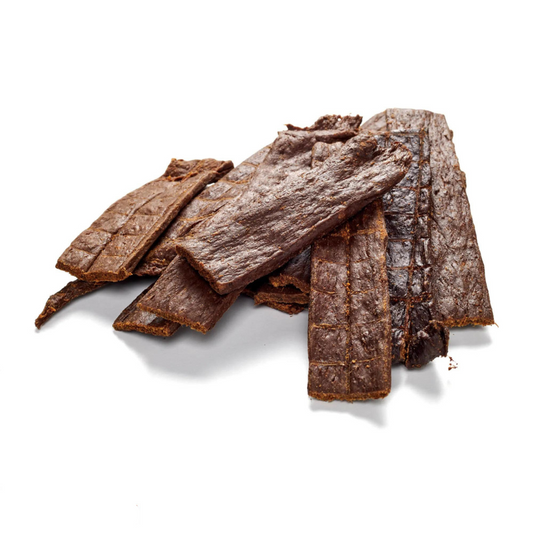
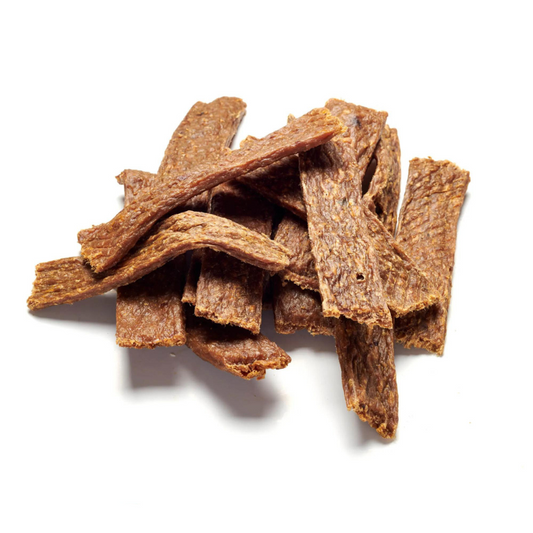
Soft softies, small pieces of meat from the training snacks category and mini meat cubes are very popular. The horse training snack is made from 100% horse and, at approx. 1 cm long, is already nicely small. The Training Softies Beef are soft and can be divided further if needed.
Grading rewards
| Situation | Reward |
|---|---|
| Easy exercise without distraction | dry food from the daily ration |
| New exercise | small training snacks or softies |
| Lots of distraction, e.g. other dogs | particularly coveted snacks such as meat cubes |
| Big success, e.g. recall | “jackpot”: several treats in a row |
Our article Training snacks for dog training explains how to use rewards in a targeted way.
Soft training softies for quick rewards:


How many treats per training session?
How many treats you need per training session depends on the exercises and the dog – several dozen small rewards often add up quickly, so the pieces should be tiny and deducted from the daily ration.
Better too many than too few
Nothing is more annoying than being left without a reward in the middle of a lesson. It is better to pack a little more and take leftover snacks back home. A pouch that closes well keeps the treats fresh – you can find tips in our article Treat pouch: how to keep dog treats fresh on the go.
Keeping an eye on the daily ration
As a rough guide, snacks should make up no more than about 10 percent of the daily energy requirement in total. On training days you can reduce the main food accordingly or use part of it directly as a reward. You can read how to calculate this in our guide How many treats per day? The 10 percent rule. You can find lean alternatives in the low-fat chews category.
Tips for portioning
- Measure in advance: fill the amount for the lesson into the treat pouch.
- Cut small: divide larger snacks into pea-sized pieces at home.
- Mix: a mix of normal food and special treats keeps motivation high.
- Not hungry, not full: feed a smaller meal before the lesson.
Dog school with puppies: what is different?
At puppy school you need particularly small, soft and easily tolerated treats, short exercise units and lots of breaks, because puppies can only concentrate for a short time.
Treats for puppies
Puppies have a sensitive stomach. Stick to varieties your puppy already knows and introduce new snacks at home instead. Soft snacks are ideal because milk teeth are not yet made for hard treats. Our article Puppy treats: what is allowed in the first months? explains what is allowed in the first months. You can find suitable chews in the chews for puppies category.
Also useful
- A chew for the break: helps your puppy calm down after training
- Short lead: for more control in the group
- Patience: puppies learn in small steps
Mild snacks for puppy school and beginners:


Tips for a relaxed start at dog school
A relaxed start at dog school works if you are well prepared, give your dog a little exercise beforehand and go into the first lesson with realistic expectations.
- Go for a walk beforehand: this way your dog can relieve itself and is less wound up.
- Arrive early: give your dog time to sniff out the new surroundings.
- Keep your distance: not every dog wants contact with other dogs straight away.
- Reward instead of scolding: positive reinforcement is the basis for good learning.
- Keep practising at home: short daily sessions consolidate what has been learned.
For practice at home, a mix training snack with different varieties provides variety.
Frequently asked questions about dog school treats
What do I need for the first dog school lesson?
You need small, soft treats, a treat pouch, a lead with a harness or collar, water with a bowl, poop bags and the vaccination record. Some dog schools also recommend a toy, blanket or clicker. It is best to ask in advance.
Which treats should I take to dog school?
Small, soft and very tasty treats such as softies, training snacks or mini meat cubes are ideal. They can be eaten quickly and leave few crumbs. Take proven varieties that your dog tolerates well.
How many treats per training session?
Several dozen small rewards often add up. That is why the pieces should be about pea-sized. Include them in the daily ration and reduce the main food a little on training days.
Should my dog eat before dog school?
A small meal some time before the lesson usually makes sense. A very hungry dog quickly loses concentration, while a full dog is not very motivated. Find out what works best for your dog.
Can I also use normal food as a reward?
Yes, dry food from the daily ration is a good reward for easy exercises. For difficult tasks or lots of distraction, you usually need something special such as soft training snacks.
Conclusion: well prepared for dog school
With the right dog school treats and well-thought-out equipment, the start at dog school will be relaxed for you and your dog. Small, soft and tasty training snacks in a treat pouch within easy reach, water, a suitable lead and poop bags form the basis. Include the rewards in the daily ration, grade them by difficulty and keep practising at home. This makes learning fun and your dog will associate dog school with positive experiences.
Further reading on this topic:
- Dog training - practicing basic commands in a playful way
- Clicker training for dogs
- Recall Training for Dogs: The Treat Ranking
This post was created with the help of AI