
Snacks for dogs with malocclusion
If your dog has a malocclusion, soft, easy-to-break snacks such as softies, soft meat cubes and thin meat strips are usually the best choice, because they put hardly any pressure on individual teeth. Very hard chews such as antlers, hooves or thick chew bones should only be offered after talking to your vet. In this post you will learn which chews suit dogs with dental misalignment, what to watch out for with short-nosed breeds and how to feed snacks safely.
Content: Snacks for dogs with malocclusion
- What is malocclusion in dogs?
- Which chews are suitable for dogs with malocclusion?
- Short-nosed breeds: what to watch out for when chewing
- Offering snacks the right way: tips for dogs with dental problems
- When to see the vet about malocclusion
- Frequently asked questions about malocclusion in dogs
- Conclusion: the right snacks for dogs with malocclusion
Soft snacks that are easy to chew even with a tricky bite:


What is malocclusion in dogs?
Malocclusion in dogs means that the upper and lower jaw do not meet properly or that individual teeth are crooked, rotated or in the wrong position. The normal bite in dogs is the so-called scissor bite: the upper incisors sit just in front of the lower ones.
Common types of malocclusion
- Underbite (undershot jaw): The lower jaw is longer than the upper jaw. In many short-nosed breeds such as pugs, boxers or bulldogs this is typical of the breed.
- Overbite (overshot jaw): The lower jaw is too short and the upper incisors protrude clearly.
- Level bite: The incisors meet edge to edge, which can lead to more wear.
- Crossbite and crowding: Individual teeth are rotated or very close together, for example because the jaw is very short.
- Retained baby teeth: If baby teeth stay in place next to the permanent teeth, they can push them into the wrong position.
Why malocclusion matters when feeding
When teeth are crowded or crooked, food residue gets stuck more easily. This encourages plaque and tartar. In addition, individual teeth can be put under more strain when chewing. That is why some dogs with dental problems prefer to chew on one side or swallow pieces whole. You can read more about how deposits form in our post Plaque and tartar in dogs.
Which chews are suitable for dogs with malocclusion?
For dogs with malocclusion, soft to medium-firm chews that are easy to bite off and give way rather than resist are the best choice. What matters most is that your dog can break the snack down safely with its individual bite.
Well suited: soft and yielding
- Softies: Soft, small bites such as our softies for dogs can be chewed with little force and are easy to split.
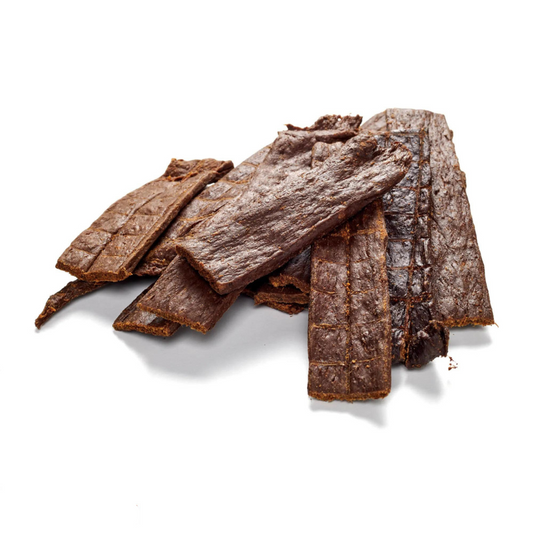
- Soft meat cubes: In the category soft meat cubes you will find tender cubes made from different types of meat.
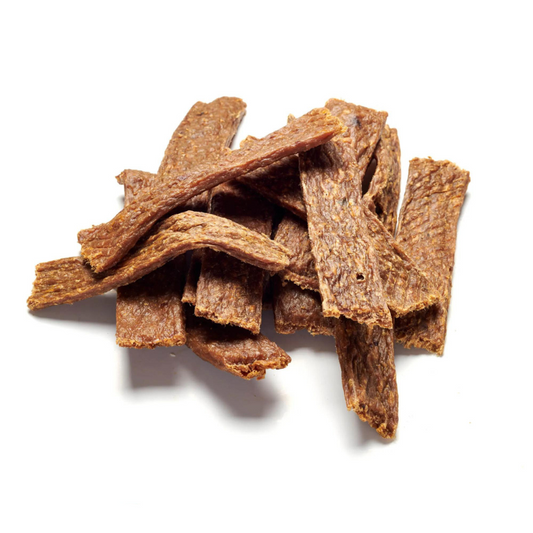
- Thin meat strips: Dried meat strips are fibrous and can be torn into small pieces.
- Lung: Dried lung is airy and crumbles easily, for example our lamb lung cubes mini.
Use with caution: hard chews
Very hard chews such as antlers, hooves, thick bully sticks or chew bones made from pressed hide put a lot of strain on the teeth. With a malocclusion this can overload individual teeth. Whether firmer chews are an option for your dog, and which ones, is best discussed with your vet.
| Chew | Hardness | With malocclusion |
|---|---|---|
| Softies, soft meat cubes | soft | usually well suited |
| Lung, thin meat strips | soft to medium | usually well suited |
| Ears, thin scalp | medium | check individually |
| Antlers, hooves, thick chew bones | very hard | only after talking to your vet |
Tender meat cubes for dogs with sensitive teeth:


Short-nosed breeds: what to watch out for when chewing
With short-nosed (brachycephalic) breeds such as pugs, French bulldogs or Shih Tzus, pay particular attention to the right size, a soft texture and calm eating. Their shortened jaw leaves less room for the teeth, so crowding and underbites are common.
Special features of a short jaw
- Little space: The teeth are often crowded or rotated, and food residue builds up faster.
- Different chewing technique: Many short-nosed dogs pick up snacks from the side and chew with their back teeth because their incisors do not meet well.
- Breathing while chewing: Dogs with restricted nasal breathing tend to need breaks while eating. Long, tough chewing sessions can be exhausting.
Choosing the right size
The snack should be big enough that your dog cannot swallow it whole, but small enough that it can grip it well with its teeth. Flat, thin shapes are often easier for short jaws than thick, round pieces. You will find helpful rules of thumb in our post chew size by dog size.
Offering snacks the right way: tips for dogs with dental problems
It is best to offer snacks to dogs with dental problems in small portions, in a soft form and under supervision. That way your dog can chew in peace and you can see straight away if anything is difficult.
How to make snacks bite-friendly
- Cut them small: Split softies or meat strips into bite-sized pieces that your dog can grip easily.
- Keep them soft: Store soft snacks well sealed so they do not dry out and harden.
- Watch closely: Notice whether your dog chews on one side only, drops pieces or smacks its lips. These can be signs of pain.
- Do not push: If your dog refuses a snack, the texture is sometimes the reason when teeth are a problem. Try a softer variety.
- Add dental care: Chews do not replace tooth brushing. With crowded teeth in particular, regular dental care is important.
You will find lots more tips on soft rewards in our post soft treats for senior dogs. The category chews for old dogs also offers a wide range of easy-to-chew snacks – and it is not just for seniors.
Examples of easy-to-chew snacks
- For training: Softies horse-potato are soft and easy to split into small pieces.
- For in between: rabbit meat strips are lean and fibrous.
- For sensitive mouths: soft chicken meat cubes are tender and easy to chew.
Fibrous snacks to tear into small pieces:


When to see the vet about malocclusion
You should take your dog to the vet about a malocclusion as soon as it shows signs of pain, teeth injure the gums or palate, or it eats less well. In puppies with retained baby teeth, an early check-up is also worthwhile.
Warning signs to take seriously
- Your dog only chews on one side or drops food.
- Strong bad breath, red or bleeding gums.
- Increased drooling, pawing at the mouth or head shaking while eating.
- Broken, loose or discoloured teeth.
- Teeth visibly pressing into the palate or lip.
Your vet can assess whether the misalignment needs treatment, for example by removing baby teeth or other measures. They can also tell you which chews are suitable for your dog. You can read how many teeth a healthy dog has in our post dog teeth and dental care.
Frequently asked questions about malocclusion in dogs
Which chews are suitable for dogs with malocclusion?
Soft, yielding snacks such as softies, soft meat cubes, thin meat strips or dried lung are the best choice. They are easy to break down and put hardly any strain on individual teeth. Only offer hard chews after talking to your vet.
What is best for pugs and bulldogs to chew?
For pugs, French and English bulldogs, flat, soft or medium-firm snacks in the right size are usually ideal. They are easy to grip even with a short jaw and an underbite. Make sure your dog chews calmly and has enough breaks to breathe.
What should I look out for with short-nosed breeds?
Crowded teeth and underbites are common in short-nosed breeds, and breathing is often restricted. Choose snacks that cannot be swallowed whole, offer them under supervision and look after their teeth regularly. If there are breathing problems or pain, your vet is the right person to ask.
Can a dog with an underbite eat normal treats?
Many dogs with a mild underbite cope well with normal treats. What matters is whether your dog can grip and break down the pieces properly. Watch it while it eats and switch to softer or smaller snacks if there are problems.
Do chews help against tartar with malocclusion?
Chewing can support dental care but does not replace tooth brushing. With crowded teeth, chews do not reach every tooth surface. Regular brushing and check-ups at the vet are therefore especially important.
Conclusion: the right snacks for dogs with malocclusion
Malocclusion in dogs does not mean your four-legged friend has to go without snacks. Soft, easy-to-break treats such as softies, tender meat cubes, thin meat strips or lung are usually a safe choice. Offer them in the right size and under supervision, watch out for warning signs such as chewing on one side, and combine snacks with regular dental care. If your dog is in pain, has injuries in its mouth or you are unsure, your vet is the right person to ask. You will find suitable snacks in our categories softies and soft meat cubes.
Further reading on this topic:
- Soft treats for senior dogs with dental problems
- Plaque and tartar in dogs
- Chew size by dog size: finding the right fit
This post was created with the help of AI