
Chew size by dog size: finding the right fit
When it comes to chew size for your dog, the most important rule of thumb is this: the chew must be big enough that your dog cannot fit it entirely into its mouth or swallow it whole – if in doubt, choose one size bigger. Small dogs do well with thin chew sticks and mini chews, while large breeds need long, thick and robust chew bones or chew plates. In this guide you'll find out how to choose the right size, when a chew is too small and how to avoid a choking hazard.
Content: Chew size by dog size: finding the right fit
- Chew size for your dog: the key rules of thumb
- Chews for small dogs: slim rather than tiny
- Chews for medium-sized dogs: longer and firmer
- Which chews are suitable for large breeds?
- When is a chew too small? Avoiding a choking hazard
- Frequently asked questions about chew size for dogs
- Conclusion: the right chew size makes chewing safe
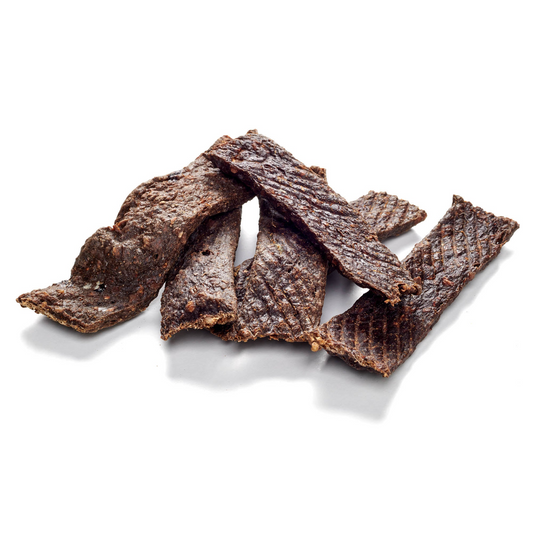
Slim chews for small dogs:


Chew size for your dog: the key rules of thumb
The right chew size depends on the size of your dog's mouth, its weight and its chewing style: the chew should be clearly longer than your dog's mouth is wide, and sturdy enough not to break into swallowable pieces after just a few bites.
Why size matters so much
A chew that is too small is the biggest risk when chewing. Dogs tend to gulp down small pieces hastily instead of chewing them. If a piece gets stuck in the throat or oesophagus, things can quickly become dangerous. A chew that is too large or too hard, on the other hand, overwhelms small jaws and can put strain on the teeth of very powerful chewers. The right size therefore ensures both safety and long-lasting chewing fun.
The rules of thumb at a glance
- Rather one size bigger: A generously sized chew is almost always safer than one that is only just big enough.
- Not entirely in the mouth: Your dog should have to hold the chew with its paws and work on it from the side with its molars.
- Hardness to match the chewing style: Gentle chewers and seniors need softer varieties, powerful chewers need robust chew bones.
- Remove the last piece: Once the chew has become so small that your dog could swallow it whole, swap it for a treat.
- Always supervise: Especially with a new variety, stay close and watch how your dog chews.

Our guide Chew plates for dogs gives you a good overview of the different types.
Chews for small dogs: slim rather than tiny
For small dogs up to about 10 kg, thin, elongated chews such as short intestine sticks, mini sticks or small rolled scalp are suitable – what matters is that they are slim enough for the small mouth but long enough not to be swallowed.
What small dogs need
Small breeds such as Chihuahuas, Yorkshire Terriers or Pomeranians have small jaws and delicate teeth. They can hardly work on very hard and thick chew bones. Slim chews of medium firmness are a better choice. According to the product description, the Beef intestine sticks, short are around 12 to 15 cm long and 0.5 to 1 cm wide – a manageable size for small dogs. The selection of mini sticks is also ideal for small mouths.
Typical mistakes with small dogs
- Pieces that are too small: Even a small dog can swallow a thumb-sized piece whole. Cubes and medallions are treats, not chews.
- Varieties that are too hard: Large bones or thick plates overwhelm small jaws.
- Too much at once: Small dogs have a low energy requirement – chews count towards the daily snack allowance.
You'll find many more ideas in our article Suitable chews for small dogs. For puppies there is a separate selection of chews for puppies that are tailored to young teeth.
Chews for medium-sized dogs: longer and firmer
Medium-sized dogs of about 10 to 25 kg need longer and firmer chews than small dogs – for example hide sticks, chew plates or medium-sized chew bones that can't be bitten apart in just a few minutes.
The right selection
Beagles, Border Collies or Cocker Spaniels often chew quite powerfully already. Short, thin sticks are used up quickly and can turn into small leftover pieces. Better options are:
- Long hide sticks: According to the product description, the Buffalo hide stick is around 75 cm long and intended for medium-sized to large dogs.
- Chew plates: Thanks to their wide, flat shape, they are hard to bite pieces off. You'll find a large selection in the category Chew plates.
- Medium chew bones: Many chew bones come in several sizes. The Buffalo hide bones, for example, are available in S (approx. 12 cm), M (approx. 15 cm) and L (approx. 20 cm).
Adjust the size to the chewing style
There are big differences within the same weight class: a leisurely nibbler can make a size M chew bone last a long time, while an ambitious chewer takes it apart in no time. Watch your dog during the first chewing sessions and then adjust the size. If the chew gets small very quickly, choose the next size up next time.
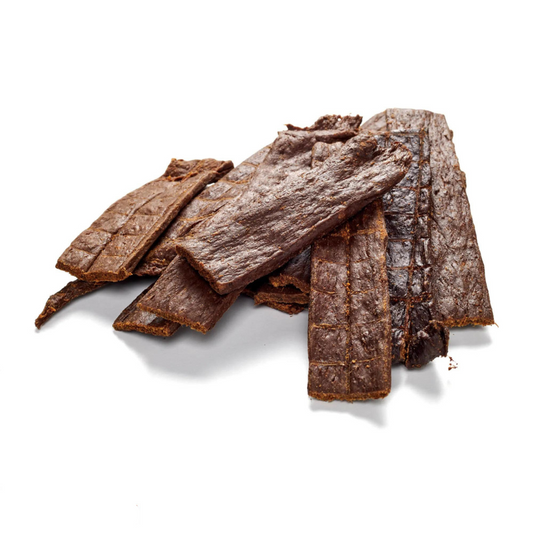
Longer chews for medium-sized dogs:


Which chews are suitable for large breeds?
Large breeds from about 25 kg need large, thick and robust chews such as large chew plates, chew bones in size L or XXL bones, which withstand powerful jaws for a long time and don't break into swallowable pieces.
Robust chews for powerful jaws
Labradors, German Shepherds or Bernese Mountain Dogs have a lot of jaw power and a large mouth. What keeps a small dog busy for a long time often disappears in a few bites with them. So pay attention to:
- Sufficient length and thickness: The chew should be clearly wider than the gap between your dog's molars.
- Firm structure: Hide plates and chew bones made of buffalo or cowhide last longer than airy lung or tripe pieces.
- Choose large variants: For chew bones available in several sizes, take the largest size for large dogs. You'll find suitable models in the category Chew bones.
XXL bones: only under supervision
Very large bones offer long-lasting occupation but require special attention. According to the product description, the Horse Jumbo Bone XXL is around 30 to 50 cm long, and it expressly advises never to leave your dog unattended with it because of the risk of splinters. Check bones regularly for sharp edges and remove any splintered pieces. We have put together more robust recommendations in the article Chews for strong chewers.
Long sticks for large dogs
Long chew sticks are also well suited to large dogs, as long as they are thick enough. Thin sticks, on the other hand, are quickly bitten through. In the category Chew sticks you'll find variants in different lengths and thicknesses.
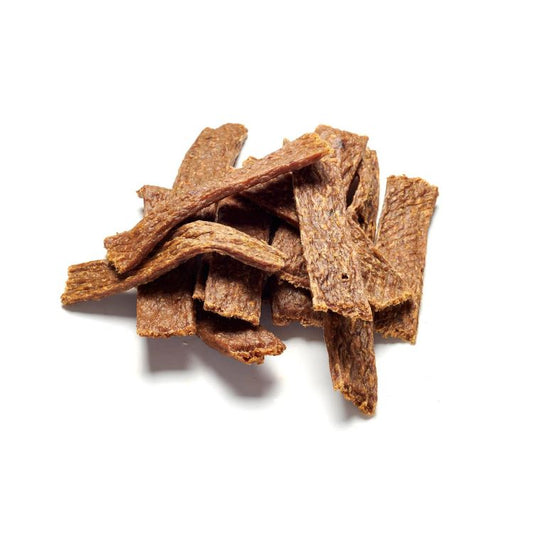
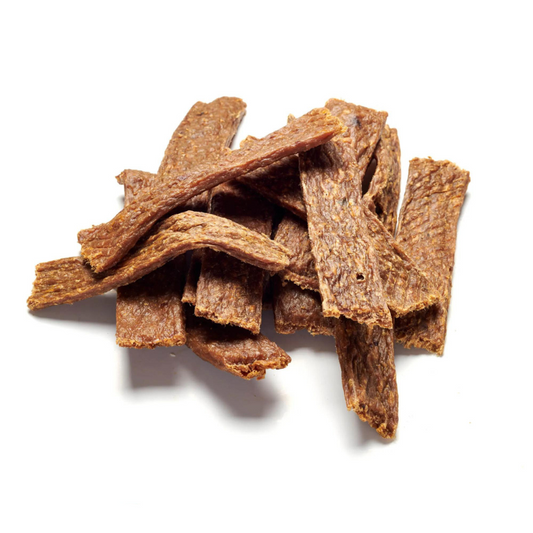
Robust chews for large breeds:


When is a chew too small? Avoiding a choking hazard
A chew is too small as soon as your dog could take it entirely into its mouth or swallow it whole – at the latest then you should swap the leftover piece for a treat and take it away.
Warning signs of a chew that is too small
- Your dog can make the chew disappear completely between its molars.
- It tries to gulp down large pieces hastily instead of chewing.
- The chew is bitten into small pieces after just a few minutes.
- Your dog gags or coughs during or after chewing.
How to avoid a choking hazard with chews
- Choose the right size: If in doubt, go for the larger variant.
- Supervise: Don't leave your dog alone with chews, especially not with new varieties.
- Swap the leftover piece: Offer a treat and calmly take the small end away – this teaches your dog that giving it up is worthwhile.
- Let your dog chew in peace: Give chews in a quiet place and separately if you have several dogs, so that food envy doesn't lead to hasty gulping.
- Provide water: Dried chews make dogs thirsty.
In an emergency
If your dog gags heavily, has difficulty breathing or behaves unusually, contact your vet or an animal clinic immediately. It's worth familiarising yourself with first aid for dogs in advance. Seniors with sensitive teeth also have their own selection of chews for old dogs.
Frequently asked questions about chew size for dogs
How big does a chew need to be for my dog?
A chew should be big enough that your dog cannot fit it entirely into its mouth and has to hold it with its paws. As a guide, it should be clearly longer than your dog's mouth is wide. If in doubt, choose the larger variant.
When is a chew too small?
A chew is too small as soon as your dog could swallow it whole. This also applies to leftover pieces of an originally large chew. Swap them for a treat in good time and take them away.
Which chews are suitable for large breeds?
Large breeds do well with large chew plates, thick hide sticks and chew bones in size L or XXL. What matters is a firm structure and sufficient thickness so that the chew doesn't quickly break into swallowable pieces.
Which chews are suitable for small dogs?
Small dogs cope well with slim, elongated chews such as short intestine sticks, mini sticks or small rolled scalp. Very hard and thick chew bones are usually too much for small jaws.
Do I need to supervise my dog while it chews?
Yes, especially with new chews and towards the end, when only a small piece is left. That way you can step in in good time if your dog tries to swallow a piece that is too large.
Conclusion: the right chew size makes chewing safe
The right chew size for your dog depends on the size of its mouth, its weight and its chewing style. Small dogs benefit from slim sticks and mini chews, medium-sized dogs from longer hide sticks and chew plates, and large breeds from thick, robust chew bones and large plates. The most important rule applies to all of them: choose one size bigger rather than smaller, remove leftover pieces in good time and stay close while your dog chews. If problems such as heavy gagging occur, your vet is the right person to contact.
Further reading on this topic:
- Suitable chews for small dogs
- Chews for strong chewers: our "Heavy Duty" selection reviewed
- Chew plates for dogs: long-lasting fun for big chewers
This post was created with the help of AI