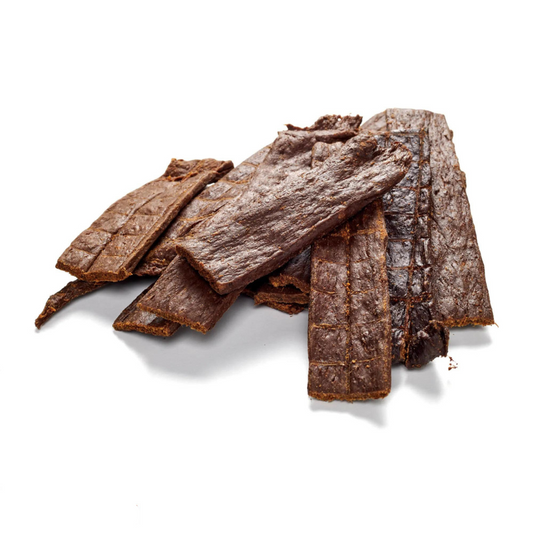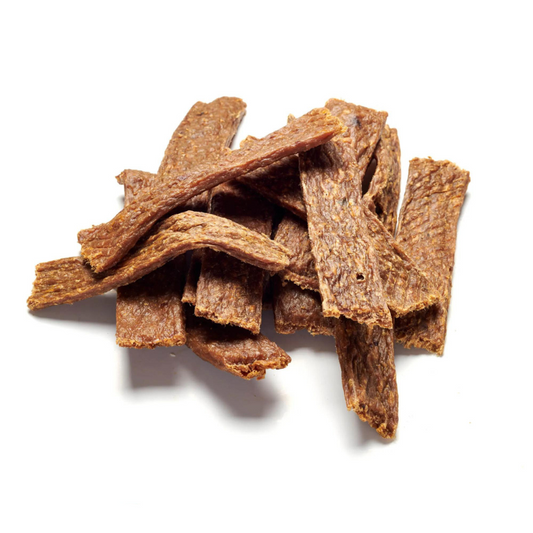

Crackers for dogs: crunchy snacks put to the test
Crackers for dogs are crispy baked snacks that can be a healthy reward when made with high-quality ingredients such as fresh meat. The ingredient list is what matters: good dog crackers clearly name the meat and animal species, contain no sugar or artificial additives and are fed in moderation. Here you will learn what should be in dog crackers, which dogs they suit and how to use them sensibly.
Content: Crackers for dogs: crunchy snacks put to the test
- What are crackers for dogs?
- Are crackers healthy for dogs?
- What ingredients should be in dog crackers?
- Are crackers suitable as training treats?
- How many crackers can a dog have per day?
- Frequently asked questions about crackers for dogs
- Conclusion: crackers for dogs – a crunchy reward, chosen wisely
Crunchy crackers for your dog:


What are crackers for dogs?
Crackers for dogs are flat, baked crunchy snacks made from a dough base that is refined with meat, cheese, vegetables or fruit.
Difference from biscuits and dried meat snacks
Unlike dried meat snacks, which often consist of just one ingredient, crackers are baked. Besides meat, they therefore also contain a dough base, for example made from flour, potatoes or other starchy ingredients. Compared to classic dog biscuits, crackers are usually thinner and crispier. The boundaries are fluid – you will find many products both under crackers and under dog biscuits.
Typical varieties
- Meat crackers: With fresh venison, beef or poultry as the main ingredient.
- Cheese crackers: With cheese for flavour, often combined with meat.
- Coconut crackers: With coconut flour or coconut flakes as part of the dough base.
Are crackers healthy for dogs?
Crackers can be healthy for dogs if they have a high meat content, a clear ingredient list and no sugar – but they are high in energy and therefore a reward, not a meal.
What speaks for good crackers
- Variety: The crunchy texture is a special experience for many dogs.
- Easy to portion: Crackers can be broken into small pieces.
- Long shelf life: Baking makes them dry and easy to store.
What you should look out for
Besides protein, baked snacks also contain carbohydrates. For overweight dogs, they are therefore only suitable in small amounts. For dogs with food allergies or during an elimination diet, crackers with many ingredients are usually unsuitable – single-protein snacks are a better fit here. Whether grain is a problem in principle is examined in our article Grain-free or not?.
Crackers and dental care
You sometimes read that crunchy snacks clean the teeth. That is only true to a very limited extent: crackers break quickly and hardly touch the tooth surface. For dental care, longer-lasting chews and regular tooth brushing are much more effective. So think of crackers as a treat and not as a dental care product.
What ingredients should be in dog crackers?
In good dog crackers, meat with a percentage is listed near the top of the ingredient list, the animal species is clearly named, and sugar, artificial colours and flavourings as well as ingredients that are toxic to dogs are absent.

How to read the ingredient list
- Note the order: Ingredients are sorted by weight. The first ingredient is the main ingredient.
- Look for percentages: "40% fresh venison" says more than "with venison".
- Check the animal species: "Beef" is more precise than "meat and animal by-products".
- Recognise sugar: Glucose syrup, molasses and caramel are also sugar.
- Rule out taboo ingredients: Chocolate, raisins and the sweetener xylitol have no place in dog snacks.
Examples from our range
According to the product information, the venison crackers contain 40% fresh venison. The beef crackers rely on 20% fresh beef, complemented by quinoa, apricots, pear, sunflower seeds and turmeric. The cheese crackers with turkey meat combine 18% fresh turkey and turkey liver with 4% cheese. Our guide Buying dog biscuits explains in detail how to read ingredient lists for dog biscuits.
Bake your own or buy?
You can also bake dog crackers yourself with just a few ingredients, for example flour or oat flakes, egg and some cooked meat. The advantage: you know exactly what is in them. The disadvantage: home-baked crackers usually do not keep as long and take time. Bought crackers are practical, consistent in quality and often made with a higher proportion of fresh meat than is easily possible at home. Both options are fine as long as the ingredients are right and you leave out salt, sugar and spices.
Crackers and soft alternatives:


Are crackers suitable as training treats?
Crackers are only partly suitable as training treats: they crumble, take some chewing and are high in energy – they are good for short, occasional rewards, but small soft snacks are better for intensive training.
When crackers are a good fit
- As a reward after a walk or a successful exercise.
- As a snack during a search game or on a snuffle mat.
- As a small treat for visiting dogs.
When other snacks are better
When training with lots of repetitions, you need small treats that are eaten quickly. Soft snacks or dried mini cubes are more practical here. You can find a large selection in the categories training snacks and mini meat cubes. The article Training snacks for dog training offers tips on choosing.
Crackers for older dogs
Seniors with sensitive teeth sometimes struggle with very hard snacks. Break the crackers into small pieces or soften them briefly in a little water. Alternatively, soft training softies that are easy to chew are a good choice.
How many crackers can a dog have per day?
How many crackers your dog can have depends on its size and the other treats it gets; as a rule of thumb, all snacks together should provide no more than about 10 percent of daily energy.
| Dog size | Guideline |
|---|---|
| Small dogs (up to 10 kg) | 1–2 crackers, ideally broken into pieces |
| Medium-sized dogs (10–25 kg) | 2–3 crackers |
| Large dogs (from 25 kg) | 3–5 crackers |
These values are rough guidelines and depend on the size and recipe of the crackers. Always follow the feeding recommendation on the pack and reduce the main food if you give a lot of snacks. Our article How many treats per day? explains how to calculate the exact amount.
Store them correctly
Keep crackers dry and well sealed so that they stay crunchy. Snacks that have become damp or smell musty no longer belong in the bowl.
Frequently asked questions about crackers for dogs
Are crackers healthy for dogs?
Yes, if they contain plenty of meat, a clear ingredient list and no sugar. As they are high in energy, you should feed them as a reward in moderation and count them in the daily ration.
What ingredients should be in dog crackers?
Meat with a percentage and a clearly named animal species should be near the top. Sugar, artificial colours and flavourings as well as chocolate, raisins or xylitol have no place in them.
Are crackers suitable as training treats?
Only partly. They are good for individual rewards, but for training with many repetitions, small soft snacks are more practical because they do not crumble and are eaten quickly.
Can dogs eat crackers made for humans?
Better not. Crackers for humans often contain a lot of salt, spices, onion or garlic powder. It is better to choose crackers made specifically for dogs.
Are crackers suitable for puppies?
Small pieces are possible for puppies as an occasional reward. Follow the manufacturer's recommendation and make sure puppies cover their energy needs mainly through puppy food.
Are crackers suitable for dogs with allergies?
Usually only to a limited extent, as crackers contain several ingredients and often different protein sources. For allergic dogs or during an elimination diet, single-protein snacks made from just one type of meat are the safer choice.
Conclusion: crackers for dogs – a crunchy reward, chosen wisely
Crackers are a crunchy change in your dog's everyday snacks. Look for a high, clearly declared meat content and a short ingredient list without sugar, and feed them in moderation. For intensive training, choose small soft snacks, for dogs with allergies single-protein treats – and for special moments a good cracker.
Further reading on this topic:
- Baking your own dog biscuits – tips & recipes
- Baking dog snacks yourself vs. buying: a comparison
- Buying dog biscuits: how to read ingredient lists correctly
This post was created with the help of AI