
Buying dog biscuits: how to read ingredient lists correctly
You can recognise good dog biscuits by a short, understandable ingredient list in which specific ingredients such as meat, grain or vegetables come first and sugar, salt and artificial colourings are left out. So if you are buying dog biscuits, do not just look at the packaging – read the declaration. In this guide we show you step by step how to understand the ingredient lists of dog biscuits and choose healthy dog treats.
Content: Buying dog biscuits: how to read ingredient lists correctly
- How do I recognise healthy dog biscuits?
- Reading a dog biscuit ingredient list: how to do it
- Which ingredients should not be in dog biscuits?
- Are dog biscuits with grain bad?
- Buy dog biscuits or bake them yourself?
- Frequently asked questions about dog biscuits
- Conclusion: choose dog biscuits consciously
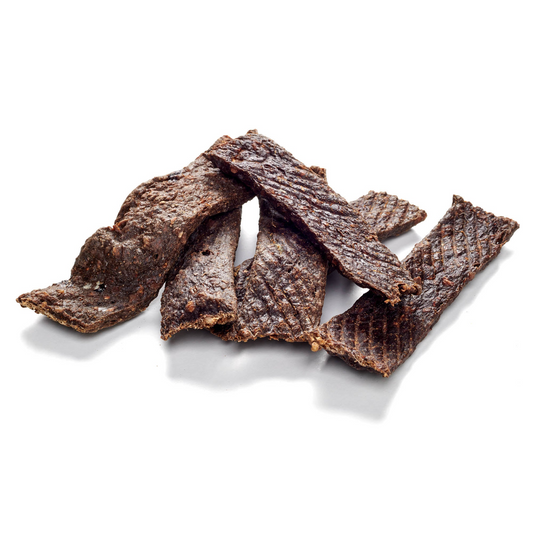
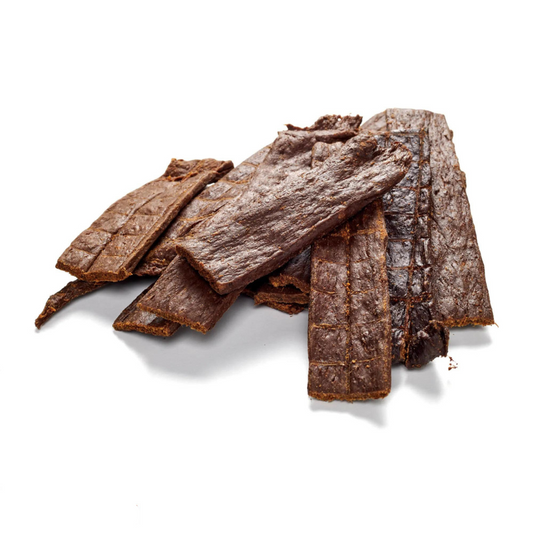
Meat crackers with a clear composition:


How do I recognise healthy dog biscuits?
You can recognise healthy dog biscuits by a few clearly named ingredients, a logical order and the absence of unnecessary additives such as sugar or colourings. The analytical constituents also help you compare products.
Features of good dog biscuits
- Short ingredient list: The fewer the ingredients, the easier it is to judge what your dog is getting.
- Specific names: “Beef” or “oat flour” tells you more than “meat and animal derivatives” or “cereals”.
- No added sugar: Dogs do not need sugar in their biscuits.
- No artificial colourings: Colourful biscuits may look nice to us, but your dog does not care about colour.
- Suitable size: Small biscuits or crackers are easier to portion and also work well as rewards.
Dog biscuits are complementary feed
Dog biscuits are usually complementary feed – they supplement the main food but do not replace it. That is why they should only make up a small part of the daily ration. You will find a wide selection in our dog biscuits and dog cookies categories.
Reading a dog biscuit ingredient list: how to do it
It is best to read the ingredient list of dog biscuits from front to back: for many feeds, the individual feed materials are listed in descending order by weight – so the first ingredient makes up the largest share.

Step 1: Check the order
If meat comes first, it is the most important ingredient in terms of quantity. If wheat flour comes first and meat appears far down the list, it is more of a cereal biscuit with meat flavour. Both can be fine – what matters is that you know what you are buying.
Step 2: Look at the percentages
If an ingredient is particularly highlighted on the packaging, such as “with venison”, you will often find a percentage in the composition. It shows you how much of it is really in there.
Step 3: Recognise category names
Terms such as “vegetable derivatives”, “cereals” or “meat and animal derivatives” are permitted category names. However, they do not reveal exactly which animal species or which grain was used. For dogs with allergies, an open declaration with specific ingredients is therefore particularly important.
Step 4: Compare the analytical constituents
Crude protein, crude fat, crude fibre and crude ash show you how the biscuit is made up. A high crude fat content means more calories. For dogs that need to watch their figure, comparing these values is especially worthwhile.
Which ingredients should not be in dog biscuits?
Dog biscuits should not contain ingredients that are toxic to dogs, such as chocolate, raisins, xylitol or macadamia nuts, and ideally no added sugar, lots of salt or artificial colourings either.
Absolute no-gos
- Chocolate and cocoa: Contain theobromine, which is toxic to dogs.
- Grapes and raisins: Can cause serious health problems in dogs.
- Xylitol (birch sugar): Toxic to dogs and sometimes found in “sugar-free” baked goods for humans.
- Macadamia nuts: Considered problematic for dogs.
- Onions and garlic in larger amounts: Can damage red blood cells.
You will find a detailed overview in our checklist of toxic foods.
Ingredients you should view critically
- Sugar, syrup, molasses: Provide empty calories and are unnecessary.
- Lots of salt: Small amounts are not a problem, but biscuits do not need much salt.
- Colourings and flavourings: They mainly serve to make the product look appealing to us humans.
What labels such as “with EU additives” mean is explained in our article Additives in dog food.
Putting advertising claims into perspective
Terms such as “natural”, “premium” or “healthy” sound good, but they are no guarantee of a certain quality. What counts is what is written in the composition. Pictures of pieces of meat or vegetables on the packaging also say little about the actual amount. If you get into the habit of reading the back first, you will make better decisions when buying dog biscuits.
Shelf life and storage
Dry dog biscuits usually keep for a long time if they are stored in a cool, dry place and well sealed. Pay attention to the best-before date and make sure the biscuits do not get damp after opening. If they smell rancid or show pale spots, they no longer belong in the bowl.
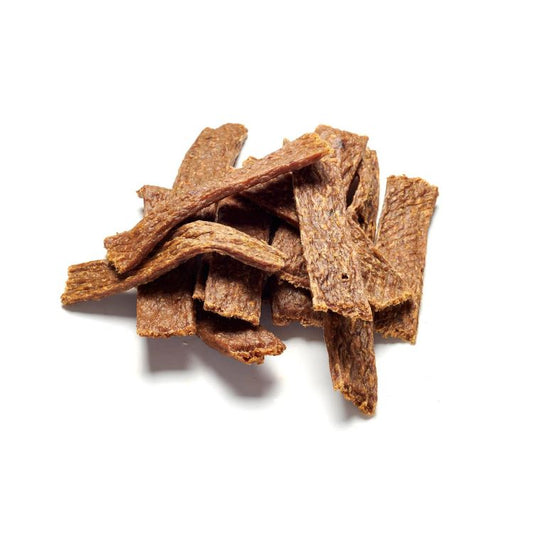
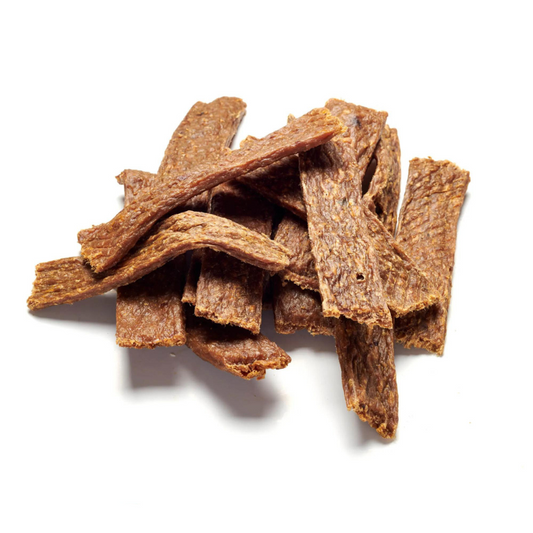
Crunchy and soft alternatives:


Are dog biscuits with grain bad?
No, dog biscuits with grain are not bad in principle – most dogs tolerate grains such as oats, spelt or rice well. Grain-free biscuits make sense above all for dogs that have been shown to react to a particular grain.
Grain in dog biscuits
Grain provides carbohydrates and fibre and gives biscuits their typical crunchy texture. Whether wheat, spelt or oats – what matters is the amount and how well your dog tolerates it. Our article Grain – good or bad for dogs? covers this in detail.
Alternatives for sensitive dogs
For dogs with a food allergy or intolerance, crackers with a few clearly declared ingredients or snacks made from just one type of meat are a good choice. Venison crackers or cheese crackers with turkey offer variety, and you will find further options in the hypoallergenic chews category. Meat-free snacks from the vegetarian and vegan category can also be an alternative. If you suspect an allergy, your vet is the right person to talk to.
Buy dog biscuits or bake them yourself?
Whether you buy dog biscuits or bake them yourself is mainly a question of time and control: homemade biscuits give you full control over the ingredients, while bought biscuits are practical, keep for a long time and are evenly portioned.
- Bought: Practical, long-lasting, clear declaration – ideal on the go and as a reward.
- Homemade: Full control over ingredients, but limited shelf life and time-consuming.
You will find a detailed comparison in Baking dog snacks yourself vs. buying them. With peanut biscuits or crunchy crackers you always have a reward to hand.
Frequently asked questions about dog biscuits
How do I recognise healthy dog biscuits?
By a short ingredient list with specific names, a logical order and the absence of sugar and artificial colourings. Also compare crude fat and crude protein in the analytical constituents.
Which ingredients should not be in dog biscuits?
Chocolate, raisins, xylitol and macadamia nuts are off limits. Added sugar, lots of salt and artificial colourings are not toxic, but they are unnecessary.
Are dog biscuits with grain bad?
Not in principle. Most dogs tolerate grain well. Grain-free biscuits make sense if your dog has been shown to react to a particular grain.
What does the order in the ingredient list mean?
For many feeds, the ingredients are sorted by their share of the weight. The first ingredient is therefore the most important in terms of quantity. This lets you see quickly whether meat or flour dominates.
How many dog biscuits can my dog eat per day?
That depends on size, activity and the calorie content of the biscuits. As a rule of thumb, all treats together should make up no more than about 10 percent of the daily energy requirement.
Are expensive dog biscuits automatically better?
Not necessarily. The price says little about the composition. It is better to compare the ingredient list, order and analytical constituents – that way you can recognise quality regardless of brand and packaging.
Conclusion: choose dog biscuits consciously
You do not recognise good dog biscuits by colourful packaging, but by the ingredient list. Pay attention to the order, to specific names instead of category terms and to the absence of sugar, colourings and ingredients that are toxic to dogs. Grain is not a problem for most dogs, and for allergies, crackers with few ingredients or single-protein snacks can help. If you follow this approach when buying dog biscuits, you will quickly find healthy dog treats that your dog enjoys and that suit him. You will find our selection in the crackers category.
Further reading on this topic:
- Baking your own dog biscuits - tips & recipes
- Baking dog snacks yourself vs. buying: a comparison
- Additives in dog food: what do EC additives mean?
This post was created with the help of AI