
Dog chews and diarrhoea: what is allowed?
Dog chews are off the menu at first when your dog has diarrhoea: as long as the stool is runny, the gastrointestinal tract should be given a rest with a bland diet, and fatty or hard-to-digest chews stay in the cupboard. Only once the stool has returned to normal can you gradually reintroduce small amounts of lean, easily digestible snacks. In this article, you will learn which treats are gentle on the stomach, how to dose them correctly and when to see the vet about diarrhoea.
Content: Dog chews and diarrhoea: what is allowed?
- Can my dog have chews when he has diarrhoea?
- Which treats are gentle on the stomach?
- Reintroducing chews properly after diarrhoea
- Preventing diarrhoea caused by snacks
- When should you see the vet about diarrhoea?
- Frequently asked questions about chews and diarrhoea
- Conclusion: pause chews during diarrhoea
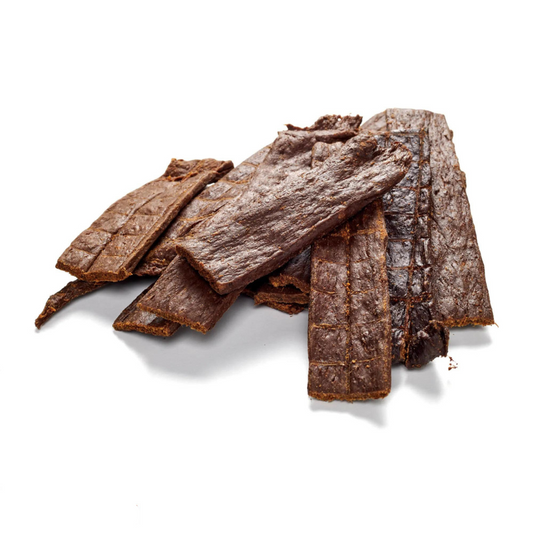
Lean rabbit snacks for the time afterwards:


Can my dog have chews when he has diarrhoea?
During acute diarrhoea, you should not give your dog any chews. The gut needs rest now, and every extra snack can prolong the symptoms.
Why chews should take a break now
Chews are usually dried, rich in protein and sometimes high in fat. For an irritated gut, that is heavy food. In addition, dogs swallow larger pieces while chewing, which first have to be softened in the stomach. A short break will not harm your dog – during this time, he is better off getting your attention in the form of cuddles and rest.
What helps in the first few days
- Fresh water: Diarrhoea drains fluid from the body. Make sure your dog drinks enough.
- Bland diet: Small portions of boiled lean chicken with well-cooked rice are often recommended – ideally after consulting your vet.
- Small meals: Several small portions a day put less strain on the gut than one large one.
- Rest: Short walks and plenty of sleep support recovery.
You can read more about causes and treatment in our guide Diarrhoea in dogs.
Which treats are gentle on the stomach?
Treats that are gentle on the stomach are above all low-fat treats made from a single, well-tolerated protein source, for example dried rabbit, turkey, chicken breast or lung. They are light and can be dosed precisely in small pieces.
Features of stomach-friendly treats
- Low in fat: Fat is harder to digest and can irritate the gut further.
- A single protein source: Single-protein snacks make it easier to identify intolerances.
- No additives: Dried meat without spices, sugar or flavourings.
- Small pieces: Cubes or thin strips are easy to portion.
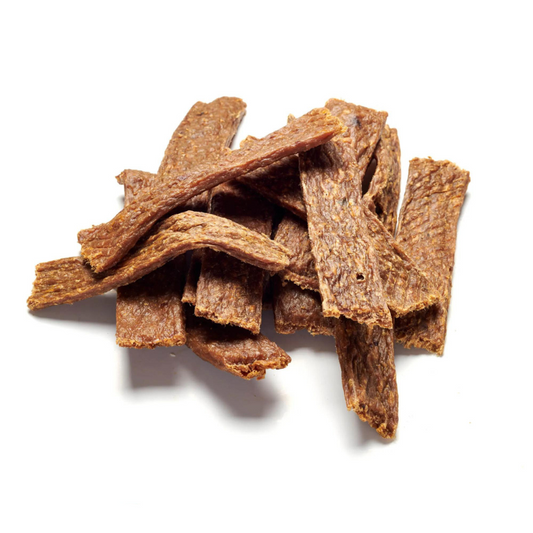
Good choices include rabbit meat cubes mini, light lamb lung cubes mini or chicken fillet strips, which you break into small pieces. You will find a large selection in the category low-fat chews and under rabbit snacks. Our article Single-protein snacks explains why snacks with only one type of meat are so practical.
What you should avoid for now
| Better to avoid | Why |
|---|---|
| Pig ears, udder, dog sausage | comparatively high in fat |
| Large hide bones and chew plates | hard to digest, large amounts at once |
| Cheese snacks | can put additional strain on the gut in sensitive dogs |
| New, unfamiliar varieties | if problems arise, the cause is hard to identify |
| Leftovers from the table | often seasoned, fatty or unsuitable |
Light lung cubes for small rewards:


Reintroducing chews properly after diarrhoea
After diarrhoea, it is best to reintroduce chews step by step: only once the stool has been normal for a few days, and initially with small amounts of a familiar, lean snack.
- Wait: Wait until the stool is firm again and your dog is eating normally.
- Back to the usual food: Slowly switch from the bland diet back to normal food over a few days.
- Choose a familiar snack: Start with a lean treat that your dog has always tolerated well.
- Start small: At first, give only a few small pieces a day.
- Watch the stool: If everything stays stable, you can slowly increase the amount after a few days.
- Larger chews last: Ears or chew sticks only come back once everything is stable.
You can read how to make any food change gentle in the article Changing your dog's food.
Chews for sensitive stomachs
If your dog is generally prone to soft stool, take a look at hypoallergenic chews and lean varieties such as turkey. Keep the amount of snacks rather small in everyday life and always introduce new varieties one at a time so that you can quickly spot intolerances.
Preventing diarrhoea caused by snacks
Diarrhoea caused by snacks can be prevented in many cases by consciously controlling the amount, fat content and variety. Many digestive problems are not caused by a single snack, but by the sum of many small extras.
Keep an eye on the amount
Treats and chews together should make up only a small part of the daily ration. A common rule of thumb is no more than about 10 percent of the daily energy requirement. It is best to prepare the daily amount in a small container in the morning – that way you keep track, even if several family members hand out rewards.
Test new varieties one at a time
Always introduce only one new variety at a time and give only small amounts during the first few days. If your dog tolerates the snack well, you can plan it in permanently. If problems occur, you will know immediately what caused them.
Hygiene and storage
Store chews in a dry, cool and well-ventilated place and throw away snacks with mould, damp patches or an unusual smell. You should also clean the bowls regularly. Close opened packs well and use them up promptly.
Take stress into account
Excitement, travel or moving house can also upset some dogs' stomachs. During such phases, it makes sense to stick to familiar, well-tolerated snacks and avoid experiments.
When should you see the vet about diarrhoea?
You should see the vet about diarrhoea if it lasts longer than one to two days, there is blood in the stool, your dog is also vomiting or seems lethargic. With puppies, seniors and dogs with pre-existing conditions, you should act sooner.
Warning signs at a glance
- Blood or mucus in the stool or black, tarry stool
- Vomiting in addition to diarrhoea
- Lethargy, weakness or fever
- Not drinking or signs of dehydration
- Abdominal pain, a bloated belly
- Suspected poisoning or a swallowed foreign object
- Puppies and old dogs, as they dehydrate more quickly
If diarrhoea keeps coming back, the vet can look for causes such as parasites, food intolerances or illnesses. Our article Bowel movements in dogs explains what is normal and what is not.
Thin meat strips from a single protein source:


Frequently asked questions about chews and diarrhoea
Can my dog have chews when he has diarrhoea?
Not during acute diarrhoea. The gut needs rest and a bland diet. Only reintroduce chews and treats once the stool has been normal for a few days – in small amounts at first.
Which treats are gentle on the stomach?
Gentle treats are low-fat snacks from a single protein source, such as dried rabbit, turkey, chicken breast or lung. They should be free of additives and easy to break into small pieces.
When should I see the vet about diarrhoea?
If the diarrhoea lasts longer than one to two days, there is blood in the stool, or your dog is vomiting, not drinking or seems lethargic. With puppies, seniors and sick dogs, you should call a vet even sooner.
Can I give my dog chicken as a treat when he has diarrhoea?
Boiled lean chicken is a common part of a bland diet and then belongs in the meal, not on top as a snack. Dried chicken strips are better suited to the time after the diarrhoea.
Can chews cause diarrhoea?
Yes, that is possible – especially with too large amounts, very fatty varieties or a sudden change. That is why you should introduce new chews slowly and keep an eye on your dog's stool.
Conclusion: pause chews during diarrhoea
With acute diarrhoea, chews take a break: water, a bland diet and rest come first. As soon as the stool is normal again, you can carefully restart with small amounts of lean single-protein snacks such as rabbit, turkey or lung and reintroduce fatty or heavy chews last. If the diarrhoea persists or warning signs such as blood, vomiting or lethargy appear, your dog needs to see a vet. You will find light rewards for a fresh start under training snacks.
Further reading on this topic:
- The Best Natural Dog Treats for Sensitive Stomachs: A Comprehensive Guide
- Diarrhea in dogs
- Low-Fat Dog Chews for Overweight Dogs & Pancreatitis
This post was created with the help of AI