
Dog treats and sustainability: whole-animal use
Whole-animal use means that as many usable parts of a slaughtered animal as possible are used – including ears, lung, tripe or tendons, which are hardly in demand in our kitchens. Natural chews and dog treats made from these parts can therefore contribute to more sustainability, provided origin, processing and transport are right.
Content: Dog treats and sustainability: whole-animal use
- What does whole-animal use mean?
- Are dog chews sustainable?
- Which animal parts become sustainable dog treats?
- Buying sustainable dog treats: what to look for
- Whole-animal use and sustainability in everyday life with your dog
- Frequently asked questions about whole-animal use and dog treats
- Conclusion: whole-animal use makes dog treats more meaningful
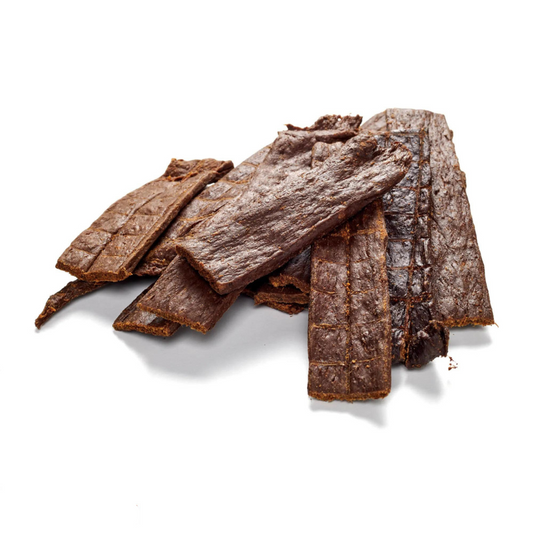
Chews made from parts that would otherwise often go unused:


What does whole-animal use mean?
Whole-animal use is the principle of using a slaughtered animal as completely as possible instead of only using the popular cuts of meat. The idea is old: in the past it was taken for granted that offal, bones and skin were used too.
From "by-products" to valuable raw materials
Many parts that people rarely eat today are very attractive to dogs. These include offal such as lung, liver, heart and tripe, but also ears, noses, scalp, tendons, feet and lower legs. When they are made into dog treats, part of the animal is put to good use.
Understanding the terms
In the feed sector, people often speak of animal by-products. That sounds negative, but it initially just means parts that are not marketed as food for humans. What matters is that the raw materials come from animals slaughtered for human consumption and from a verified origin.
Are dog chews sustainable?
Natural dog chews can be sustainable because they use parts of the slaughtered animal that would otherwise not be used – how sustainable they actually are, however, depends on origin, processing, transport route and packaging.
What speaks for natural chews
- Use instead of disposal: Parts such as ears or lung are put to use.
- Simple ingredient list: Often just one ingredient, without artificial additives.
- Gentle drying: Air-dried products keep for a long time and need no refrigeration.
- Long-lasting occupation: A chew can partly replace plastic toys as something to chew on.
Where sustainability reaches its limits
- Long transport routes: Raw materials from distant countries cause more emissions.
- Unclear origin: Without information it is hard to judge how something was produced.
- Energy-intensive processes: Depending on the production method, different amounts of energy are needed.
- Overfeeding: Snacks that promote excess weight make sense neither for the dog nor for the environment.
How drying, baking and smoking differ is explained in our article Production methods compared.
Which animal parts become sustainable dog treats?
Sustainable dog treats are mainly made from offal, skin and cartilage as well as ears, noses, feet and lower legs – exactly the parts that rarely make it over the butcher's counter.
| Animal part | Examples | Properties for dogs |
|---|---|---|
| Offal | lung, liver, heart, tripe, abomasum | aromatic, often light; liver only in moderation |
| Ears and noses | cattle, horse and rabbit ears, cattle noses | cartilaginous, medium chewing time |
| Skin and scalp | buffalo skin, scalp plates | firm, long-lasting chewing fun |
| Tendons and cartilage | Achilles tendon, nasal cartilage | tough, good for keen chewers |
| Feet and lower legs | chicken feet, lamb and beef lower legs | natural, some with fur |
You will find an overview of these products in the category From head to toe. Ears and noses are particularly popular.
Offal snacks from whole-animal use:


Offal: small, light, versatile
Lung is airy and light, ideal for lots of small rewards. One example is Beef lung cubes. Liver is very aromatic but, because of its high vitamin A content, should only be fed in small amounts. You can read more in Dried lung, tripe & co. You will find all varieties in the category offal.
Chews with fur
Ears or lower legs with fur are an original example of whole-animal use, because even the fur is used. Many owners appreciate them as a natural change, for example Rabbit ears with fur. You will find more products in the category chews with fur.
Buying sustainable dog treats: what to look for
You can recognise sustainable dog treats by transparent origin, a simple ingredient list, gentle processing and an amount that suits your dog.
Shopping checklist
- Check the origin: Short routes from Germany or Europe are usually the better choice. Background information can be found in Dog chews origin.
- Read the ingredients: A product made from a single animal species is transparent and often well tolerated.
- Consider the processing: Gently dried products do without preservatives.
- Choose the right size: A chew that suits the size of your dog is used up completely.
- Plan your stock sensibly: Larger packs save packaging if you store them properly.
- Feed according to need: Snacks belong to the daily ration and should not lead to excess weight.
Share large chews instead of throwing them away
Part of sustainability lies in how you handle chews at home. Large chews such as lower legs or scalp plates do not have to be finished in one day. Take them away after a reasonable chewing time, let them dry well and give them again the next day. However, you should throw away small remains that have become too small to chew safely, so that your dog does not swallow them whole. If you have several dogs, you can divide larger pieces beforehand. This way a chew is fully used, your dog does not get too large a portion at once and you buy less overall. When dividing, make sure not to create sharp edges.
Store properly, waste nothing
It is best to keep dried chews dry, cool and airy, for example in a cloth bag or a ventilated tin. This way they keep for a long time and nothing ends up in the bin.
Whole-animal use and sustainability in everyday life with your dog
Sustainability in everyday life with your dog begins with the choice of snacks but goes further: the amount of food, toys and accessories also play a part.
- Varied protein sources: Different animal species make use of the entire range.
- Alternative proteins: Snacks with insect protein are another option, for example for dogs with allergies.
- Durable accessories: Sturdy bowls, leads and toys last longer.
- Reward consciously: Small pieces and dividing larger chews prevent overfeeding.
You will find more ideas in our guide Sustainable dog ownership made easy.
Frequently asked questions about whole-animal use and dog treats
Are dog chews sustainable?
Natural dog chews can be sustainable because they use parts of slaughtered animals that would otherwise hardly be used. How good the balance is depends on origin, transport, processing and packaging. Short routes and transparent information are good signs.
What does whole-animal use mean?
Whole-animal use means using a slaughtered animal as completely as possible – from the meat and offal to skin, cartilage, ears and feet. Dog treats mainly use the parts that are rarely in demand in human nutrition.
How do I buy sustainable dog treats?
Look for a clear statement of origin, ideally from Germany or Europe, a short ingredient list and gentle processing. Buy sensible quantities, store the snacks properly and feed them according to need.
Is offal a healthy snack for dogs?
Offal such as lung, heart or tripe is well suited to most dogs and very popular. Liver contains a lot of vitamin A and should therefore only be fed in small amounts. If your dog has existing conditions, discuss the selection with your vet.
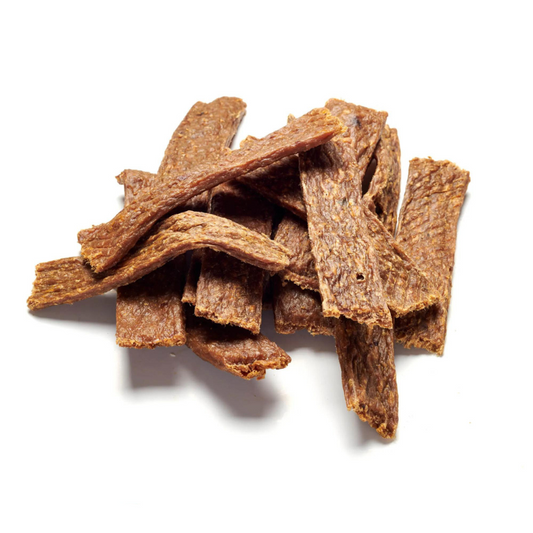
Natural chews from head to toe:


Conclusion: whole-animal use makes dog treats more meaningful
Whole-animal use is a simple, sensible idea: what is left of the slaughtered animal becomes valuable, natural dog treats. If you pay attention to transparent origin, gentle processing and amounts that match your dog's needs, you are doing something good for your dog and the environment. Try Horse ears, for example, as a natural chew or browse the category Hooves & Feet.
Further reading on this topic:
- Sustainable dog ownership made easy
- Insect protein: the sustainable alternative for allergies
- Dog chews origin: checking Germany and Europe
This post was created with the help of AI