
Sugar and salt in dog snacks: what to look out for?
Sugar and salt in dog snacks are unnecessary: dogs do not need added sugar, and a complete main food already covers their salt requirements. Good treats therefore do without added sugar and contain as little added salt as possible. Here you will learn why this matters, how to spot hidden sugar on the label and which snacks are a good choice.
Content: Sugar and salt in dog snacks: what to look out for?
- Is sugar in treats harmful?
- How much salt can a dog tolerate?
- How can I spot hidden sugar?
- Dog snacks without sugar and salt: the best alternatives
- Frequently asked questions about sugar and salt in dog snacks
- Conclusion: avoid sugar and salt in dog snacks
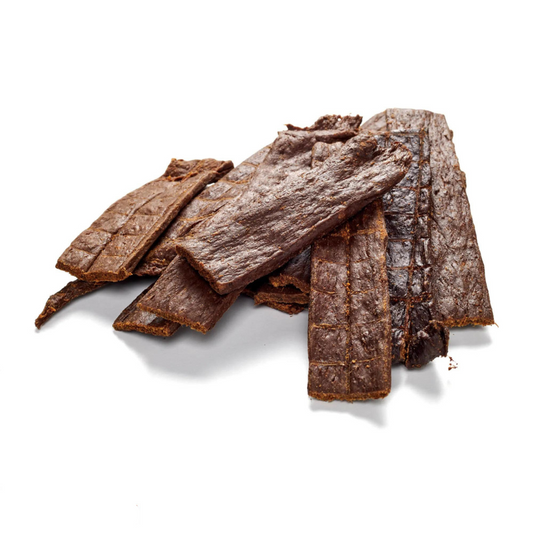
Snacks made from pure meat – without added sugar:


Is sugar in treats harmful?
Added sugar in treats is unnecessary for dogs and unfavourable in the long run: it provides empty calories, can promote obesity and encourages dental plaque. Dogs also quickly get used to the sweet taste and are then more likely to refuse unsweetened snacks.
Why sugar ends up in dog snacks at all
In some snacks, sugar is used as a flavour enhancer, for browning during baking, as a binder or to extend shelf life. It plays no role in your dog’s nutrition – dogs get their energy mainly from protein and fat and can also obtain carbohydrates from starch.
Possible consequences of too much sugar
- Obesity: Sugar provides energy, but no important nutrients.
- Dental problems: Sugar can encourage the build-up of plaque and tartar.
- Habituation: Sweet snacks can make your dog fussier.
- Strain with existing conditions: Sugar should be avoided anyway in cases of diabetes or obesity – talk to your vet about this.
Important difference: xylitol is toxic
The sugar substitute xylitol (birch sugar, E 967) is dangerous for dogs even in small amounts because it can cause a sharp drop in blood sugar. It has no place in dog snacks, but it is found in some foods for humans such as chewing gum or sugar-free sweets. If your dog has eaten xylitol, contact a vet immediately. You can find other dangerous foods in our big checklist of poisonous foods.
How much salt can a dog tolerate?
A healthy dog needs sodium, but usually already gets enough of it from a complete main food. Extra salt from snacks is therefore not necessary, and you should not give your dog heavily salted human foods such as crisps, sausage or cheese.
Sodium: important, but in moderation
Sodium is a vital mineral that, among other things, regulates water balance and nerve function. Dried meat naturally contains some sodium – that is normal and no cause for concern. It only becomes critical when snacks are additionally heavily salted or your dog gets salty leftovers.
When salt becomes a problem
- Very large amounts of salt can lead to salt poisoning. Signs include extreme thirst, vomiting, diarrhoea, trembling or restlessness – go to the vet immediately.
- With heart or kidney disease, vets often recommend a low-sodium diet. Snacks should then be agreed with the vet.
- Always give your dog fresh water, especially when they get dried snacks.
For dogs with kidney or liver problems we have a separate post: Treats for dogs with kidney or liver problems.
How can I spot hidden sugar?
You can spot hidden sugar in the composition on the label: sugar has many names, and anything ending in “-ose” or called “syrup” is basically sugar. If one of these appears near the top of the list, the proportion is correspondingly high.
Typical names for sugar
| Name on the label | What it means |
|---|---|
| Sugar, sucrose | table sugar |
| Glucose, dextrose, glucose syrup | grape sugar or sugar syrup |
| Fructose, fruit sugar | sugar from fruit |
| Molasses, caramel | sugary by-products or burnt sugar |
| Honey, syrup | natural but concentrated sources of sugar |
| “Sugar” under minerals/other | as a collective declaration on complementary feeds |
How to check a snack in three steps
- Read the composition: The shorter the list, the better. Ideally there is just one animal ingredient.
- Look for sugar terms: Watch out for the names in the table above.
- Check salt and additives: If “salt” or “sodium chloride” is near the top, the snack is rather salty. What additives such as flavourings and preservatives mean is explained in our post Chew bones without additives: how to spot quality.
Dog snacks without sugar and salt: the best alternatives
The best alternative to sugary or salty dog snacks are treats made from pure dried meat, fish or offal. They often consist of just one ingredient, naturally taste good to dogs and need no flavour enhancers.
Dried meat and offal
Whether air-dried or freeze-dried: snacks made from meat and offal contain no added sugar. You will find numerous varieties in the Meat category, and particularly light snacks such as the Beef heart freeze dried in the freeze-dried category. Offal such as lung or tripe is also popular.
Meat strips for sharing
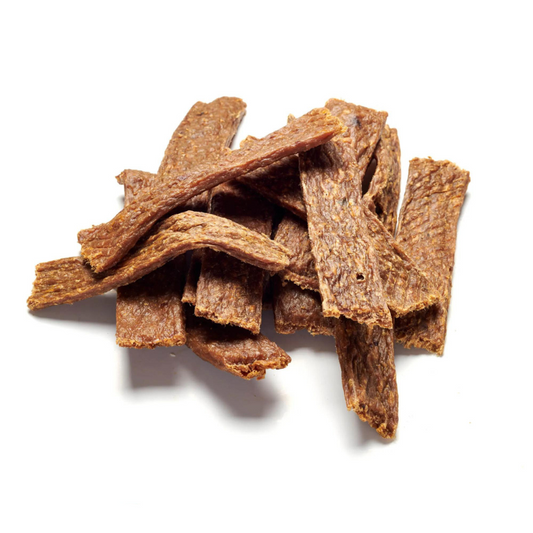
Meat strips are easy to break into small pieces and ideal for everyday use. The Rabbit meat strips or the Turkey meat strips are lean examples. You will find more varieties among our meat strips.
Meat strips for small rewards in between:


Biscuits and baked treats: take a closer look
With baked dog snacks, it is worth taking a particularly close look at the label. For dough, browning and flavour, some manufacturers use sugar, syrup or honey, and cheese or sausage as ingredients also bring extra salt. That does not automatically make a biscuit bad – what matters is how far up the composition these ingredients appear and how often your dog gets such snacks. Baked treats are better suited as an occasional reward, while pure meat snacks are the better choice for daily training. Small pieces help you keep the amount under control.
How to recognise a good snack
- One or just a few ingredients, all of which you know
- Meat, fish or offal in first place
- No sugar, syrup or caramel in the composition
- No artificial flavourings or colourings
- Clear information on origin and analytical constituents
What else you can keep in mind in everyday life
- No leftovers from the table – they are often salted, seasoned or sweetened.
- Keep an eye on the amount: treats should provide no more than about 10 percent of daily energy.
- Provide fresh water, especially with dried snacks.
- For weight problems, low-fat chews are a good choice.
Frequently asked questions about sugar and salt in dog snacks
Is sugar in treats harmful?
A little sugar will not make a dog ill straight away, but it is unnecessary. Regularly added sugar provides empty calories, can encourage obesity and dental plaque and makes dogs fussier. Snacks without any added sugar are better.
How much salt can a dog tolerate?
A complete main food normally covers the sodium requirement. Extra salt from snacks or leftovers is not necessary. With heart or kidney disease, salt intake should be agreed with the vet.
How can I spot hidden sugar?
In the composition, look for terms such as sucrose, glucose, dextrose, fructose, syrup, molasses, caramel or honey. The further up they appear, the higher their proportion. Snacks made from a single animal ingredient contain no added sugar.
Do dried meat snacks contain salt?
Meat naturally contains some sodium, which is retained during drying. That is normal. The main problem is snacks or human foods to which a lot of salt has been added.
Is honey in dog biscuits okay?
Honey is natural, but it is still sugar. In small amounts in a biscuit it is generally unproblematic for healthy dogs, but it is not necessary as a regular ingredient in treats.
Conclusion: avoid sugar and salt in dog snacks
Sugar and salt in dog snacks offer your dog no benefit – good treats stand out thanks to a short ingredient list and a high meat content. If you read the composition, know the terms for sugar and avoid leftovers, you are on the safe side. With existing conditions such as diabetes, heart or kidney problems, it is best to discuss snacks with your vet. What makes a really good treat is explained in our post High-value dog treats: What makes a treat special?.
Further reading on this topic:
- Chew bones without additives: how to spot quality
- Additives in dog food: what do EC additives mean?
- High-value dog treats: What makes a treat special?
This post was created with the help of AI