
Single feed vs. complementary feed: understanding labels
A single feed material for dogs consists of just one raw material, such as dried beef lung, whereas a complementary feed is a mixture that supplements the main food but does not replace it. Many natural chews are single feed materials, while most treats with several ingredients are complementary feeds. In this post we show you what the terms mean and how to read the label of a dog chew correctly.
Content: Single feed vs. complementary feed: understanding labels
- What is a single feed material?
- What does complementary feed mean?
- What is on the label of a dog chew?
- Which is better: single or complementary feed?
- How to read the label: an example
- Frequently asked questions about feed labels
- Conclusion: telling single and complementary feed apart
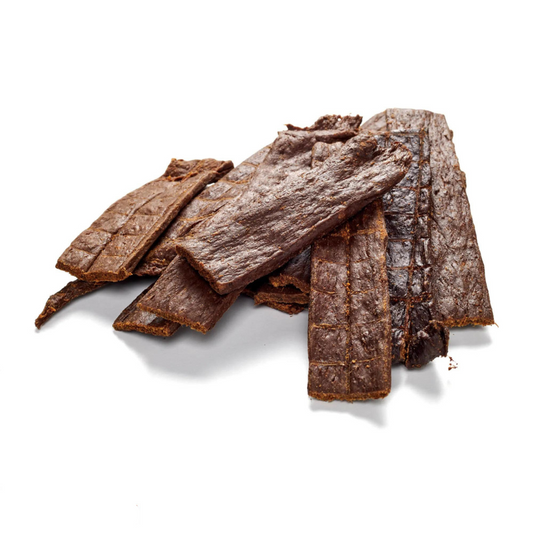
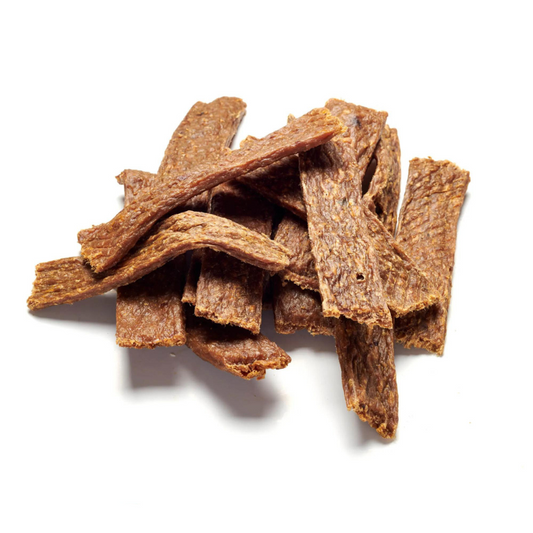
Chews made from just one ingredient:


What is a single feed material?
A single feed material is a feed that consists of a single plant or animal raw material – for example a dried tendon, a rabbit ear or dried horse meat. It is not mixed with other ingredients and may at most be processed to a small extent, for example by drying.
Typical single feed materials among dog snacks
- Tendons and Achilles tendons from beef, horse or ostrich
- Ears, scalp or noses
- Dried offal such as lung, tripe or heart
- Freeze-dried meat from one animal species
- Dried fish or fish skin
For you as an owner, single feed materials have one big advantage: you know exactly what your dog is getting. This is particularly helpful with allergies or an elimination diet. The Chewing fun category offers a good overview of such snacks, and the Achilles tendon category specifically for tendons.
Single feed materials for allergies and elimination diets
If your vet recommends an elimination diet, your dog may only get very specific ingredients for several weeks. Treats with lots of components are off limits during this time, because even a small amount of a trigger can distort the result. Single feed materials made from exactly the protein source your dog gets in the diet are then often the only way to reward them anyway. Agree on the choice with your vet beforehand and ideally keep a short food diary. Tips on choosing a single type of meat can be found in our post on single protein snacks.
What does complementary feed mean?
A complementary feed is a feed that is not sufficient on its own for a complete daily ration and should only be fed together with other feeds. Most treats, biscuits and sticks fall into this category.
The three most important terms compared
| Term | Meaning | Examples |
|---|---|---|
| Complete feed | covers all nutritional needs when fed in the right amount | complete dry or wet food |
| Complementary feed | supplements the ration, is not sufficient on its own | treats, dog biscuits, mineral feed |
| Single feed material | consists of a single raw material | dried tendons, ears, lung |
Special case: dietetic feed
In addition to these terms, there are dietetic feeds intended for particular nutritional purposes, for example to support dogs with kidney or digestive problems. They carry a corresponding note on the label and should only be fed after consulting the vet.
What this means for feeding
Neither single feed materials nor complementary feeds are designed to feed your dog on their own. They belong alongside a complete main food and together should make up no more than about 10 percent of daily energy. Why this matters so much is explained in our post The right balance: Why chews shouldn’t be a main meal.
What is on the label of a dog chew?
The label of a dog chew carries mandatory information prescribed in the EU: among other things, the type of feed, the animal species it is intended for, the composition, the analytical constituents, the net quantity, the best-before date and the responsible manufacturer or retailer. Exactly which information is required depends on the type of feed.
The most important information at a glance
- Type of feed: for example “single feed material” or “complementary feed for dogs”.
- Composition: the ingredients, in mixtures listed in descending order by weight.
- Analytical constituents: crude protein, crude fat, crude fibre and crude ash in percent, and moisture where required.
- Additives: such as preservatives or antioxidants, if included.
- Feeding instructions: recommendations on quantity or use.
- Best-before date and batch number: so that a batch can be traced.
- Name and address of the responsible company and a registration or approval number of the establishment.
Interpreting analytical constituents correctly
The analytical constituents help you compare snacks with one another. Crude protein stands for the protein content, crude fat for the fat content. Crude ash is not an additive but the mineral residue left over from the laboratory analysis. Crude fibre describes indigestible fibre components. A high crude fat value means more calories – for overweight dogs, low-fat chews are therefore often the better choice.
Tripe and ears for natural chewing fun:


Which is better: single or complementary feed?
Neither is better in principle – single feed materials score with transparency and are well suited to sensitive dogs, while complementary feeds offer more variety in shape and flavour. What matters is that the ingredients are of high quality and the amount is right.
Advantages of single feed materials
- Only one ingredient – ideal for allergies and intolerances
- Usually free from additives
- Easy to compare using the analytical constituents
- Long-lasting chewing fun with tendons, ears or scalp
When complementary feeds make sense
- For soft training treats that are easy to split
- For seniors or dogs with dental problems
- For variety in shape and texture
With complementary feeds, it is worth taking a close look at the ingredient list. How to read it correctly for baked treats is shown in our post Buying dog biscuits: how to read ingredient lists correctly. Natural chews with a short ingredient list such as the Bovine Achilles tendon or the Pure rumen bone can be found in the Meat and Offal categories.
How to read the label: an example
The easiest way to learn how to read a label is to go through the information step by step: first the type of feed, then the composition, then the analytical constituents and finally origin and shelf life.
Example: rabbit ears, freeze-dried
With a chew such as the Freeze-dried rabbit ears, the composition consists of just one ingredient. You can see at once which animal species is included. Using the analytical constituents, you can compare the fat content with other ears, and the best-before date tells you until when the snack will keep its quality.
Warning signs on the label
- Collective terms such as “meat and animal derivatives” without stating the exact animal species
- Long ingredient lists with sugar, flavourings and colourings
- Missing information on origin or manufacturer
- No analytical constituents
You can read more about why origin matters in our post Dog chews origin: checking Germany and Europe.
Frequently asked questions about feed labels
What is a single feed material?
A single feed material consists of a single plant or animal raw material, for example dried lung, a tendon or an ear. It is not mixed with other ingredients and is therefore well suited to dogs with allergies.
What does “complementary feed” mean?
A complementary feed is not sufficient on its own to meet all nutritional needs and should only be given in addition to a complete main food. Most treats, biscuits and sticks belong to this group.
What is on the label of a dog chew?
Mandatory information includes the type of feed, the animal species, the composition, the analytical constituents, the net quantity, the best-before date, a batch number and the name and address of the responsible company.
Can a dog chew replace the main food?
No. Chews and treats do not cover all nutritional needs. They are a useful supplement but should make up no more than about 10 percent of daily energy.
What does crude ash on the pack mean?
Crude ash is the mineral residue left after incineration in the laboratory analysis. It stands for the mineral content and is not an added substance.
Conclusion: telling single and complementary feed apart
Once you know the difference between single feed material, complementary feed and complete feed, you can quickly classify any label. Single feed materials offer maximum transparency, complementary feeds more variety – both belong alongside the main food. Look for a clear composition, sensible analytical constituents and traceable origin. If your dog has allergies or existing conditions, your vet can help you choose.
Further reading on this topic:
- Additives in dog food: what do EC additives mean?
- Single protein snacks: treats with just one type of meat
- Dog chews origin: checking Germany and Europe
This post was created with the help of AI