
Meat Cubes as Dog Treats: Mini, Soft or Classic?
Meat cubes for dogs are dried pieces of meat that come in three varieties: mini, soft and classic. Which meat cubes suit your dog depends mainly on how you use them: mini cubes are ideal for training, soft cubes for seniors and small dogs, and classic cubes for a satisfying chew in between. Here you'll find a comparison and practical tips on portion sizes.
Content: Meat Cubes as Dog Treats: Mini, Soft or Classic?
- What are meat cubes for dogs?
- Mini, soft or classic meat cubes compared
- Which meat cubes suit which dog?
- Are meat cubes good for training?
- Frequently asked questions about meat cubes for dogs
- Conclusion: The right meat cubes for your dog
Classic meat cubes to try:


What are meat cubes for dogs?
Meat cubes for dogs are small, evenly sized pieces of meat, lung or fish that are gently dried and used as treats or training rewards.
What meat cubes are made of
Good meat cubes are made from a single animal ingredient, such as chicken, lamb, rabbit or wild boar. Depending on the variety, they use pure muscle meat or lung, which is lighter and airier. Drying removes water from the cubes and makes them keep – no preservatives needed.
Why the cube shape is practical
- Even size: You can easily judge how much your dog is getting.
- Quickly eaten: Ideal when you want to keep your training session flowing.
- Pocket-friendly: Cubes fit into any treat pouch and hardly crumble.
- Versatile: Also great for filling snuffle mats or food toys.
How to spot good quality
The ingredients list tells you a lot: if it names just one type of meat, for example “100 % chicken”, that's a good sign. Pressed cubes sometimes contain a small amount of starch as a binder, which is fine as long as it's clearly declared. Sugar, salt, flavourings and colourings, on the other hand, have no place in a natural dog snack. Information on crude protein, crude fat and origin is also helpful. The leaner the variety, the easier it is to fit into everyday life – turkey, chicken and rabbit tend to be lean, while goose and wild boar are a little richer.
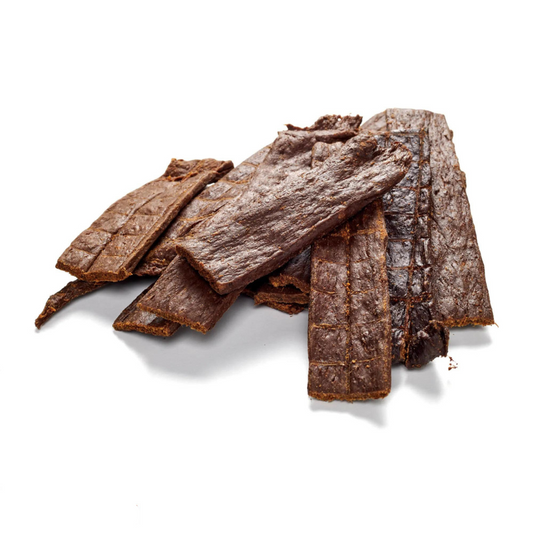
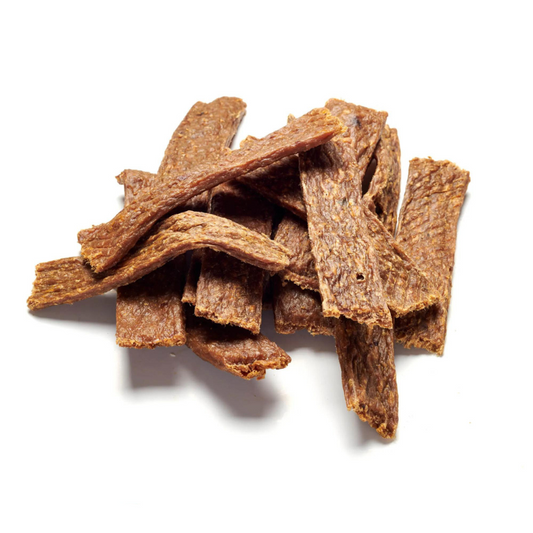
You'll find all varieties in our meat cubes category. If you prefer larger pieces to share, take a look at our article on meat strips for dogs.
Mini, soft or classic meat cubes compared
The key difference between meat cubes is size and texture: mini cubes are especially small, soft cubes are tender and moister, and classic cubes are larger and firmer.

| Variety | Size and texture | Ideal for |
|---|---|---|
| Mini meat cubes | approx. 1 cm, firm and dry | Training with lots of repetitions, small dogs |
| Soft meat cubes | tender, slightly more moisture | Seniors, sensitive teeth, puppies |
| Classic meat cubes | larger, firm, short chew | Medium-sized and large dogs, rewards in between |
What's the difference between soft and classic?
Soft meat cubes contain more residual moisture, which makes them tender and pliable. They are easy to break apart with your fingers and gentler on dogs with dental problems. Classic meat cubes are dried more thoroughly, firmer and keep for longer. Because soft cubes contain more water, you should use up an opened pack quickly.
Which variety for which occasion?
Each variety has its place in everyday life. For a walk with lots of short exercises, pack mini cubes so you can reward quickly and often. At home, when your dog can chew in peace, classic cubes make a lovely reward. Soft cubes are ideal when things need to happen fast or your dog should swallow the treat without much chewing – for example at the vet or during medical training. That's why many dog owners keep two or three varieties at home and choose according to the situation.
Which meat cubes suit which dog?
For most dogs, a combination works best: mini cubes for daily training, soft cubes for older dogs and classic cubes as a special reward.
Small dogs and puppies
Small dogs and puppies get on best with mini meat cubes. The small pieces fit their mouths and barely dent the snack budget. Soft varieties are also suitable for puppies. You'll find tips on choosing in training treats for small dogs.
Seniors and dogs with dental problems
Older dogs or dogs recovering from dental treatment benefit from soft snacks such as soft meat cubes or our Softies. Read more in soft treats for older dogs with dental problems.
Large dogs that love to chew
Large dogs love classic cubes, such as lamb meat cubes or wild boar meat cubes. For dogs with food intolerances, single-protein varieties such as rabbit or wild boar are a good choice.
Light alternative: lung cubes
Lung cubes such as our lamb lung cubes are airy, light and fairly low in fat. They crumble easily and are suitable for dogs that need to watch their weight.
Mini cubes for lots of repetitions:


Are meat cubes good for training?
Yes, meat cubes are excellent for training because they are small, quickly eaten and extremely appealing to most dogs.
How to use meat cubes in training
- Grade your rewards: Dry food is enough for easy exercises; reward difficult tasks with meat cubes.
- Mind the timing: Give the cube within one to two seconds of the desired behaviour.
- Keep it small: You can halve large cubes – your dog will hardly notice the difference.
- Mix it up: Changing varieties keeps motivation high.
You'll find more ideas in training snacks for dog training and in our training snacks category.
Meat cubes for enrichment
Meat cubes aren't just for direct rewards. Scatter a few cubes in the garden or around your home and let your dog sniff them out. This provides mental stimulation and is a welcome change on rainy days. The small pieces also work well in snuffle mats, lick mats or treat balls. Mini cubes roll out of a treat ball especially well, while soft cubes can be wedged into food toys with openings to keep your dog busy for longer.
The right amount
Meat cubes are high in energy. All snacks combined should make up no more than about 10 percent of your dog's daily energy requirement. On training days, reduce the main meal slightly. As a rough guide: the smaller the dog, the fewer cubes – for a toy poodle, ten mini cubes are already a generous amount, for a German Shepherd more of a nibble.
How to store meat cubes
Store classic and mini cubes in a dry, dark place and well sealed. Soft cubes are more delicate: reseal the pack every time you take some out and use it up within a few weeks. If cubes smell rancid or show any coating, they no longer belong in the bowl.
Frequently asked questions about meat cubes for dogs
Which meat cubes suit which dog?
Mini cubes suit small dogs and training, soft cubes suit seniors and dogs with sensitive teeth. Classic cubes are suitable for medium-sized and large dogs. If your dog has allergies, choose a variety with just one protein source.
What's the difference between soft and classic?
Soft cubes are more tender, contain more moisture and are easy to break apart. Classic cubes are firmer, dried more thoroughly and keep for longer. Ideally, both are made from nothing but meat.
Are meat cubes good for training?
Yes, they are small, quickly eaten and very popular. Mini cubes are particularly suitable for exercises with lots of repetitions. Remember to deduct the snacks from the daily ration.
Can puppies eat meat cubes?
Puppies can have small or soft meat cubes as soon as they tolerate solid food well. Give only a few pieces and watch how they agree with your puppy. If you have any questions, your vet can help.
How many meat cubes can my dog have per day?
That depends on size and activity level. For a small dog, a small handful of mini cubes is often enough; large dogs can have a little more. Follow the 10 percent rule and the information in the product description.
Soft cubes for seniors and gourmets:


Conclusion: The right meat cubes for your dog
Meat cubes are versatile treats that can be adapted to almost any dog: mini cubes for training, soft cubes for seniors and sensitive teeth, classic cubes for a short chew. Look for a simple composition made from just one type of meat, count the snacks as part of the daily ration and store them in a dry place. That way, you'll always have the right reward to hand for every situation.
Further reading on this topic:
- Training snacks for dog training
- Softies for dogs: How to use soft treats the right way
- Meat Strips for Dogs: A Versatile Reward
This post was created with the help of AI