
Dog in the office: snacks and chews for the workplace
The best office snacks for dogs are low in odour, crumb-free and quiet – for example chewing roots, halved antler pieces, tendons or soft training softies. They keep your office dog calmly busy in its spot without disturbing your colleagues. In this post you will learn which chews and treats work well at the workplace, how to pack a snack box for the office day and what to keep in mind out of consideration for others.
Content: Dogs in the office – snacks and chews for the workplace
- Dog in the office: which snacks are best?
- Quiet chews: low odour, crumb-free, quiet
- Office dog treats: rewarding calm at work
- Snack box for your office dog: how to pack it
- Consideration and safety: snacks for dogs in the office
- Frequently asked questions about dog snacks in the office
- Conclusion: relaxed with a dog in the office
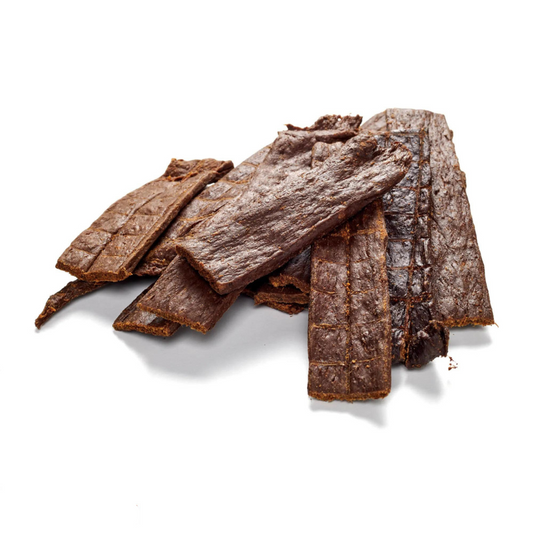
Quiet chews that hardly smell and barely crumble:


Dog in the office: which snacks are best?
The best snacks for a dog in the office are those that hardly smell, don't crumble, are chewed quietly and keep your dog busy for a long time. An office is a shared space: what is no problem at home can quickly bother others at work.
The four criteria for office snacks
- Low odour: Dried fish snacks, tripe or greasy ears often have a strong smell. In the office, neutral chews made of wood, roots, antler or cheese are usually the better choice.
- Crumb-free: Snacks that crumble while being chewed end up in the carpet or between the chair castors. Compact, fibrous or soft snacks usually leave fewer traces.
- Quiet: Loud crunching or a hard chew clattering on the floor can be distracting in meetings and phone calls. A blanket or cushion underneath muffles the noise.
- Long-lasting: A good office snack keeps your dog occupied for a while so it can settle down instead of constantly asking for something new.
Chewing instead of boredom
Chewing is a natural need for dogs and has a relaxing effect on many of them. Especially in an unfamiliar environment, a familiar chew can help your dog settle in its own spot. You can read why this is the case in our post Chewing against stress.
Whether dogs are allowed at your company at all and what advantages and disadvantages an office dog brings for the team is covered in our post Dogs in the workplace. If you work from home instead, you will find suitable ideas in Snacks for the home office.
Quiet chews: low odour, crumb-free, quiet
Quiet chews for the workplace are mainly chewing roots, wooden chew sticks, antlers, cheese chews and dried tendons, because they have little smell and leave hardly any crumbs.
Chewing roots and wooden chew sticks
Chewing roots and wooden chew sticks are almost odourless and are gnawed down slowly. They can produce fine fibres, but these are easy to pick up. One example is the coffee wood dog chew stick, which only has a subtle woody scent. You will find a wider selection in the category chewing roots and chewing sticks.
Antlers and cheese chews
Antler pieces are very hard, low in odour and last a long time for many dogs. Halved antlers make the softer core easier to reach and are therefore often suitable for dogs that don't chew as forcefully. Because antler can clatter on hard floors, your dog is best off chewing it on its blanket. You can see more variants in the category antlers. Another low-odour alternative is the cheese stick, which is nibbled down slowly.
Tendons and chew bones
Dried tendons are fibrous, hardly crumble and usually smell only mildly. Ostrich Achilles tendons are also fairly lean. Chew bones made of buffalo or horse hide last a long time but soften a little during chewing – so a washable mat belongs underneath here as well. You will find an overview under chew bones.
Office suitability at a glance
The following table shows rough tendencies. How strongly a snack smells or crumbles also depends on its size, how it was dried and how your dog chews.
| Type of snack | Smell | Crumbs | Noise |
|---|---|---|---|
| Chewing roots and wooden chew sticks | very low | fine fibres | quiet |
| Antler | very low | hardly any | can clatter on hard floors |
| Cheese chews | low | hardly any | quiet to moderate |
| Tendons | low to moderate | hardly any | quiet |
| Hide chew bones | low | hardly any, softens | quiet |
| Fish snacks and tripe | strong | sometimes noticeable | varies – better at home |
Office dog treats: rewarding calm at work
The best office dog treats are small, soft snacks that you can hand over without crumbs and that are eaten quickly. They are ideal for reinforcing calm behaviour in your dog's spot.
Rewarding calm on purpose
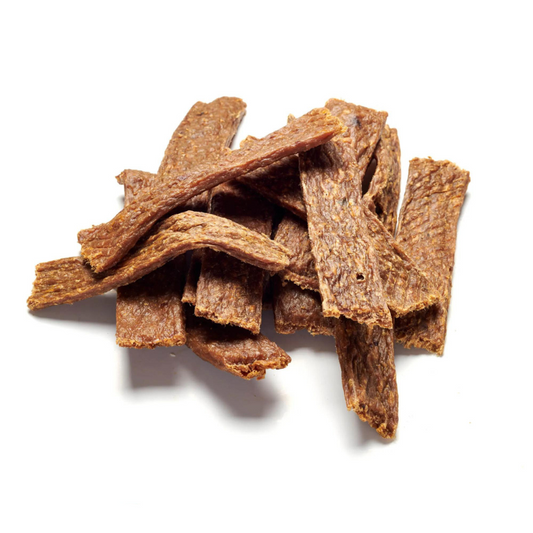
In the office, it is less about tricks and more about composure. If your dog is lying relaxed in its spot while someone walks past, that is a good moment for a small reward. This way it learns that calm pays off. Soft snacks from the category softies are easy to break up and leave no crumbs on your desk.
How to use treats sensibly in the office
- Choose small pieces: Pea-sized bites are perfectly enough and barely affect the daily ration.
- Reward quietly: Calmly give the treat from your hand instead of throwing it on the floor.
- Reward settling in: Reinforce your dog in the first few minutes as soon as it lies down in its spot.
- Support encounters: If it stays relaxed when colleagues come by, it gets a reward.
- Make agreements: Agree with your team that only you feed your dog – this prevents begging and keeps the amount under control.
You will also find suitable small rewards in the category training snacks.
Soft rewards that don't crumble:


Snack box for your office dog: how to pack it
A well-packed snack box for your office dog contains a quiet chew, a pre-portioned daily ration of treats, a water bowl and everything for a cosy resting spot.
The checklist for the working day
With a fixed checklist you won't forget anything, and your dog will get used to the office routine faster. The following overview sums up the six most important points.

- Low odour: Pack snacks that are barely noticeable even in closed rooms.
- Crumb-free: Choose compact or soft snacks that leave no crumbs behind.
- Quiet: A chew that is gnawed calmly is a better fit than loudly crunching snacks.
- Water bowl: Chewing makes dogs thirsty – a bowl of fresh water always belongs in the kit.
- Resting spot: A familiar blanket or cushion in a quiet place away from walkways.
- Daily ration pre-packed: In the morning, put the treats for the day into a small tin or pouch.
Keeping an eye on the daily ration
Treats and chews count towards your dog's daily food intake. As a rule of thumb, snacks should make up only around 10 percent of the daily requirement in total. Once the tin is empty, the budget for the day is used up – which also makes it easy for colleagues not to slip your dog anything extra. If needed, deduct the snacks from the main food.
The right resting spot
A quiet spot under or next to your desk, away from the door and the copier, helps your dog switch off. Put its usual blanket there and only give it the chew in this spot. This way it links the place with relaxation. Also plan regular short walks, for example during your lunch break.
Consideration and safety: snacks for dogs in the office
Consideration in the office mainly means that smells, crumbs and noise don't bother anyone, allergies are taken seriously and your dog is never left unsupervised while chewing.
Colleagues with allergies or fears
Some people are allergic to dogs or feel uncomfortable around them. So talk to your team in advance and keep your dog away from other people's desks. Store snacks in a closed container so your dog doesn't rummage through bags or bins, and make sure nobody gives it anything from their own plate. Chocolate, grapes or chewing gum containing xylitol are dangerous for dogs.
Chewing only under supervision
Even the quietest chew should only be given when you are nearby. Take away small leftover pieces before they can be swallowed and choose a size that suits your dog. If you go into a longer meeting, it is better to take the chew away beforehand. Our post safety rules for dog chews explains which rules apply.
Snacks for sensitive dogs
If your dog is excited in the office, it often tolerates unfamiliar snacks less well. So mainly give snacks it already knows. For dogs that don't tolerate certain animal proteins well, plant-based chews can be an alternative. If there are digestive problems or intolerances, it is best to talk to your vet. You will find more ideas for long chewing sessions in the category chewing fun.
Chew bones and tendons for long rest phases:


Frequently asked questions about dog snacks in the office
Which snacks are suitable for an office dog?
Suitable snacks are those that have little smell, hardly crumble and are chewed quietly. These include chewing roots, antlers, cheese chews, tendons and soft training softies as rewards. Strong-smelling snacks such as fish or tripe are better given at home.
How do I keep my dog busy in the office?
A long-lasting chew in its resting spot is usually the easiest way to keep your dog occupied. Add short walks during breaks and reward calm behaviour with small treats. Many dogs sleep through a large part of the working day if they have had enough exercise beforehand.
Which chews don't crumble?
Antlers, tendons, cheese chews and soft softies usually leave hardly any crumbs. Chewing roots and wooden chew sticks can shed fine fibres, but these are easy to collect. A blanket under the chewing spot also keeps the floor clean.
How many treats does an office dog get per day?
The rule of thumb also applies in the office: snacks should make up no more than around 10 percent of the daily energy requirement. The easiest way is to pre-pack the daily ration in the morning. The rest of the energy comes from the main food.
Can my dog chew unsupervised in the office?
No, you should only give chews under supervision. If you leave your desk for a longer time, take the chew away beforehand or ask a trusted person to keep an eye on your dog.
Conclusion: relaxed with a dog in the office
With the right snacks, your dog in the office becomes a relaxed colleague: low-odour, crumb-free and quiet chews keep it busy in its spot, while small soft treats reward calm behaviour. A packed snack box with a daily ration, water bowl and familiar blanket makes the working day easier. If you also show consideration for your colleagues and only give chews under supervision, little stands in the way of a harmonious office routine. For health questions, your vet is the right person to talk to.
Further reading on this topic:
- Treat Pouch: How to Keep Dog Treats Fresh on the Go
- Leave your dog alone without worrying: This is how you get your four-legged friend used to your absence!
This post was created with the help of AI