
Dog Eating Leaves and Chestnuts: Autumn Forest Dangers
If your dog eats leaves, it is usually harmless, but it can become dangerous when mouldy leaves, horse chestnuts or acorns end up in its mouth as well. Horse chestnuts are toxic to dogs and can cause gastrointestinal problems or an intestinal blockage. In this article you will learn why dogs eat leaves, which dangers lurk in the autumn forest and how to train your dog to stop eating things off the ground using rewards.
Content: Dog Eating Leaves and Chestnuts: Autumn Forest Dangers
- Why does my dog eat leaves?
- Autumn forest dangers: leaves, horse chestnuts and acorns
- Dog ate horse chestnuts: what to do?
- Dog eating leaves: how to stop it
- Frequently asked questions about dogs eating leaves and horse chestnuts
- Conclusion: safely through the autumn forest
Training treats for your autumn walk:


Why does my dog eat leaves?
Dogs usually eat leaves out of curiosity, boredom or playfulness – less often, an upset stomach or hunger is behind it.
Common reasons
- Exploration: Puppies and young dogs in particular put anything new in their mouths.
- Play drive: Rustling, flying leaves invite chasing and chewing.
- Smells: Leaves hide exciting traces of wildlife and food scraps.
- Boredom: Under-stimulated dogs find their own ways to keep busy.
- Digestion: Some dogs eat plants when they feel nauseous – much like eating grass.
Puppies in their first autumn
For puppies, their first autumn is a huge adventure: everything rustles, and everything has to be investigated with the mouth. That is normal, but young dogs in particular are quick to swallow what they find. So practise swapping and the “leave it” cue early, keep walks short and reward your puppy generously when it ignores leaves and conkers. Because puppies are still very small, even a single horse chestnut can become a problem.
You can read more about similar behaviour in Why do dogs eat grass?. If your dog eats a striking amount or also shows vomiting, diarrhoea or loss of appetite, your vet should take a look.
Autumn forest dangers: leaves, horse chestnuts and acorns
The biggest dangers in the autumn forest are horse chestnuts, acorns, mushrooms and mouldy leaves, because they can cause gastrointestinal problems, poisoning or constipation.
Are horse chestnuts poisonous to dogs?
Yes, horse chestnuts are poisonous to dogs. They contain saponins such as aescin, which irritate the mucous membranes and can cause vomiting, diarrhoea and abdominal pain. On top of that there is a mechanical risk: a whole conker can get stuck in the intestine and cause an intestinal blockage. Playing with conkers also poses a choking hazard. So never throw conkers as toys.
Acorns, mushrooms and beechnuts
Acorns contain tannins that can irritate the gastrointestinal tract; larger amounts are considered a concern. Mushrooms are hard to identify, and some species are highly toxic. Beechnuts should not be eaten in large quantities either. Our article Autumn dangers: acorns, chestnuts and mushrooms covers these topics in detail.
What makes the leaves themselves dangerous
- Mould: Damp, rotting leaves can contain moulds and their toxins.
- Foreign objects: Twigs and sticks can injure the mouth and intestines.
- Contamination: In parks and gardens, fertiliser, pesticides or poison baits may be lying in the leaves.
| Find | Possible danger | What to do? |
|---|---|---|
| Horse chestnut | Gastrointestinal irritation, intestinal blockage | Contact your vet |
| Acorns | Gastrointestinal irritation from tannins | See the vet if symptoms appear or after larger amounts |
| Mushrooms | Sometimes severe poisoning | Vet immediately, take the mushroom remains with you |
| Mouldy leaves | Vomiting, trembling possible | Watch your dog, vet if symptoms appear |
Dog ate horse chestnuts: what to do?
If your dog has eaten horse chestnuts, it is best to contact your vet or an animal clinic immediately – even if it is not showing any symptoms yet.
Symptoms to watch out for
- Vomiting and retching
- Diarrhoea, possibly bloody
- Abdominal pain, hunched posture, restlessness
- Loss of appetite and weakness
- No bowel movement despite straining (a sign of constipation)
How to react correctly
- Stay calm: Remove any remains from your dog’s mouth if you can do so safely.
- Estimate the amount: How much did your dog eat, and when?
- Call the vet: Describe the situation and follow the instructions.
- Do not induce vomiting: Home remedies like salt water are dangerous – only your vet should decide this.
You will find general information on signs of poisoning in Poisoning in dogs.
Dog eating leaves: how to stop it
The best way to stop your dog eating leaves is to train a reliable “leave it” cue with rewards and to offer it desirable alternatives.
Step by step to a reliable “leave it”
- Start at home: Put a treat in your closed hand. As soon as your dog backs off from your hand, say “Leave it” and reward it from your other hand.
- Increase the difficulty: Place the treat openly on the floor and cover it with your foot if needed. Reward every time your dog backs away.
- Practise with leaves: Put a handful of leaves in the garden and reward your dog when it looks at you on your cue.
- Use it in the forest: Start in quiet spots and reward generously with especially tasty snacks.
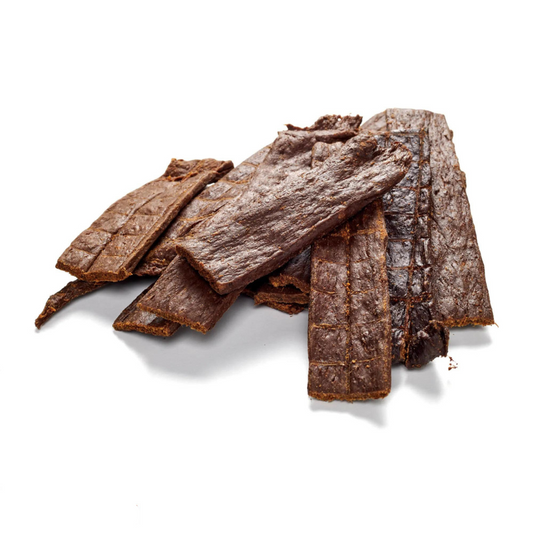
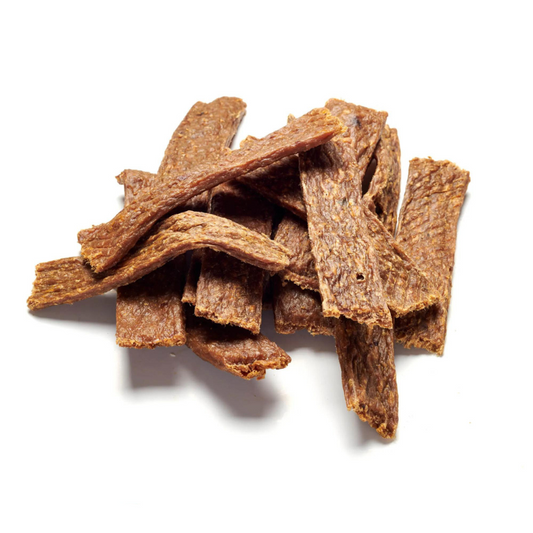
What matters is a reward that is more attractive than the find. Small, flavourful training treats or mini meat cubes are particularly well suited, for example the venison training treat or the lamb training treat. Our article Poison bait training: how to stop your dog eating off the ground explains how poison bait training works.
Choosing the right reward
In the forest, your reward competes with exciting smells and finds. Ordinary dry food is often not enough there. Soft or strongly scented snacks that your dog can eat quickly are better suited, so the training keeps flowing. Alternate the flavours to keep the reward exciting, and keep the pieces small so you can reward often. Remember to deduct the snacks from the daily ration so your dog does not put on weight in autumn.
Management on walks
- Long line: This lets you step in in time without constantly pulling.
- Reward attention: Reward every voluntary moment of eye contact.
- Choose your routes: Avoid avenues lined with horse chestnut trees while your dog is still practising.
- Muzzle training: For dogs that eat everything, a well-fitting muzzle introduced positively can make sense.
Offer alternatives
A well-exercised dog is less likely to go looking for things to eat. Plan search games where your dog is allowed to find treats in the leaves that you have hidden yourself – this way it can use its nose in a controlled way. At home, chews from our chew fun range help your dog relax.
Small rewards with lots of flavour:


Frequently asked questions about dogs eating leaves and horse chestnuts
Are horse chestnuts poisonous to dogs?
Yes, horse chestnuts are poisonous. They can cause vomiting, diarrhoea and abdominal pain, and whole conkers can also cause an intestinal blockage. If your dog has eaten one, contact your vet immediately.
Why does my dog eat leaves?
Mostly out of curiosity, boredom or playfulness. Sometimes an upset stomach is behind it. If your dog eats a lot or has additional symptoms, have it examined.
How do I get my dog to stop?
Train a “leave it” cue with high-value treats, start at home and slowly increase the distractions. On walks, a long line, attention training and enough mental and physical exercise help.
Is it bad if my dog eats a leaf?
A single, clean leaf is usually harmless. Large amounts, mouldy leaves and anything lying among them are a problem. Keep an eye on your dog and watch for gastrointestinal problems.
Which treats are suitable for training?
Ideally small, flavourful snacks that are eaten quickly, such as training treats or mini meat cubes. They have to be more attractive to your dog than the find on the ground. Soft snacks are also easy to break into pieces.
Conclusion: safely through the autumn forest
If your dog eats leaves, curiosity or boredom is usually behind it. It gets dangerous with horse chestnuts, acorns, mushrooms and mouldy leaves. With a well-trained “leave it” cue, high-value rewards and a little management on walks, you can gradually teach your dog to stop eating things off the ground. And if it does eat horse chestnuts: better to call the vet once too early than once too late.
Further reading on this topic:
- The dangers of autumn: What you should know about acorns, chestnuts and mushrooms
- Anti-poison bait training: Safe on the road with your best friend
- Poisoning in dogs
This post was created with the help of AI